

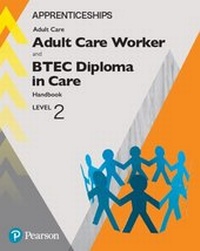
Apprenticeship Adult Care Support Worker Level 2 Learner Handbook + Activebook
1st Edition
Published on 16. October 2018
200 pages
978-1-292-27960-2 (ISBN)
Description

An ideal companion to support apprentices throughout their on-programme learning. Apprenticeship Handbook for Adult Care Level 2 provides apprentices with all the support they will need throughout the on-programme component of their apprenticeship. It is a course companion that includes all the knowledge required by the apprenticeship Standard and set out in the Pearson EPA specification, as well as providing opportunities for skills development and an appreciation of appropriate behaviours in the workplace
More details
Other editions
Additional editions
Book
11/2018
Pearson Education Limited
€55.68
Shipment within 10-20 days
Content
- Front Cover
- Contents
- How to use this book
- Topics
- A: Job role and responsibilities (Siân Lavers)
- Your job, tasks and responsibilities
- The tasks and responsibilities of your job role
- Your job role
- Different tasks to support individuals
- Support individuals according to their personal care/support plan
- Implementing care according to the care plan
- Professional boundaries and limits of your training and expertise
- Boundaries
- Guidance
- Training and development
- Ask for help when not confident or skilled in any aspect of your role
- Feedback
- Relevant statutory standards and codes of practice
- CQC Standards
- The Care Certificate
- Provide information to enable choice
- Duty of care
- How does duty of care affect you in your work role?
- Duty of care checklist
- Duty of candour
- Making complaints
- Handling complaints
- Mental capacity
- Confidentiality
- Encourage active participation
- Contribute towards a care plan
- Why have care plans?
- Care planning cycle
- Ensure the individual knows what they are agreeing to
- Identify, respond to and escalate changes to physical, social and emotional needs
- Maslow's hierarchy of needs
- Changes to physical needs
- Changes to social needs
- Changes to emotional needs
- How to respond to changes
- Escalating changes
- Contribute to the ongoing development of care/support plans
- Communication
- Regulations and organisational policies and procedures
- Policies and procedures
- Support individuals with cognitive, physical or sensory impairments
- Situational judgement questions
- B: Values and behaviours (Colette Burgess)
- What are your values?
- Help individuals to achieve their personal aims and goals
- Put the user of the service at the centre of your care
- Choices and risks
- Demonstrating empathy and person-centred work
- Support individuals to achieve their aims
- Demonstrating person-centred care
- Supporting individuals to achieve
- Different views and ideas
- How to achieve your aims and goals
- Demonstrate person-centred skills and empathy
- What dignity means
- Protecting an individual's dignity
- Ensuring dignity
- Respecting diversity and equality
- Treating people fairly
- Legal protection
- Demonstrate courage
- Policies and procedures
- Discrimination
- Finding information
- Demonstrating courage and promoting equality
- Situational judgement questions
- C: The importance of communication (Heather Higgins)
- Communication in care settings
- Barriers to communication
- The importance of positive communication in care settings
- Barriers in the workplace
- Examples of barriers
- Identify and reduce barriers to communication
- Use preferred methods of communication
- Impact of non-verbal communication
- Posture
- Body orientation
- Eye contact
- Use of personal space
- Appropriate use of touch
- Active listening
- Reducing barriers through active listening
- Reducing barriers through active listening
- Non-verbal communication
- Positive non-verbal communication
- The way you communicate can affect others
- Non-verbal communication
- Use of language
- Written communication
- Write clearly and concisely
- Write clearly and concisely in records and reports
- Different forms of communication
- Technological aids
- Human aids
- Using preferred methods of communication
- Find out about the best way to communicate with the individual you are supporting
- Person-centred communication
- Communication techniques
- Using pictures to communicate
- Make sure confidential information is kept safe
- Personal and sensitive information
- Keep information safe and confidential
- Situational judgement questions
- D: Safeguarding (Andrew Carter-Whiting)
- Supporting individuals to remain safe from harm
- What is abuse and how do you respond?
- Supporting individuals to remain safe from harm
- How to respond to suspected or alleged abuse
- National and local strategies for safeguarding
- The role of different agencies in safeguarding
- Ways to reduce likelihood of abuse
- Person-centred support
- Active listening
- Recognise potential signs of different forms of abuse
- Receiving comments and complaints
- Complaints procedure
- The importance and process of whistleblowing
- If nothing has been done
- Recognise unsafe practices in the workplace
- What you should do
- Distress and stress
- Address dilemmas between a person's rights and their safety
- Understand the principles for online safety
- Respond to concerns of abuse
- Challenge unsafe practices
- Situational judgement questions
- E: Promoting health and wellbeing (Carolyn Aldworth)
- Keeping safe and well
- Health and safety responsibilities
- Health and safety at work
- Keeping safe at work
- Move people and objects safely
- Accident or sudden illness
- Trips and falls
- Needlestick injuries
- Burns and scalds
- Injuries from equipment and electrocution
- Accidental poisoning
- Sudden illness
- Dealing with hazardous substances
- Handling hazardous substances
- Storing hazardous substances
- Disposing of hazardous substances
- What is a risk assessment?
- Using risk assessments
- Avoiding spread of infection
- Using risk assessments in health and safety dilemmas
- Common risks in adult care settings
- Promoting person-centred care safely
- Promote fire safety
- Fire in a care setting
- Fire safety procedures
- Reducing the spread of infection
- Airborne
- Direct contact
- Indirect contact
- Preventing infection
- Hand hygiene and reducing the spread of infection
- Promoting healthy eating and wellbeing
- Healthy eating and nutrition
- Fluids
- Support at mealtimes
- Recognise symptoms of cognitive impairment
- Dementia
- Learning disabilities
- Mental ill health
- Monitor and report changes in health and wellbeing
- Observations
- Keep people, buildings and yourself safe in a work setting
- Authorised access
- Protecting confidential information
- Promote the health and wellbeing of individuals
- Situational judgement questions
- F: Professional working and professional development (Colette Burgess)
- Working professionally and professional development
- Professional working relationships
- The job description
- First impressions
- Being a professional
- Reflecting on your work practices
- Personal issues
- Celebrate differences
- Professional relationships and friends
- Crossing boundaries
- Working within professional boundaries
- Working with other people and organisations
- Working together
- Working in partnership with others
- Being actively involved in your personal development plan
- Self-reflection
- Why care workers reflect
- How to reflect
- Getting feedback
- How to make feedback supportive
- Supervision and appraisal meetings
- Your personal development plan
- Contributing to your development plan
- Excellent core skills in writing, numbers and information technology
- Writing skills
- Number skills
- Information technology
- Developing your core skills and knowledge
- Positive attitude and personal resilience
- Being positive
- Resilience
- When conflicts arise
- Identifying sources of support
- How to access specialist knowledge
- The diversity of adult care work
- Access and apply additional skills
- Situational judgement questions
- Mapping document - Apprenticeship standards and BTEC Level 2 Diploma in Care
- Answers to Situational Judgement questions
- Glossary
- Index
- Back Cover
