

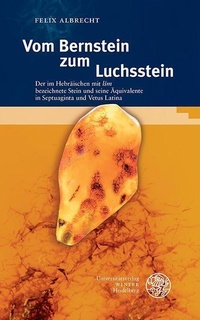
Vom Bernstein zum Luchsstein
Der im Hebräischen mit ,lSm' bezeichnete Stein und seine Äquivalente in Septuaginta und Vetus Latina
Published on 23. July 2021
103 pages
978-3-8253-7280-4 (ISBN)
Description

Die in der Bibel belegte hebräische Steinbezeichnung ,lSm' (Exodus 28,19 par. 39,12) erklärt sich über das von den römischen Autoren Plinius und Tacitus bezeugte germanische Lehnwort ,gl(a)esum' als Bezeichnung für den baltischen Bernstein. In der Antike gelangte der baltische Bernstein über mehrere Handelsrouten in den Mittelmeerraum. Eine der Routen endete im antiken Ligurien. So entstand die Vorstellung des ligurischen Bernsteins.
Die Septuaginta benutzt zur Wiedergabe von hebräisch ,lSm' das griechische Wort ,¿¿¿¿¿¿¿¿', ein Neologismus zur Bezeichnung des ligurischen Bernsteins. Epiphanius von Salamis befasste sich eingehend mit diesem Stein. Ausführlich erörterte er alternative Bezeichnungen wie ,¿¿¿¿¿¿¿¿¿¿' (,¿¿¿¿¿¿¿¿¿¿'), das in der Antike als "Luchs-Urin" gedeutet wurde. Der Band zeichnet die Namensgeschichte des baltischen Bernsteins detailliert nach und veranschaulicht die Ausführungen durch ausgewählte Illustrationen.
Die Septuaginta benutzt zur Wiedergabe von hebräisch ,lSm' das griechische Wort ,¿¿¿¿¿¿¿¿', ein Neologismus zur Bezeichnung des ligurischen Bernsteins. Epiphanius von Salamis befasste sich eingehend mit diesem Stein. Ausführlich erörterte er alternative Bezeichnungen wie ,¿¿¿¿¿¿¿¿¿¿' (,¿¿¿¿¿¿¿¿¿¿'), das in der Antike als "Luchs-Urin" gedeutet wurde. Der Band zeichnet die Namensgeschichte des baltischen Bernsteins detailliert nach und veranschaulicht die Ausführungen durch ausgewählte Illustrationen.
More details
Other editions
Additional editions
Felix Albrecht
Vom Bernstein zum Luchsstein
Der im Hebräischen mit 'lsm' bezeichnete Stein und seine Äquivalente in Septuaginta und Vetus Latina
Book
07/2021
1st Edition
Universitätsverlag Winter
€32.00
Shipment within 5-7 days
Content
- Umschlag
- Titel
- Impressum
- Vorwort
- Inhaltsverzeichnis
- Einleitung
- 1 Hebräisch 'lsm' (MT Ex 28,19 par. 39,12)
- 1.1 Das germanisch-baltische Lehnwort 'gl(a)esum'
- 1.2 Der Zusammenhang von protogerm. '*g?lesom' zu hebr. 'lsm'
- Exkurs: Bernstein im Akkadischen
- 1.3 Ein Zusammenhang von hebr. 'lsm' zu ägyptisch 'nsm'?
- 2 Das ???????? der Septuaginta (LXX Ex 28,19 par. 36,19
- LXX Ez 28,13)
- 2.1 Ligurischer Bernstein
- 2.2 Epiphanius über ????????
- 2.2.1 ?????????
- 2.2.2 ?????????
- 2.2.3 Die abschließende Deutung des Epiphanius
- 3 Der 'lyncurius' der Vetus Latina (Ex 28,19)
- 3.1 ?????????? und ??????????
- 3.2 Zur Etymologie von ?????????? und ??????????
- 3.3 Zur Rezeption von 'lyncurium' ("Luchsstein")
- 3.4 Abbildungen von Luchs und Luchsstein
- Zusammenfassung
- Verwendete Literatur
- Register
- Rückumschlag
