

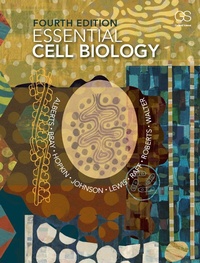
Essential Cell Biology
4th Edition
Published on 15. October 2013
864 pages
978-1-317-80627-1 (ISBN)
Description

Essential Cell Biology provides a readily accessible introduction to the central concepts of cell biology, and its lively, clear writing and exceptional illustrations make it the ideal textbook for a first course in both cell and molecular biology. The text and figures are easy-to-follow, accurate, clear, and engaging for the introductory student. Molecular detail has been kept to a minimum in order to provide the reader with a cohesive conceptual framework for the basic science that underlies our current understanding of all of biology, including the biomedical sciences.
The Fourth Edition has been thoroughly revised, and covers the latest developments in this fast-moving field, yet retains the academic level and length of the previous edition. The book is accompanied by a rich package of online student and instructor resources, including over 130 narrated movies, an expanded and updated Question Bank, and new enhanced assessments for students.
The Fourth Edition has been thoroughly revised, and covers the latest developments in this fast-moving field, yet retains the academic level and length of the previous edition. The book is accompanied by a rich package of online student and instructor resources, including over 130 narrated movies, an expanded and updated Question Bank, and new enhanced assessments for students.
More details
Edition
4th edition
Language
English
Place of publication
London
United Kingdom
Publishing group
W W Norton & Co Ltd
Target group
College/higher education
Edition type
Revised edition
Illustrations
860 farbige Abbildungen
860 Illustrations, color
File size
407,18 MB
ISBN-13
978-1-317-80627-1 (9781317806271)
Copyright in bibliographic data and cover images is held by Nielsen Book Services Limited or by the publishers or by their respective licensors: all rights reserved.
Schweitzer Classification
Other editions
Additional editions
Bruce Alberts | Dennis Bray | Karen Hopkin
Essential Cell Biology
Book
11/2013
4th Edition
Garland Publishing Inc
€213.92
Article exhausted; check for reprint
Bruce Alberts | Dennis Bray | Karen Hopkin
Essential Cell Biology
Loose-leaf edition
10/2013
4th Edition
Garland Publishing Inc
€85.61
Article exhausted; check different version
Bruce Alberts | Dennis Bray | Karen Hopkin
Essential Cell Biology
Book
10/2013
4th Edition
Garland Publishing Inc
€94.28
Article exhausted; check different version
Persons
Bruce Alberts received his PhD from Harvard University and is Professor of Biochemistry and Biophysics at the University of California, San Francisco. He is the editor-in-chief of Science magazine. For 12 years he served as President of the U.S. National Academy of Sciences (1993-2005).
Dennis Bray received his PhD from Massachusetts Institute of Technology and is currently an active emeritus professor at University of Cambridge. In 2006 he was awarded the Microsoft European Science Award.
Karen Hopkin received her PhD in biochemistry from the Albert Einstein College of Medicine and is a science writer in Somerville, Massachusetts. She is a regular columnist for The Scientist and a contributor to Scientific American's daily podcast, "60-Second Science."
Alexander Johnson received his PhD from Harvard University and is Professor of Microbiology and Immunology and Director of the Biochemistry, Cell Biology, Genetics, and Developmental Biology Graduate Program at the University of California, San Francisco.
Julian Lewis received his DPhil from the University of Oxford and is an Emeritus Scientist at the London Research Institute of Cancer Research UK.
Martin Raff received his MD from McGill University and is at the Medical Research Council Laboratory for Molecular Cell Biology and Cell Biology Unit at University College London.
Keith Roberts received his PhD from the University of Cambridge and was Deputy Director of the John Innes Centre, Norwich. He is currently Emeritus Professor at the University of East Anglia.
Peter Walter received his PhD from The Rockefeller University in New York and is a Professor in the Department of Biochemistry and Biophysics at the University of California, San Francisco, and an Investigator of the Howard Hughes Medical Institute.
Dennis Bray received his PhD from Massachusetts Institute of Technology and is currently an active emeritus professor at University of Cambridge. In 2006 he was awarded the Microsoft European Science Award.
Karen Hopkin received her PhD in biochemistry from the Albert Einstein College of Medicine and is a science writer in Somerville, Massachusetts. She is a regular columnist for The Scientist and a contributor to Scientific American's daily podcast, "60-Second Science."
Alexander Johnson received his PhD from Harvard University and is Professor of Microbiology and Immunology and Director of the Biochemistry, Cell Biology, Genetics, and Developmental Biology Graduate Program at the University of California, San Francisco.
Julian Lewis received his DPhil from the University of Oxford and is an Emeritus Scientist at the London Research Institute of Cancer Research UK.
Martin Raff received his MD from McGill University and is at the Medical Research Council Laboratory for Molecular Cell Biology and Cell Biology Unit at University College London.
Keith Roberts received his PhD from the University of Cambridge and was Deputy Director of the John Innes Centre, Norwich. He is currently Emeritus Professor at the University of East Anglia.
Peter Walter received his PhD from The Rockefeller University in New York and is a Professor in the Department of Biochemistry and Biophysics at the University of California, San Francisco, and an Investigator of the Howard Hughes Medical Institute.
Content
TABLE OF CONTENTS
1. Cells: The Fundamental Units of Life
2. Chemical Components of Cells
3. Energy, Catalysis, and Biosynthesis
4. Protein Structure and Function
5. DNA and Chromosomes
6. DNA Replication, Repair, and Recombination
7. From DNA to Protein: How Cells Read the Genome
8. Control of Gene Expression
9. How Genes and Genomes Evolve
10. Modern Recombinant DNA Technology
11. Membrane Structure
12. Transport Across Cell Membranes
13. How Cells Obtain Energy from Food
14. Energy Generation in Mitochondria and Chloroplasts
15. Intracellular Compartments and Protein Transport
16. Cell Signaling
17. Cytoskeleton
18. The Cell Division Cycle
19. Sexual Reproduction and the Power of Genetics
20. Cellular Communities: Tissues, Stem Cells, and Cancer
1. Cells: The Fundamental Units of Life
2. Chemical Components of Cells
3. Energy, Catalysis, and Biosynthesis
4. Protein Structure and Function
5. DNA and Chromosomes
6. DNA Replication, Repair, and Recombination
7. From DNA to Protein: How Cells Read the Genome
8. Control of Gene Expression
9. How Genes and Genomes Evolve
10. Modern Recombinant DNA Technology
11. Membrane Structure
12. Transport Across Cell Membranes
13. How Cells Obtain Energy from Food
14. Energy Generation in Mitochondria and Chloroplasts
15. Intracellular Compartments and Protein Transport
16. Cell Signaling
17. Cytoskeleton
18. The Cell Division Cycle
19. Sexual Reproduction and the Power of Genetics
20. Cellular Communities: Tissues, Stem Cells, and Cancer
