

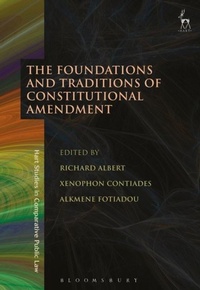
The Foundations and Traditions of Constitutional Amendment
1st Edition
Published on 13. July 2017
416 pages
978-1-5099-0827-1 (ISBN)
Description

There is growing interest in constitutional amendment from a comparative perspective. Comparative constitutional amendment is the study of how constitutions change through formal and informal means, including alteration, revision, evolution, interpretation, replacement and revolution. The field invites scholars to draw insights about constitutional change across borders and cultures, to uncover the motivations behind constitutional change, to theorise best practices, and to identify the theoretical underpinnings of constitutional change.
This volume is designed to guide the emergence of comparative constitutional amendment as a distinct field of study in public law. Much of the recent scholarship in the field has been written by the scholars assembled in this volume. This book, like the field it hopes to shape, is not comparative alone; it is also doctrinal, historical and theoretical, and therefore offers a multiplicity of perspectives on a subject about which much remains to be written.
This book aspires to be the first to address comprehensively the new dimensions of the study of constitutional amendment, and will become a reference point for all scholars working on the subject. The volume covers all of the topics where innovative work is being done, such as the notion of the people, the trend of empirical quantitative approaches to constitutional change, unamendability, sunrise clauses, constitutional referenda, the conventional divide between constituent and constituted powers, among other important subjects. It creates a dialogue that cuts through these innovative conceptualisations and highlights scholarly disagreement and, in so doing, puts ideas to the test. The volume therefore captures the fierce ongoing debates on the relevant topics, it reveals the current trends and contested issues, and it offers a variety of arguments elaborated by prominent experts in the field. It will open the way for further dialogue.
This volume is designed to guide the emergence of comparative constitutional amendment as a distinct field of study in public law. Much of the recent scholarship in the field has been written by the scholars assembled in this volume. This book, like the field it hopes to shape, is not comparative alone; it is also doctrinal, historical and theoretical, and therefore offers a multiplicity of perspectives on a subject about which much remains to be written.
This book aspires to be the first to address comprehensively the new dimensions of the study of constitutional amendment, and will become a reference point for all scholars working on the subject. The volume covers all of the topics where innovative work is being done, such as the notion of the people, the trend of empirical quantitative approaches to constitutional change, unamendability, sunrise clauses, constitutional referenda, the conventional divide between constituent and constituted powers, among other important subjects. It creates a dialogue that cuts through these innovative conceptualisations and highlights scholarly disagreement and, in so doing, puts ideas to the test. The volume therefore captures the fierce ongoing debates on the relevant topics, it reveals the current trends and contested issues, and it offers a variety of arguments elaborated by prominent experts in the field. It will open the way for further dialogue.
More details
Series
Edition
1. Auflage
Language
English
Place of publication
London
United Kingdom
Publishing group
Bloomsbury Publishing PLC
Target group
Professional and scholarly
ISBN-13
978-1-5099-0827-1 (9781509908271)
Copyright in bibliographic data and cover images is held by Nielsen Book Services Limited or by the publishers or by their respective licensors: all rights reserved.
Schweitzer Classification
Other editions
Additional editions
Richard Albert | Xenophon Contiades | Alkmene Fotiadou
The Foundations and Traditions of Constitutional Amendment
Book
11/2019
Hart Publishing
€106.65
Shipment within 15-20 days
Richard Albert | Xenophon Contiades | Alkmene Fotiadou
The Foundations and Traditions of Constitutional Amendment
Book
07/2017
Hart Publishing
€222.84
Shipment within 15-20 days
Persons
Richard Albert has been appointed Professor of Law at Boston College Law School and visiting professor at the University of Toronto, Externado University of Colombia, the Interdisciplinary Center (Herzliya) and Yale University.
Xenophon Contiades is Professor of Public Law, Panteion University of Social and Political Sciences (Athens, Greece) and Managing Director of the Centre for European Constitutional Law.
Alkmene Fotiadou is Research Associate at the Centre for European Constitutional Law.
Xenophon Contiades is Professor of Public Law, Panteion University of Social and Political Sciences (Athens, Greece) and Managing Director of the Centre for European Constitutional Law.
Alkmene Fotiadou is Research Associate at the Centre for European Constitutional Law.
Content
Introduction: The State of the Art in Constitutional Amendment
Richard Albert
I. Defining the Field
II. The Architecture of Constitutional Amendment Rules
III. Amendment as Constitution
Part I: The Foundations of Constitutional Amendment
1. Amendment Power, Constituent Power, and Popular Sovereignty: Linking Unamendability and Amendment Procedures
Yaniv Roznai
I. Introduction
II. Unamendability and Constituent Power
III. The Constitutionalisation of Primary Constituent Power
IV. The Spectrum of Constitutional Amendment Powers
V. Conclusion
2. Constitutional Theory and Cognitive Estrangement: Beyond Revolutions, Amendments and Constitutional Moments
Zoran Oklopcic
I. Introduction: The Person of 'The People' and A Three-Fold Cognitive Estrangement
II. Beyond 'The People': New Tropes, Old Anxieties
III. Three Forms of Estrangement-prevention: Holmes, Pettit, Dworkin
IV. Tertium Datur: Mapping Constitutional Change Between the Revolution and the Amendment
V. Towards a Different Familiarity: 'The People', The Paradox and The Sacrifice
3. Constraints on Constitutional Amendment Powers
Oran Doyle
I. Introduction
II. A Doctrine of Unconstitutional Constitutional Amendments
III. Constraint and Powers of Constitutional Change
IV. The Types of Constraint on Constitutional Amendment Powers
V. Distribution of Power and the Justification of Constraint
VI. Justification of Constraints on Constitutional Amendment Powers
VII. Conclusion
4. Comment on Doyle's Constraints on Constitutional Amendment Powers
Mark Tushnet
5. Constituting the Amendment Power: A Framework for Comparative Amendment Law
Thomaz Pereira
I. Introduction
II. Conclusion
6. Sieyès: The Spirit of Constitutional Democracy?
Luisa Fernanda García López
I. Introduction
II. Towards a Representative Democracy
III. Towards a Constitutional Democracy
IV. Conclusion
7. Revolutionary Reform in Venezuela: Electoral Rules and Historical Narratives in the Creation of the 1999 Constitution
Joshua Braver
I. Introduction
II. Carl Schmitt's Unfortunate Victory over Hannah Arendt in the Analysis of Popular Constitution-Making
III. Hannah Arendt's Revolutionary Reform
IV. Hugo Chávez's Radical and Original Constituent Power
V. The Turning Point: The Electoral Rules for the Constituent Assembly
VI. Radical Breaks and Exclusionary Mandates
VII. Conclusion
Richard Albert
I. Defining the Field
II. The Architecture of Constitutional Amendment Rules
III. Amendment as Constitution
Part I: The Foundations of Constitutional Amendment
1. Amendment Power, Constituent Power, and Popular Sovereignty: Linking Unamendability and Amendment Procedures
Yaniv Roznai
I. Introduction
II. Unamendability and Constituent Power
III. The Constitutionalisation of Primary Constituent Power
IV. The Spectrum of Constitutional Amendment Powers
V. Conclusion
2. Constitutional Theory and Cognitive Estrangement: Beyond Revolutions, Amendments and Constitutional Moments
Zoran Oklopcic
I. Introduction: The Person of 'The People' and A Three-Fold Cognitive Estrangement
II. Beyond 'The People': New Tropes, Old Anxieties
III. Three Forms of Estrangement-prevention: Holmes, Pettit, Dworkin
IV. Tertium Datur: Mapping Constitutional Change Between the Revolution and the Amendment
V. Towards a Different Familiarity: 'The People', The Paradox and The Sacrifice
3. Constraints on Constitutional Amendment Powers
Oran Doyle
I. Introduction
II. A Doctrine of Unconstitutional Constitutional Amendments
III. Constraint and Powers of Constitutional Change
IV. The Types of Constraint on Constitutional Amendment Powers
V. Distribution of Power and the Justification of Constraint
VI. Justification of Constraints on Constitutional Amendment Powers
VII. Conclusion
4. Comment on Doyle's Constraints on Constitutional Amendment Powers
Mark Tushnet
5. Constituting the Amendment Power: A Framework for Comparative Amendment Law
Thomaz Pereira
I. Introduction
II. Conclusion
6. Sieyès: The Spirit of Constitutional Democracy?
Luisa Fernanda García López
I. Introduction
II. Towards a Representative Democracy
III. Towards a Constitutional Democracy
IV. Conclusion
7. Revolutionary Reform in Venezuela: Electoral Rules and Historical Narratives in the Creation of the 1999 Constitution
Joshua Braver
I. Introduction
II. Carl Schmitt's Unfortunate Victory over Hannah Arendt in the Analysis of Popular Constitution-Making
III. Hannah Arendt's Revolutionary Reform
IV. Hugo Chávez's Radical and Original Constituent Power
V. The Turning Point: The Electoral Rules for the Constituent Assembly
VI. Radical Breaks and Exclusionary Mandates
VII. Conclusion
