

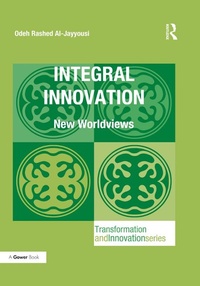
Integral Innovation
New Worldviews
Published on 21. April 2017
194 pages
978-1-317-11547-2 (ISBN)
Description

Technology plays a critical role in transforming societies and economies through enhancing efficiency, connectivity and access to resources and services. The challenge remains how to harness technologies to achieve sustainable development without causing harm to human and natural capitals.
Professor Odeh Rashed Al-Jayyousi argues that science, technology and innovation (STI) are underpinned by social choices and, hence, a transition to a sustainable green economy is defined by individuals' and institutions' decisions on how to use and apply these STI developments. It is, therefore, important to examine closely the ways in which social institutions and processes in the "integral worlds" (the different perspectives of reality) shape the priorities of technologies and the conditions under which their potential benefits can be reaped. He states that in order for technological innovation to provide a guarantee of sustainable economic development, it is necessary that a transfer of technology to developing countries becomes a basic principle of national development policies, and that they, in turn, are open to adopting an explicit long-term application of technological innovation.
Integral Innovation: New Worldviews presents a conceptual framework for the evolution of technology and innovation from a historical and cultural perspective. It provides an analysis of the role of innovation and technology in sustainable development and introduces a number of international case studies, which shed light on the social learning processes for knowledge co-creation and innovation culture. It is essential reading for those interested in innovation and technology management.
Professor Odeh Rashed Al-Jayyousi argues that science, technology and innovation (STI) are underpinned by social choices and, hence, a transition to a sustainable green economy is defined by individuals' and institutions' decisions on how to use and apply these STI developments. It is, therefore, important to examine closely the ways in which social institutions and processes in the "integral worlds" (the different perspectives of reality) shape the priorities of technologies and the conditions under which their potential benefits can be reaped. He states that in order for technological innovation to provide a guarantee of sustainable economic development, it is necessary that a transfer of technology to developing countries becomes a basic principle of national development policies, and that they, in turn, are open to adopting an explicit long-term application of technological innovation.
Integral Innovation: New Worldviews presents a conceptual framework for the evolution of technology and innovation from a historical and cultural perspective. It provides an analysis of the role of innovation and technology in sustainable development and introduces a number of international case studies, which shed light on the social learning processes for knowledge co-creation and innovation culture. It is essential reading for those interested in innovation and technology management.
More details
Series
Language
English
Place of publication
London
United Kingdom
Publishing group
Taylor & Francis Ltd
Target group
College/higher education
Product notice
Reflowable
Illustrations
4 Tables, black and white; 24 Line drawings, black and white; 24 Illustrations, black and white
File size
4,07 MB
ISBN-13
978-1-317-11547-2 (9781317115472)
Copyright in bibliographic data and cover images is held by Nielsen Book Services Limited or by the publishers or by their respective licensors: all rights reserved.
Schweitzer Classification
Other editions
Additional editions
Book
12/2019
1st Edition
Routledge
€51.98
Shipment within 15-20 days
Book
04/2017
1st Edition
Routledge
€215.41
Shipment within 10-20 days
Person
Odeh Rashed Al-Jayyousi has been Professor and Head of Technology Management and Innovation at Arabian Gulf University in Bahrain since September 2015. He was the Vice President for Science and Research at the Royal Scientific Society in Jordan during the period of 2011-2013. He was the Regional Director for the Middle East regional office of IUCN - International Union for Conservation of Nature (headquartered in Switzerland) - throughout 2004-2011. Previously, he was Dean of Scientific Research and a university professor in Water Resources and Environment during the period of 1994-2004. He was an academic director for the MSc Programme in Transformational Management in the UK. His research interests include water and environmental policy, sustainable development, innovation management, technology foresight, green technology and smart cities. He has published several books including Islam and Sustainable Development (2012) and a book on renewable energy and knowledge sharing in the Arab world (2015). He was granted an award for Scientists and Social Initiatives in 2014.
Content
Table of Contents
List of figures
List of Tables
About the author
Preface
Acknowledgements
Chapter 1. Setting the Scene: Integral Innovation
1.1. Overview
1.2. Introduction: Reflections and Context
1.3. Cultural/ Social Innovation:
1.4. Ecological Innovation
1.5. Technological Innovation:
1.6. Case study 1.1
1.7. Economic/Business Innovation:
1.8. Innovation Enablers, Drivers and Imperatives:
Chapter 2: Cultural Innovation:
2.1. Overview:
2.2. Rise and fall of nations and organizations:
2.3. Innovation in the Islamic civilization:
2.4. Cultural values and technology
2.5. Case study 2.1
Chapter 3. Eco-innovation
3.1. Introduction:
3.2. Islamic worldview on eco-innovation
3.3. Eco-cosmic innovation and design:
3.4. Theory of eco-innovation:
3.5. Blue Economy- Zero Emission Research
3.6. Case Study 3.1
3.7. Case Study 3.2
3.8. Case Study 3.3
3.9. Case Study 3.4
3.10. Case Study 3.5
Chapter 4. Technological Innovation
4.1. Introduction
4.2. Innovation and Green Technology in the developing world:
4.3. Case study 4.1
4.4. Case study 4.2
Chapter 5. Economic and Business Innovation
5.1. Introduction:
5.2. Business Model Development:
5.3. Models of Business Innovations
5.4. Case Study 5.1
5.5. CASE STUDY 5.2
5.6. Case study 5.3
5.7. CASE STUDY 5.4
Chapter 6. Individual Innovation
6.1. Individual Innovation:
6.2. Innovation processes in organizations
6.3. Case Study 6.1
Chapter 7. Innovative Communities and Cities
7.1. Overview:
7.2. Creative Cities: Theoretical framework
7.3. The Creation of Innovative Cities: The Islamic city as a model for innovation:
7.4. The Collapse of Innovative Cities:
7.5. The Re-construction of Innovative Cities: Mecca City as a model
Chapter 8. Organizational Innovation
8.1. Overview:
8.2. Introduction:
8.3. Organizational design and innovation:
8.4. . Organizational learning and innovation
8.5. Organizational Change and Innovation:
8.6. Case Study 8.1
Chapter 9. National Innovation Systems: Synthesis
9.1. Overview:
9.2. Introduction:
9.3. CASE STUDIES:
9.4. Case study 9.1
9.5. Case study 9.2
9.6. Case Study 9.3
Chapter 10. Synthesis & Epilogue
Index
List of figures
List of Tables
About the author
Preface
Acknowledgements
Chapter 1. Setting the Scene: Integral Innovation
1.1. Overview
1.2. Introduction: Reflections and Context
1.3. Cultural/ Social Innovation:
1.4. Ecological Innovation
1.5. Technological Innovation:
1.6. Case study 1.1
1.7. Economic/Business Innovation:
1.8. Innovation Enablers, Drivers and Imperatives:
Chapter 2: Cultural Innovation:
2.1. Overview:
2.2. Rise and fall of nations and organizations:
2.3. Innovation in the Islamic civilization:
2.4. Cultural values and technology
2.5. Case study 2.1
Chapter 3. Eco-innovation
3.1. Introduction:
3.2. Islamic worldview on eco-innovation
3.3. Eco-cosmic innovation and design:
3.4. Theory of eco-innovation:
3.5. Blue Economy- Zero Emission Research
3.6. Case Study 3.1
3.7. Case Study 3.2
3.8. Case Study 3.3
3.9. Case Study 3.4
3.10. Case Study 3.5
Chapter 4. Technological Innovation
4.1. Introduction
4.2. Innovation and Green Technology in the developing world:
4.3. Case study 4.1
4.4. Case study 4.2
Chapter 5. Economic and Business Innovation
5.1. Introduction:
5.2. Business Model Development:
5.3. Models of Business Innovations
5.4. Case Study 5.1
5.5. CASE STUDY 5.2
5.6. Case study 5.3
5.7. CASE STUDY 5.4
Chapter 6. Individual Innovation
6.1. Individual Innovation:
6.2. Innovation processes in organizations
6.3. Case Study 6.1
Chapter 7. Innovative Communities and Cities
7.1. Overview:
7.2. Creative Cities: Theoretical framework
7.3. The Creation of Innovative Cities: The Islamic city as a model for innovation:
7.4. The Collapse of Innovative Cities:
7.5. The Re-construction of Innovative Cities: Mecca City as a model
Chapter 8. Organizational Innovation
8.1. Overview:
8.2. Introduction:
8.3. Organizational design and innovation:
8.4. . Organizational learning and innovation
8.5. Organizational Change and Innovation:
8.6. Case Study 8.1
Chapter 9. National Innovation Systems: Synthesis
9.1. Overview:
9.2. Introduction:
9.3. CASE STUDIES:
9.4. Case study 9.1
9.5. Case study 9.2
9.6. Case Study 9.3
Chapter 10. Synthesis & Epilogue
Index
