

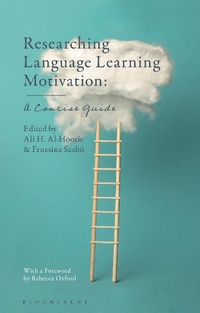
Researching Language Learning Motivation
A Concise Guide
1st Edition
Published on 27. January 2022
304 pages
978-1-350-16690-5 (ISBN)
Description

One of the most active areas in the field of second language acquisition, language learning motivation is a burgeoning area of research. Yet the plethora of new ideas and research directions can be confusing for newcomers to the discipline to navigate. Offering concise, bite-size overviews of key contemporary research concepts and directions, this book provides an invaluable guide to the contemporary state of the field.
Making the discussion of key topics accessible to a wider audience, each chapter is written by a leading expert and reflects on cutting-edge research issues. From well-established concepts, such as engagement and learning goals, to emerging ideas, including contagion and plurilingualism, this book provides easy to understand overviews and analysis of key contemporary themes. Helping readers understand a field which can appear highly technical and overwhelming, Researching Language Learning Motivation provides valuable insights, perspectives and practical applications.
Making the discussion of key topics accessible to a wider audience, each chapter is written by a leading expert and reflects on cutting-edge research issues. From well-established concepts, such as engagement and learning goals, to emerging ideas, including contagion and plurilingualism, this book provides easy to understand overviews and analysis of key contemporary themes. Helping readers understand a field which can appear highly technical and overwhelming, Researching Language Learning Motivation provides valuable insights, perspectives and practical applications.
More details
Series
Edition
1. Auflage
Language
English
Place of publication
London
United Kingdom
Publishing group
Bloomsbury Publishing PLC
Target group
College/higher education
ISBN-13
978-1-350-16690-5 (9781350166905)
Copyright in bibliographic data and cover images is held by Nielsen Book Services Limited or by the publishers or by their respective licensors: all rights reserved.
Schweitzer Classification
Other editions
Additional editions
Book
01/2022
Bloomsbury Academic
€34.00
Shipment within 15-20 days
Persons
Ali H. Al-Hoorie teaches at the Jubail English Language and Preparatory Year Institute, Royal Commission for Jubail and Yanbu, Saudi Arabia.
Fruzsina Szabó is Lecturer in the Institute of English and American Studies at the University of Debrecen, Hungary.
Fruzsina Szabó is Lecturer in the Institute of English and American Studies at the University of Debrecen, Hungary.
Content
List of Figures
List of Tables
Notes on Contributors
Foreword, Rebecca Oxford (University of Maryland, USA)
Introduction, Ali H. Al-Hoorie (Royal Commission for Jubail and Yanbu, Saudi Arabia) and Fruzsina Szabó (University of Debrecen, Hungary)
Part I: General Reflections
1. Motivating in the Language Classroom: A Discourse of 'Social Control'?, Ema Ushioda (University of Warwick, UK)
2. Motivation, Mediation, and the Individual: A Sociocultural Theory Perspective, Matthew E. Poehner (The Pennsylvania State University, USA)
3. Too Much Psychology?: The Role of the Social in Language Learning Motivation, Ofelia García (City University of New York, USA)
Part II: Engagement and Self-Regulation
4. Engagement: The Active Ingredient in Language Learning, Sarah Mercer (University of Graz, Austria)
5. Engaging the Learner: Linking Motivational Practice to Learners' Development, Phil Hiver (Florida State University, USA)
6. Learning Goals, Self-regulation and L2 Motivation, Alastair Henry (University West, Sweden)
7. Self-Determination and Engagement in Language Learning: A Dialogic Process, W. L. Quint Oga-Baldwin and Emiko Hirosawa (Waseda University, Japan)
Part III: Selves Approaches
8. Using the Self as a Basis for a Motivation System: Has It Been Worth the Trouble?, Peter D. MacIntyre (Cape Breton University, Canada)
9. The L2 Motivational Self System: Using the Selves in the Classroom, Mostafa Papi (Florida State University, USA)
10. Language Learning in Rural America: Creating an Ideal Self with Limited Resources, Amy S. Thompson (West Virginia University, USA)
11. Using Technology to Harness the Power of L2 Possible Selves, Flor-de-lis Gonzalez (University of Northampton, UK)
Part IV: Emotions and Affect
12. Emotion in Second Language Acquisition: Reflections on Its Brith and Unexpected Growth, Jean-Marc Dewaele (Birkbeck, University of London, UK)
13. Enhancing Emotional Engagement in Speaking Tasks: A Cognitive-Behavioural Theory ApproachApproach, Kate Maher and Jim King (University of Leicester, UK)
14. Emotional Contagion: Optimizing Language Teacher-Learner Synergy, Tammy Gregersen (American University of Sharjah, UAE) and Ahmed Abdulteef Al Khateeb (King Faisal University, Saudi Arabia)
15. Group-DMCs and Group-Level Emotion in the L2 Classroom, Christine Muir (University of Nottingham, UK)
Part V: Emerging Topics
16. Complexity Theory: From Metaphors to Methods, Ali H. Al-Hoorie (Royal Commission for Jubail and Yanbu, Saudi Arabia) and Phil Hiver (Florida State University, USA)
17. "OH, HI. HELLO": Critical Discourse Analysis as a Means of Understanding Desire for English, Martin Lamb (University of Leeds, UK)
18. Migration, Plurilingualism and Motivation: Extending the Research Agenda, Vera Busse (Universitat Koblenz, Germany)
19. English as a Lingua Franca and Student Motivation, Zana Ibrahim (University of Kurdistan Hewler, Iraq)
20. Using NeuroELT Maxims to Raise Student Motivation, Robert S. Murphy (University of Kitakyushu, Japan)
21. How Good Class Group Dynamics Socializes Well-Being into Cultures, Biologies, and Brains, Yoshifumi Fukada (Meisei University, Japan) Tim Murphey (Kanda University, Japan), Tetsuya Fukuda (International Christian University, Japan) and Joseph Falout (Nihon University, Japan)
Afterword, Lourdes Ortega (Georgetown University, USA)
References
Index
List of Tables
Notes on Contributors
Foreword, Rebecca Oxford (University of Maryland, USA)
Introduction, Ali H. Al-Hoorie (Royal Commission for Jubail and Yanbu, Saudi Arabia) and Fruzsina Szabó (University of Debrecen, Hungary)
Part I: General Reflections
1. Motivating in the Language Classroom: A Discourse of 'Social Control'?, Ema Ushioda (University of Warwick, UK)
2. Motivation, Mediation, and the Individual: A Sociocultural Theory Perspective, Matthew E. Poehner (The Pennsylvania State University, USA)
3. Too Much Psychology?: The Role of the Social in Language Learning Motivation, Ofelia García (City University of New York, USA)
Part II: Engagement and Self-Regulation
4. Engagement: The Active Ingredient in Language Learning, Sarah Mercer (University of Graz, Austria)
5. Engaging the Learner: Linking Motivational Practice to Learners' Development, Phil Hiver (Florida State University, USA)
6. Learning Goals, Self-regulation and L2 Motivation, Alastair Henry (University West, Sweden)
7. Self-Determination and Engagement in Language Learning: A Dialogic Process, W. L. Quint Oga-Baldwin and Emiko Hirosawa (Waseda University, Japan)
Part III: Selves Approaches
8. Using the Self as a Basis for a Motivation System: Has It Been Worth the Trouble?, Peter D. MacIntyre (Cape Breton University, Canada)
9. The L2 Motivational Self System: Using the Selves in the Classroom, Mostafa Papi (Florida State University, USA)
10. Language Learning in Rural America: Creating an Ideal Self with Limited Resources, Amy S. Thompson (West Virginia University, USA)
11. Using Technology to Harness the Power of L2 Possible Selves, Flor-de-lis Gonzalez (University of Northampton, UK)
Part IV: Emotions and Affect
12. Emotion in Second Language Acquisition: Reflections on Its Brith and Unexpected Growth, Jean-Marc Dewaele (Birkbeck, University of London, UK)
13. Enhancing Emotional Engagement in Speaking Tasks: A Cognitive-Behavioural Theory ApproachApproach, Kate Maher and Jim King (University of Leicester, UK)
14. Emotional Contagion: Optimizing Language Teacher-Learner Synergy, Tammy Gregersen (American University of Sharjah, UAE) and Ahmed Abdulteef Al Khateeb (King Faisal University, Saudi Arabia)
15. Group-DMCs and Group-Level Emotion in the L2 Classroom, Christine Muir (University of Nottingham, UK)
Part V: Emerging Topics
16. Complexity Theory: From Metaphors to Methods, Ali H. Al-Hoorie (Royal Commission for Jubail and Yanbu, Saudi Arabia) and Phil Hiver (Florida State University, USA)
17. "OH, HI. HELLO": Critical Discourse Analysis as a Means of Understanding Desire for English, Martin Lamb (University of Leeds, UK)
18. Migration, Plurilingualism and Motivation: Extending the Research Agenda, Vera Busse (Universitat Koblenz, Germany)
19. English as a Lingua Franca and Student Motivation, Zana Ibrahim (University of Kurdistan Hewler, Iraq)
20. Using NeuroELT Maxims to Raise Student Motivation, Robert S. Murphy (University of Kitakyushu, Japan)
21. How Good Class Group Dynamics Socializes Well-Being into Cultures, Biologies, and Brains, Yoshifumi Fukada (Meisei University, Japan) Tim Murphey (Kanda University, Japan), Tetsuya Fukuda (International Christian University, Japan) and Joseph Falout (Nihon University, Japan)
Afterword, Lourdes Ortega (Georgetown University, USA)
References
Index
