

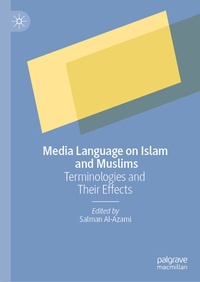
Media Language on Islam and Muslims
Description

This book brings together contributions from ten academics and a commentary from a Muslim community leader on how the British media represent some of the most important terminologies related to Islam and Muslims. It takes a nuanced approach to language within Muslims in the media research by focusing on terminologies. Each contributor in this volume focused on one terminology and its associated words to show how the representation of these terminologies have major implications on the lives of British Muslims. The book also includes some key recommendations on the usage of these terms from the Media Style Guide of the Centre for Media monitoring - a research organisation of the Muslim Council of Britain. This book's link with the Muslim community can be a step towards new approaches in this field where academics will engage with communities and practitioners to ensure better impact of their academic works. This book will be of interest to students, scholars and practitioners ina range of fields, including Journalism, Media and Communication Studies, English Language and Linguistics, Sociology, Cultural and Religious Studies.
More details
Other editions
Additional editions
Person
Salman Al-Azami is a Senior Lecturer in Language, Media and Communication at the School of Humanities, Liverpool Hope University, UK. He specialises in Multilingualism, Language in Education, Religion in the Media, and Islamophobia in the Media. His last monograph is entitled Religion in the Media: A Linguistic Analysis .
