

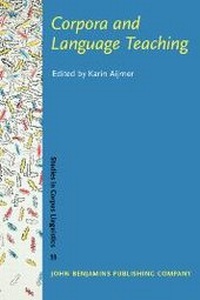
Corpora and Language Teaching
1st Edition
Published on 14. January 2009
VIII, 232 pages
978-90-272-8998-8 (ISBN)
Description

The articles in this edited volume represent a broad coverage of areas. They discuss the role and effectiveness of corpora and corpus-linguistic techniques for language teaching but also deal with broader issues such as the relationship between corpora and second language teaching and how the different perspectives of foreign language teachers and applied linguists can be reconciled. A number of concrete examples are given of how authentic corpus material can be used for different learning activities in the classroom. It is also shown how specific learner problems for example in the area of phraseology can be studied on the basis of learner corpora and textbook corpora. On the basis of learner corpora of speech and writing it is further shown that even advanced learners of English are uncertain about stylistic and text type differences.
More details
Other editions
Additional editions
Karin Aijmer
Corpora and Language Teaching
Book
01/2009
John Benjamins Publishing Co
€104.94
Shipment within 10-15 days
Person
Content
- Corpora and Language Teaching
- Editorial page
- Title page
- LCC data
- Table of contents
- List of contributors
- Introduction
- Part I. Corpora and second-language acquisition
- The contribution of learner corpora to second language acquisition and foreign language teaching
- 1. Introduction
- 2. Core components of learner corpus research
- 3. Learner corpus research and SLA
- 4. Learner corpus research and foreign language teaching
- 5. Conclusion
- References
- Some thoughts on corpora and second-language acquisition
- 1. Introduction
- 2. The explicit vs. the implicit method
- 3. Language learning as hypothesis testing
- 4. The student as researcher
- 5. Corpora and language acquisition
- 6. The many uses of corpora
- 7. Corpora in language teaching: concluding remarks
- References
- Part II. The direct corpus approach
- Who benefits from learning how to use corpora?
- 1. Introduction
- 2. Looking back: What are the stumbling-blocks, and whatare the advantages?
- 3. Introducing students to corpus analysis: Teacher-prepared exercises
- 4. Using corpora to answer student questions
- 5. Corpus exercises in the language lab
- 6. Students' evaluation of corpus exercises
- 7. Who benefits from learning how to use corpora?
- References
- Oslo Interactive English
- 1. Introduction
- 2. Aims and background
- 3. The structure of OIE
- 4. The corpus
- 5. The users
- 6. Concluding remarks
- References
- Corpus research and practice
- Part III. The indirect corpus approach
- Themes in Swedish advanced learners' writing in English
- 1. Introduction
- 2. Themes and thematic variation
- 3. Results
- 4. Features of NNS' argumentative writing
- 5. Discussion
- 6. Conclusion
- References
- Thematic choice and expressions of stance in English argumentative texts by Norwegian learners
- 1. Introduction and background
- 2. Material and method
- 3. Previous research on "Scandinavian English" word order
- 4. Some features of thematic structure in NICLE material
- 5. The use of extraposition
- 6. Self-reference and subjective stance
- 7. Other markers of stance
- 8. Other voices
- 9. Concluding remarks
- References
- The usefulness of corpus-based descriptions of English for learners
- 1. Introduction
- 2. Phraseology and relative frequency
- 3. Wordform, pattern and modality
- 4. Semantic sequences and the learner
- 5. Discussion and conclusion
- References
- Part IV. New types of corpora
- Income/interest/net
- 1. Introduction
- 2. The notion of aboutness
- 3. Texts from specialised corpora
- 4. From n-gram to skipgram to concgram
- 5. Methodology for using concgrams to determine aboutness
- 6. Findings and discussion
- 6. Conclusions
- Acknowledgements
- References
- New types of corpora for new educational challenges
- 1. ELT material and the corpus tradition
- 2. A survey of textbook studies
- 3. A new type of pedagogically annotated corpus for textbook research
- 4. Meeting new pedagogical challenges
- 5. Conclusion
- References
- The grammar of conversation in advanced spoken learner English
- 1. Introduction: Spoken grammar in corpus linguisticsand language pedagogy
- 2. The grammar of conversation in advanced German learners' speech:Three case studies and their language-pedagogical implications
- 3. Concluding remarks
- References
- Index
