

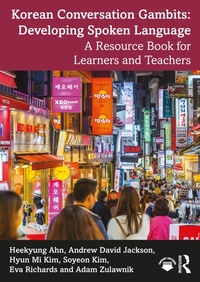
Korean Conversation Gambits: Developing Spoken Language
A Resource Book for Learners and Teachers
1st Edition
Published on 18. December 2024
236 pages
978-1-040-26011-1 (ISBN)
Description

Korean Conversation Gambits: Developing Spoken Language provides specific linguistic and communicative strategies that help Korean language learners engage in daily conversations as well as discussions and negotiations in work and academic contexts.
The book presents, and provides practice in, spoken Korean gambits that will help speakers organise their conversations and frame the type of extended discourse that is common in spoken Korean. The book introduces students to strategies for getting thinking time, dealing with breakdowns in comprehension, asking for and providing clarification, exemplifying, floor-holding, interrupting, checking understanding, disagreeing, reformulating and organising longer stretches of discourse; for example, when giving presentations, telling stories or providing self-introductions. Korean Conversation Gambits: Developing Spoken Language comes complete with classroom-ready practice materials.
This textbook can be used as a resource by both teachers and Korean learners from introductory to intermediate and proficient levels.
The book presents, and provides practice in, spoken Korean gambits that will help speakers organise their conversations and frame the type of extended discourse that is common in spoken Korean. The book introduces students to strategies for getting thinking time, dealing with breakdowns in comprehension, asking for and providing clarification, exemplifying, floor-holding, interrupting, checking understanding, disagreeing, reformulating and organising longer stretches of discourse; for example, when giving presentations, telling stories or providing self-introductions. Korean Conversation Gambits: Developing Spoken Language comes complete with classroom-ready practice materials.
This textbook can be used as a resource by both teachers and Korean learners from introductory to intermediate and proficient levels.
More details
Edition
1. Auflage
Language
English
Place of publication
London
United Kingdom
Publishing group
Taylor & Francis Ltd
Target group
Adult education
Professional and scholarly
Illustrations
41 Tables, color; 1 Line drawings, color; 14 Halftones, color; 15 Illustrations, color
ISBN-13
978-1-040-26011-1 (9781040260111)
Copyright in bibliographic data and cover images is held by Nielsen Book Services Limited or by the publishers or by their respective licensors: all rights reserved.
Schweitzer Classification
Other editions
Additional editions
Heekyung Ahn | Andrew David Jackson | Hyun Mi Kim
Korean Conversation Gambits: Developing Spoken Language
A Resource Book for Learners and Teachers
Book
12/2024
1st Edition
Routledge
€212.90
Shipment within 10-20 days

Heekyung Ahn | Andrew David Jackson | Hyun Mi Kim
Korean Conversation Gambits: Developing Spoken Language
A Resource Book for Learners and Teachers
Book
12/2024
1st Edition
Routledge
€47.50
Shipment within 10-20 days
Persons
Heekyung Ahn, School Education Services Manager, Department of Education, Victoria State Government.
Andrew David Jackson, Associate Professor and Director of Monash University Korean Studies Research Hub (MUKSRH) at Monash University, Melbourne.
Hyun Mi Kim, Teaching Associate at Monash University, Melbourne.
Soyeon Kim, Research Fellow at Monash University, Melbourne.
Eva Richards, PhD student at Monash University, Melbourne.
Adam Zulawnik, Academic specialising in Korean, Japanese and translation studies at the Asia Institute, University of Melbourne, Melbourne.
Andrew David Jackson, Associate Professor and Director of Monash University Korean Studies Research Hub (MUKSRH) at Monash University, Melbourne.
Hyun Mi Kim, Teaching Associate at Monash University, Melbourne.
Soyeon Kim, Research Fellow at Monash University, Melbourne.
Eva Richards, PhD student at Monash University, Melbourne.
Adam Zulawnik, Academic specialising in Korean, Japanese and translation studies at the Asia Institute, University of Melbourne, Melbourne.
Content
About the contributors
Acknowledgements
Introduction: Korean Conversation Gambits A Resource Book for Teachers and Learners
Part A: Gambits for Everyday Conversations
Topic/situation Level Gambit type Function
Chapter 1. Talking about Tastes (Music and Movies) Intro. Responding Gambits Getting Thinking Time
Chapter 2. Talking about Plans and Everyday Activities Intro. Linking/Expanding Gambits Adding Information
Chapter 3. Discussing Likes and Dislikes (Food and University Subjects) Intro. Expanding Gambits Offering Explanations and Providing Reasons
Chapter 4. Hobbies, Pastimes and Plans Intro. Requesting Gambits Asking for Clarification, Dealing with Breakdowns in Understanding
Chapter 5. Talking about Plans, Wishes, Desires Intro. Responding Gambits Asking for more Information
Chapter 6. Greetings: Meeting and Parting Intro. Greeting Adjacency Pairs
Chapter 7. Talking about Travel, Shared Interests (Movies, Plans, Holidays)
Intro. Responding Gambits Responding Gambits: Showing Interest and Finding Commonality
Chapter 8. Discussing Food, Drink Customs and National Culture. Interm. Requesting and Expanding Gambits Asking for Clarification and Providing Explanations
Chapter 9. Discussing Tastes and Attraction Interm. Expanding and Sequencing Gambits Illustrating your Point, Providing more Detail; Structuring Responses: Ranking
Chapter 10. Giving Bad, Surprising or Shocking News Prof. Opening Gambits (When giving Difficult News)
Chapter 11. Reacting to News Prof. Responding Gambits
Chapter 12. Talking about appearances, ability Prof. Responding Gambits Receiving Compliments
Chapter 13. Talking about News Prof. Responding/Linking Gambits Shifting the Subject of Conversation to Similar or Related Topics
Chapter 14. Story-telling, Jokes, Anecdotes Prof. Handling Longer Stretches of Spoken Discourse Opening Stories, Attracting Attention, Scene-setting, Recounting what was Said, Returning to the Story after Digressions, Wrapping up Stories
Part B: Gambits for Everyday situations
Topic/situation Level Gambit type Function
Chapter 15. Street Directions and Instructions
Intro. Checking Gambits Checking Understanding
Chapter 16. Talking about Transportation Intro. Sequencing Gambits
Chapter 17. Service Situations Intro. Service Situation Adjacency Pairs Requesting and Thanking for Service, Asking for Information
Chapter 18. Speaking on the Phone Interm. Telephone Conversation Adjacency Pairs Opening, Ending Calls, Dealing with Technical Difficulties
Chapter 19. Describing Recipes or Other Processes Interm. Sequencing and Linking Instructions
Part C: Gambits for Work/school life
Topic/situation Level Gambit type Function
Chapter 20. Meeting People; Talking about Personal Information Intro. Managing longer Discourses:
Self-introductions (for Beginners)
Chapter 21. Talking about Health Interm. Mini-presentations during Meetings in Business and Classroom Discourse Summarising, Paraphrasing
Chapter 22. Presenting Arguments, Proposals, Pitches Prof. Organizing longer stretches of Discourses:
Presentations
Presentation Introductions
* Greeting
* Getting Attention
* Introducing Topics
* Signposting
* Starting
Presentation Main Sections
* Defining
* Exemplifying
* Comparing and Contrasting
* Referring to Tables
* Referring Back
* Shifting Topics
* Emphasizing
* Explaining
Presentation Conclusions: Q and A
* Summarising
* Thanking
* Inviting Questions
* Responding to Questions
* Deflecting
* Ending
Chapter 23. Discussing/Arguing (1) Prof. Discussion Gambits Providing Opinions
Chapter 24. Discussing/Arguing (2) Prof. Discussion Gambits Disagreeing
Chapter 25. Discussing/Arguing (3) Prof. Discussion Gambits Agreeing
Chapter 26. Discussing/Arguing (4) Prof. Discussion Gambits Requesting and Providing Clarification
Chapter 27. Discussing/Arguing (5) Prof. Discussion Gambits Checking Understanding
Chapter 28. Discussing/Arguing (6) Prof. Discussion Gambits Asking for Clarification, reformulating, Confirming/Correcting
Chapter 29. Discussing/Arguing (7) Prof. Discussion Gambits Asking for and Providing Exemplification
Chapter 30. Discussing/Arguing (8) Prof. Discussion Gambits Interrupting and Taking Turns
Audio Transcripts
Answer Key to Exercises
References
Index
List of Gambits by Type (English)
List of Principal Gambits (alphabetical) in English
List of Principal Gambits (alphabetical) in Korean
Acknowledgements
Introduction: Korean Conversation Gambits A Resource Book for Teachers and Learners
Part A: Gambits for Everyday Conversations
Topic/situation Level Gambit type Function
Chapter 1. Talking about Tastes (Music and Movies) Intro. Responding Gambits Getting Thinking Time
Chapter 2. Talking about Plans and Everyday Activities Intro. Linking/Expanding Gambits Adding Information
Chapter 3. Discussing Likes and Dislikes (Food and University Subjects) Intro. Expanding Gambits Offering Explanations and Providing Reasons
Chapter 4. Hobbies, Pastimes and Plans Intro. Requesting Gambits Asking for Clarification, Dealing with Breakdowns in Understanding
Chapter 5. Talking about Plans, Wishes, Desires Intro. Responding Gambits Asking for more Information
Chapter 6. Greetings: Meeting and Parting Intro. Greeting Adjacency Pairs
Chapter 7. Talking about Travel, Shared Interests (Movies, Plans, Holidays)
Intro. Responding Gambits Responding Gambits: Showing Interest and Finding Commonality
Chapter 8. Discussing Food, Drink Customs and National Culture. Interm. Requesting and Expanding Gambits Asking for Clarification and Providing Explanations
Chapter 9. Discussing Tastes and Attraction Interm. Expanding and Sequencing Gambits Illustrating your Point, Providing more Detail; Structuring Responses: Ranking
Chapter 10. Giving Bad, Surprising or Shocking News Prof. Opening Gambits (When giving Difficult News)
Chapter 11. Reacting to News Prof. Responding Gambits
Chapter 12. Talking about appearances, ability Prof. Responding Gambits Receiving Compliments
Chapter 13. Talking about News Prof. Responding/Linking Gambits Shifting the Subject of Conversation to Similar or Related Topics
Chapter 14. Story-telling, Jokes, Anecdotes Prof. Handling Longer Stretches of Spoken Discourse Opening Stories, Attracting Attention, Scene-setting, Recounting what was Said, Returning to the Story after Digressions, Wrapping up Stories
Part B: Gambits for Everyday situations
Topic/situation Level Gambit type Function
Chapter 15. Street Directions and Instructions
Intro. Checking Gambits Checking Understanding
Chapter 16. Talking about Transportation Intro. Sequencing Gambits
Chapter 17. Service Situations Intro. Service Situation Adjacency Pairs Requesting and Thanking for Service, Asking for Information
Chapter 18. Speaking on the Phone Interm. Telephone Conversation Adjacency Pairs Opening, Ending Calls, Dealing with Technical Difficulties
Chapter 19. Describing Recipes or Other Processes Interm. Sequencing and Linking Instructions
Part C: Gambits for Work/school life
Topic/situation Level Gambit type Function
Chapter 20. Meeting People; Talking about Personal Information Intro. Managing longer Discourses:
Self-introductions (for Beginners)
Chapter 21. Talking about Health Interm. Mini-presentations during Meetings in Business and Classroom Discourse Summarising, Paraphrasing
Chapter 22. Presenting Arguments, Proposals, Pitches Prof. Organizing longer stretches of Discourses:
Presentations
Presentation Introductions
* Greeting
* Getting Attention
* Introducing Topics
* Signposting
* Starting
Presentation Main Sections
* Defining
* Exemplifying
* Comparing and Contrasting
* Referring to Tables
* Referring Back
* Shifting Topics
* Emphasizing
* Explaining
Presentation Conclusions: Q and A
* Summarising
* Thanking
* Inviting Questions
* Responding to Questions
* Deflecting
* Ending
Chapter 23. Discussing/Arguing (1) Prof. Discussion Gambits Providing Opinions
Chapter 24. Discussing/Arguing (2) Prof. Discussion Gambits Disagreeing
Chapter 25. Discussing/Arguing (3) Prof. Discussion Gambits Agreeing
Chapter 26. Discussing/Arguing (4) Prof. Discussion Gambits Requesting and Providing Clarification
Chapter 27. Discussing/Arguing (5) Prof. Discussion Gambits Checking Understanding
Chapter 28. Discussing/Arguing (6) Prof. Discussion Gambits Asking for Clarification, reformulating, Confirming/Correcting
Chapter 29. Discussing/Arguing (7) Prof. Discussion Gambits Asking for and Providing Exemplification
Chapter 30. Discussing/Arguing (8) Prof. Discussion Gambits Interrupting and Taking Turns
Audio Transcripts
Answer Key to Exercises
References
Index
List of Gambits by Type (English)
List of Principal Gambits (alphabetical) in English
List of Principal Gambits (alphabetical) in Korean
