

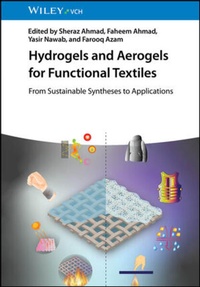
Hydrogels and Aerogels for Functional Textiles
From Sustainable Syntheses to Applications
1st Edition
Published on 13. March 2026
256 pages
978-3-527-85140-9 (ISBN)
Description

provides a comprehensive overview of integrating hydrogel and aerogel materials into textiles and valuable knowledge to explore their potential applications in various fields.
More details
Other editions
Additional editions
Sheraz Ahmad | Faheem Ahmad | Yasir Nawab
Hydrogels and Aerogels for Functional Textiles
From Sustainable Syntheses to Applications
Book
05/2026
1st Edition
Wiley-VCH
€139.00
Available immediately
Persons
Dr. Sheraz Ahmad currently is an Associate Professor at National Textile University, Pakistan. He did Ph.D. in Textile engineering with a focus on textile fibers from Université de Haute Alsace Mulhouse, France. He has authored over 73 peer-reviewed journal articles, 5 books, and 23 conference communications. He led development of several innovative technologies/ industrial solutions which are successfully licensed/transferred to industry for commercialization. These technologies include the development of a novel mechano-chemical process for extraction of banana fibers from agro-waste and their use in high-end textiles, licensed to Interloop Ltd. In addition to this, his research team has developed eco-friendly technology to extract alternative natural fibers such as Sisal etc., and convert them into clothing applications.
Dr. Faheem Ahmad has completed his PhD in Materials Science and Engineering from Koç University Istanbul, Turkey. He is currently working as Assistant Professor at the National Textile University Faisalabad, Pakistan. In addition to his expertise in functional textiles, he has actively worked on alternative natural fibers, exploring their processing techniques and conducting comprehensive Life Cycle Assessments (LCAs). He has authored 40 research publications.
Prof. Yasir Nawab is a renowned scholar and researcher with a remarkable career that has had a significant impact on textile science and engineering, particularly in the textile industry.
He is currently an Adjunct Professor at North Carolina State University in Raleigh, North Carolina, and a Tenured Professor at National Textile University in Faisalabad, Pakistan. He has authored more than 170 journal publications, edited more than 10 books.
Dr. Farooq Azam has completed his PhD in Textile Engineering from the National Textile University, Faisalabad, Pakistan. He currently works as a Lecturer at the National Textile University, Faisalabad, Pakistan. In addition to his expertise in functional textiles, he has actively researched hydrogel and aerogel-based polymeric fibers and textiles using natural materials. He has authored 25 peer reviewed international journal research publications.
Dr. Faheem Ahmad has completed his PhD in Materials Science and Engineering from Koç University Istanbul, Turkey. He is currently working as Assistant Professor at the National Textile University Faisalabad, Pakistan. In addition to his expertise in functional textiles, he has actively worked on alternative natural fibers, exploring their processing techniques and conducting comprehensive Life Cycle Assessments (LCAs). He has authored 40 research publications.
Prof. Yasir Nawab is a renowned scholar and researcher with a remarkable career that has had a significant impact on textile science and engineering, particularly in the textile industry.
He is currently an Adjunct Professor at North Carolina State University in Raleigh, North Carolina, and a Tenured Professor at National Textile University in Faisalabad, Pakistan. He has authored more than 170 journal publications, edited more than 10 books.
Dr. Farooq Azam has completed his PhD in Textile Engineering from the National Textile University, Faisalabad, Pakistan. He currently works as a Lecturer at the National Textile University, Faisalabad, Pakistan. In addition to his expertise in functional textiles, he has actively researched hydrogel and aerogel-based polymeric fibers and textiles using natural materials. He has authored 25 peer reviewed international journal research publications.
Content
Chapter 1: Introduction
1.1 Hydrogels and Aerogels
1.2 Unique Properties Relevant to Textiles
1.3 Why Hydrogels and Aerogels in Textiles?
1.4 Scope and Structure of the Book
1.5 Target Audience and Applications
1.6 Challenges and Opportunities
Chapter 2: Science of Hydrogels and Aerogels
2.1 Introduction
2.2 Hydrogels: Relationship between Function and Structure
2.3 Science of Preparing Hydrogels
2.4 Aerogels
2.5 Science of Preparing Aerogels
2.6 Textile Innovations
2.7 Conclusion
Chapter 3: Fiber-Based Hydrogels and Aerogels
3.1 Introduction
3.2 Natural-Fiber Hydrogels and Aerogels
3.3 Synthetic-Fiber Hydrogels and Aerogels
3.4 Blended Hydrogels and Aerogels in Textiles
3.5 Conclusion
Chapter 4: Synthesis Techniques for Hydrogels and Aerogels in Textiles
4.1 Introduction
4.2 Synthesis Techniques from Natural Fibers
4.4 Blended Fiber Hydrogels and Aerogels
4.5 Conclusion
Chapter 5: Functional Properties of Hydrogels and Aerogels in Textiles
5.1 Introduction
5.2 Moisture Management
5.3 Thermal Insulation Properties
5.4 Antimicrobial and Antibacterial Properties
5.5 Flame Retardancy
5.6 Biodegradability
5.7 Conclusion
Chapter 6: Applications in Sustainable Fashion
6.1 Introduction
6.2 Eco-Friendly Clothing
6.3 Biodegradable Fashion Accessories
6.4 Sustainable Sportswear
6.5 Hydrogel and Aerogel-Infused Footwear
6.6 Sustainable Manufacturing Breakthrough
6.7 Future Perspectives and Challenges
6.8 Conclusion
Chapter 7: Plant Fiber-Based Hydrogels and Aerogels for Biomedical Applications
7.1 Introduction
7.2 Wound Dressings
7.3 Drug Delivery Systems
7.4 Smart Bandages
7.5 Wearable Electronics and Health Monitors
7.6 Sensor Applications
7.7 Future Perspectives
Chapter 8: Animal Fiber-Based Hydrogels and Aerogels for Biomedical Applications
8.1 Introduction
8.2 Preparation and Fabrication Methods
8.3 Properties and Characterization
8.4 Biomedical Applications
8.5 Conclusion
8.6 Future Trends
Chapter 9: Advancements in Hydrogel and Aerogel Textile Technology
9.1 Introduction
9.2 Fundamentals of Hydrogel and Aerogel Materials
9.4 Conductive Hydrogels and Aerogels
9.5 Responsive and Adaptive Textile Systems
9.6 Sustainability and Biocompatibility
9.7 Challenges
9.8 Conclusions
Chapter 10: Applications of Aerogels in Protective Clothing
10.1 Introduction
10.2 Mechanism of Thermal Insulation
10.3 Types of Aerogels
10.4 Impact Resistance and Chemical Protection
10.5 Aerogels as Lightweight Protective Gear
10.6 Hybrid and Smart Aerogel Applications in Protective Textiles
10.7 Manufacturing Techniques and Textile Integration
10.8 Conclusion
Chapter 11: Challenges and Solutions in the Use of Hydrogels and Aerogels for Textiles
11.1 Introduction
11.2 Environmental Impact Assessment
11.3 Recycling and Upcycling Strategies
11.4 Biocompatibility Concerns
11.5 Consumer Acceptance and Education
11.6 Economic Feasibility and Lifecycle Analysis
11.7 Conclusion
Chapter 12: Future Horizons
12.1 Sustainable Hydrogel and Aerogel Textile Innovations
12.2 Collaborations and Interdisciplinary Research
12.3 Potential Market Trends
12.4 Regulations and Safety Standards
12.5 Conclusion
Chapter 13: Conclusion
1.1 Hydrogels and Aerogels
1.2 Unique Properties Relevant to Textiles
1.3 Why Hydrogels and Aerogels in Textiles?
1.4 Scope and Structure of the Book
1.5 Target Audience and Applications
1.6 Challenges and Opportunities
Chapter 2: Science of Hydrogels and Aerogels
2.1 Introduction
2.2 Hydrogels: Relationship between Function and Structure
2.3 Science of Preparing Hydrogels
2.4 Aerogels
2.5 Science of Preparing Aerogels
2.6 Textile Innovations
2.7 Conclusion
Chapter 3: Fiber-Based Hydrogels and Aerogels
3.1 Introduction
3.2 Natural-Fiber Hydrogels and Aerogels
3.3 Synthetic-Fiber Hydrogels and Aerogels
3.4 Blended Hydrogels and Aerogels in Textiles
3.5 Conclusion
Chapter 4: Synthesis Techniques for Hydrogels and Aerogels in Textiles
4.1 Introduction
4.2 Synthesis Techniques from Natural Fibers
4.4 Blended Fiber Hydrogels and Aerogels
4.5 Conclusion
Chapter 5: Functional Properties of Hydrogels and Aerogels in Textiles
5.1 Introduction
5.2 Moisture Management
5.3 Thermal Insulation Properties
5.4 Antimicrobial and Antibacterial Properties
5.5 Flame Retardancy
5.6 Biodegradability
5.7 Conclusion
Chapter 6: Applications in Sustainable Fashion
6.1 Introduction
6.2 Eco-Friendly Clothing
6.3 Biodegradable Fashion Accessories
6.4 Sustainable Sportswear
6.5 Hydrogel and Aerogel-Infused Footwear
6.6 Sustainable Manufacturing Breakthrough
6.7 Future Perspectives and Challenges
6.8 Conclusion
Chapter 7: Plant Fiber-Based Hydrogels and Aerogels for Biomedical Applications
7.1 Introduction
7.2 Wound Dressings
7.3 Drug Delivery Systems
7.4 Smart Bandages
7.5 Wearable Electronics and Health Monitors
7.6 Sensor Applications
7.7 Future Perspectives
Chapter 8: Animal Fiber-Based Hydrogels and Aerogels for Biomedical Applications
8.1 Introduction
8.2 Preparation and Fabrication Methods
8.3 Properties and Characterization
8.4 Biomedical Applications
8.5 Conclusion
8.6 Future Trends
Chapter 9: Advancements in Hydrogel and Aerogel Textile Technology
9.1 Introduction
9.2 Fundamentals of Hydrogel and Aerogel Materials
9.4 Conductive Hydrogels and Aerogels
9.5 Responsive and Adaptive Textile Systems
9.6 Sustainability and Biocompatibility
9.7 Challenges
9.8 Conclusions
Chapter 10: Applications of Aerogels in Protective Clothing
10.1 Introduction
10.2 Mechanism of Thermal Insulation
10.3 Types of Aerogels
10.4 Impact Resistance and Chemical Protection
10.5 Aerogels as Lightweight Protective Gear
10.6 Hybrid and Smart Aerogel Applications in Protective Textiles
10.7 Manufacturing Techniques and Textile Integration
10.8 Conclusion
Chapter 11: Challenges and Solutions in the Use of Hydrogels and Aerogels for Textiles
11.1 Introduction
11.2 Environmental Impact Assessment
11.3 Recycling and Upcycling Strategies
11.4 Biocompatibility Concerns
11.5 Consumer Acceptance and Education
11.6 Economic Feasibility and Lifecycle Analysis
11.7 Conclusion
Chapter 12: Future Horizons
12.1 Sustainable Hydrogel and Aerogel Textile Innovations
12.2 Collaborations and Interdisciplinary Research
12.3 Potential Market Trends
12.4 Regulations and Safety Standards
12.5 Conclusion
Chapter 13: Conclusion
