

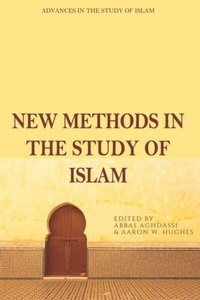
New Methods in the Study of Islam
1st Edition
Published on 31. August 2022
352 pages
978-1-3995-0351-8 (ISBN)
Description

Offers an innovative study of traditional and new methodologies used to study Islam
More details
Other editions
Additional editions
Abbas Aghdassi | Aaron W. Hughes
New Methods in the Study of Islam
Book
08/2022
Edinburgh University Press
€131.50
Shipment within 15-20 days
Content
- Intro
- List of Figures
- Series Editors' Foreword
- Acknowledgements
- Notes on Contributors
- Note on Transliteration
- 1 Introduction: Why New Methods in the Study of Islam?
- Part I Methods: Old and New
- 2 New Methods, Old Methods in the Study of Islam: On the Importance of Translation
- 3 The Reception of al-Andalus, 1821-2021: Two Hundred Years of Study and Debate
- Part II Textual Studies
- 4 Subversive Philology? Prosopography as a Relational and Corpus-Based Approach to Early Islamic History
- 5 Juxtaposition, Tension, Play: The Development of Islamic Law and Legal Theory
- 6 New Theoretical Approaches to the Qur?an and Qur?anic Studies: An Analysis of the Qur?anic (Disabled) Body in Light of Conceptual Metaphor and Conceptual Blending Theory
- Part III Islam and/as Critique
- 7 On the Relationship between Culture/Religion and Politics: A Critique of the Culturalist Approach to Islam
- Part IV New Comparisons
- 8 Can Comparative Theology Help Muslims to a Better Understanding of Religious Diversity?
- Part V Local Islams
- 9 Eastern or Western Paradigm: The Struggle for Methodological Dominance in the Study of Islam in Universities in Northern Nigeria
- 10 Narratives from the Peripheries: An Indian Ocean Perspective for the Study of Islam
- 11 Including Localised Islamic Concepts in the Study of Islam
- 12 Bodies, Things, Doings: A Practice Theory Approach to the Study of Islam
- Index
