

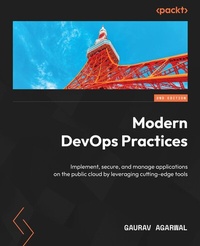
Modern DevOps Practices
Implement, secure, and manage applications on the public cloud by leveraging cutting-edge tools
2nd Edition
Published on 23. September 2024
568 pages
978-1-80512-835-9 (ISBN)
Description

Enhance DevOps workflows by integrating the functionalities of Git, Docker, Kubernetes, Argo CD, Ansible, Terraform, Istio, and more with the help of practical examples and expert tips
Key Features
Explore containers as a service (CaaS) and infrastructure automation in the public cloud
Secure and ship software continuously to production with DevOps, GitOps, SecOps, and automation
Operate distributed and scalable microservices apps in the cloud with a modern service mesh
Purchase of the print or Kindle book includes a free PDF eBook
Book DescriptionDevOps and the cloud have changed how we look at software development and operations like never before, leading to the rapid growth of various DevOps tools, techniques, and practices. This updated edition helps you pick up the right tools by providing you with everything you need to get started with your DevOps journey. The book begins by introducing you to modern cloud-native architecture, and then teaches you about the architectural concepts needed to implement the modern way of application development. The next set of chapters helps you get familiarized with Git, Docker, Kubernetes, Ansible, Terraform, Packer, and other similar tools to enable you to build a base. As you advance, you'll explore the core elements of cloud integration-AWS ECS, GKE, and other CaaS services. The chapters also discuss GitOps, continuous integration, and continuous delivery-GitHub actions, Jenkins, and Argo CD-to help you understand the essence of modern app delivery. Later, you'll operate your container app in production using a service mesh and apply AI in DevOps. Throughout the book, you'll discover best practices for automating and managing your development lifecycle, infrastructure, containers, and more. By the end of this DevOps book, you'll be well-equipped to develop and operate applications using modern tools and techniques.What you will learn
Explore modern DevOps practices with Git and GitOps
Master container fundamentals with Docker and Kubernetes
Become well versed in AWS ECS, Google Cloud Run, and Knative
Discover how to efficiently build and manage secure Docker images
Understand continuous integration with Jenkins on Kubernetes and GitHub Actions
Get to grips with using Argo CD for continuous deployment and delivery
Manage immutable infrastructure on the cloud with Packer, Terraform, and Ansible
Operate container applications in production using Istio and learn about AI in DevOps
Who this book is forIf you are a software engineer, system administrator, or operations engineer looking to step into the world of DevOps within public cloud platforms, this book is for you. Existing DevOps engineers will also find this book helpful as it covers best practices, tips, and tricks for implementing DevOps with a cloud-native mindset. Although no containerization experience is necessary, a basic understanding of the software development life cycle and delivery will help you get the most out of this book.
Key Features
Explore containers as a service (CaaS) and infrastructure automation in the public cloud
Secure and ship software continuously to production with DevOps, GitOps, SecOps, and automation
Operate distributed and scalable microservices apps in the cloud with a modern service mesh
Purchase of the print or Kindle book includes a free PDF eBook
Book DescriptionDevOps and the cloud have changed how we look at software development and operations like never before, leading to the rapid growth of various DevOps tools, techniques, and practices. This updated edition helps you pick up the right tools by providing you with everything you need to get started with your DevOps journey. The book begins by introducing you to modern cloud-native architecture, and then teaches you about the architectural concepts needed to implement the modern way of application development. The next set of chapters helps you get familiarized with Git, Docker, Kubernetes, Ansible, Terraform, Packer, and other similar tools to enable you to build a base. As you advance, you'll explore the core elements of cloud integration-AWS ECS, GKE, and other CaaS services. The chapters also discuss GitOps, continuous integration, and continuous delivery-GitHub actions, Jenkins, and Argo CD-to help you understand the essence of modern app delivery. Later, you'll operate your container app in production using a service mesh and apply AI in DevOps. Throughout the book, you'll discover best practices for automating and managing your development lifecycle, infrastructure, containers, and more. By the end of this DevOps book, you'll be well-equipped to develop and operate applications using modern tools and techniques.What you will learn
Explore modern DevOps practices with Git and GitOps
Master container fundamentals with Docker and Kubernetes
Become well versed in AWS ECS, Google Cloud Run, and Knative
Discover how to efficiently build and manage secure Docker images
Understand continuous integration with Jenkins on Kubernetes and GitHub Actions
Get to grips with using Argo CD for continuous deployment and delivery
Manage immutable infrastructure on the cloud with Packer, Terraform, and Ansible
Operate container applications in production using Istio and learn about AI in DevOps
Who this book is forIf you are a software engineer, system administrator, or operations engineer looking to step into the world of DevOps within public cloud platforms, this book is for you. Existing DevOps engineers will also find this book helpful as it covers best practices, tips, and tricks for implementing DevOps with a cloud-native mindset. Although no containerization experience is necessary, a basic understanding of the software development life cycle and delivery will help you get the most out of this book.
More details
Edition
2nd Revised edition
Language
English
Place of publication
Birmingham
United Kingdom
Target group
Professional and scholarly
US School Grade: College Graduate Student
Edition type
Revised edition
File size
20,37 MB
ISBN-13
978-1-80512-835-9 (9781805128359)
Copyright in bibliographic data and cover images is held by Nielsen Book Services Limited or by the publishers or by their respective licensors: all rights reserved.
Schweitzer Classification
Other editions
Additional editions
Gaurav Agarwal
Modern DevOps Practices
Implement, secure, and manage applications on the public cloud by leveraging cutting-edge tools
Book
01/2024
2nd Edition
Packt Publishing
€59.10
Shipment within 3-4 weeks
Previous edition
Gaurav Agarwal
Modern DevOps Practices
Implement and secure DevOps in the public cloud with cutting-edge tools, tips, tricks, and techniques
E-Book
06/2024
1st Edition
Packt Publishing Limited
from
€39.59
Available for download
Person
Agarwal Gaurav :
Gaurav Agarwal is a Senior Cloud Engineer at ThoughtSpot with over a decade of experience as a seasoned Cloud and DevOps Engineer. Previously, Gaurav served as a Cloud Solutions Architect at Capgemini and Software Developer at TCS. With a distinguished list of certifications, including HashiCorp Certified Terraform Associate, Google Cloud Certified Professional Cloud Architect, Certified Kubernetes Administrator, and Security Specialist, he possesses an impressive technical profile. Gaurav's extensive background encompasses roles where he played pivotal roles in infrastructure setup, cloud management, and the implementation of CI/CD pipelines. His technical prowess extends to numerous technical blog posts and a published book, underscoring his commitment to advancing the field.
Gaurav Agarwal is a Senior Cloud Engineer at ThoughtSpot with over a decade of experience as a seasoned Cloud and DevOps Engineer. Previously, Gaurav served as a Cloud Solutions Architect at Capgemini and Software Developer at TCS. With a distinguished list of certifications, including HashiCorp Certified Terraform Associate, Google Cloud Certified Professional Cloud Architect, Certified Kubernetes Administrator, and Security Specialist, he possesses an impressive technical profile. Gaurav's extensive background encompasses roles where he played pivotal roles in infrastructure setup, cloud management, and the implementation of CI/CD pipelines. His technical prowess extends to numerous technical blog posts and a published book, underscoring his commitment to advancing the field.
Content
Table of Contents
The Modern way of DevOps
Source Code Management with Git and GitOps
Containerization with Docker
Creating and Managing Container Images
Container Orchestration with Kubernetes
Managing Advanced Kubernetes Resources
Containers as a Service (CaaS) and Serverless Computing for Containers
Infrastructure as Code (IaC) with Terraform
Configuration Management with Ansible
Immutable Infrastructure with Packer
Continuous Integration with GitHub Actions and Jenkins
Continuous Deployment/ Delivery with Argo CD
Securing and Testing Your CI/CD Pipeline
Understanding Key Performance Indicators for Your Service in Production
Implementing Traffic Management, Security, and Observability with Istio
The Modern way of DevOps
Source Code Management with Git and GitOps
Containerization with Docker
Creating and Managing Container Images
Container Orchestration with Kubernetes
Managing Advanced Kubernetes Resources
Containers as a Service (CaaS) and Serverless Computing for Containers
Infrastructure as Code (IaC) with Terraform
Configuration Management with Ansible
Immutable Infrastructure with Packer
Continuous Integration with GitHub Actions and Jenkins
Continuous Deployment/ Delivery with Argo CD
Securing and Testing Your CI/CD Pipeline
Understanding Key Performance Indicators for Your Service in Production
Implementing Traffic Management, Security, and Observability with Istio
