

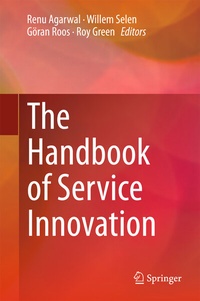
The Handbook of Service Innovation
Description

Bringing together some of the world's leading thinkers, academics and professionals to provide practitioners, students and academicians with comprehensive insights into implementing effective service innovation. This book presents service innovation holistically and systemically across various service areas, including health, education, tourism, hospitality, telecommunications, and retail. It addresses contemporary issues through conceptual and applied contributions across industry, academia, and government, providing insights for improved practice and policy making.
Featuring cutting-edge research contributions, practical examples, implementations and a select number of case studies across several growth service industries, this book also includes examples of failed service innovation attempts in order to demonstrate a balanced view of the topic and to make clear the pitfalls to be avoided.
Culminating in a suggested step-by-step guide to enable service organization's managers to understand and implement the concepts of service innovation and manage its evolutionary processes effectively, this book will prove a valuable resource to a wide reaching audience including researchers, practitioners, managers, and students who aspire to create a deeper scientific foundation for service design and engineering, service experience and marketing, and service management and innovation.
Includes endorsements from professionals in the field of service innovation.
Reviews / Votes
Bringing together the wide and diverse field of service innovation into a single, comprehensive and insightful text is a daunting challenge. Yet this is exactly what the Handbook of Service Innovation does. A great and compelling read, which I wholeheartedly recommend.
Professor Andy Neely,
Director, Cambridge Service Alliance, University of Cambridge, UK.
This is a hugely important topic and this handbook containing chapters from some of the leading academics and practitioner in the field. Service innovation encapsulates much of the work on management practices and productivity. As the modern world increasingly focuses on services long-run growth is going to come from innovation in their delivery, both product and process innovation. This book provides an ideal map for researchers to get up to speed on the latest work and thinking.
Professor Nicholas Bloom,
Professor of Economics, Stanford University, California USA.
Senior Associate of the Centre for Economic Performance, London School of Economics, London, UK.
The nature of service innovation continues to evolve as service offerings dominate over product offerings in developed economies around the world. Today making sense of service innovation is a top priority in industry, academia, government, and the social sectors. The Handbook of Service Innovation provides a up-to-date set of concepts, examples, and perspectives on this intellectual deep and economic significantarea of research, practice, education, and policy.
Dr. James ("Jim") C. Spohrer
Director, IBM University Programs (IBM UP) and Cognitive Systems Institute
IBM Research - Almaden, San Jose, USA
The mechanisms by which services can innovate seem almost as numerous as the array of services themselves. And, the numbers of each are destined to grow as the percent of the workforce in service jobs continues to increase. The editors of this volume have ranged far and wide to provide us with some of the best current thinking on service innovation - how it happens, where it happens, and how it can be managed most appropriately. These articles illustrate the many ways in which services interact with our lives and the ways our lives interact with services - to change them and to improve them.
Professor Roger W. Schmenner,
Professor Emeritus of Operations Management, Kelley School of Business, Indiana University, USA
In this era of unparalleled service innovation, it is more vital than ever that we understand how to innovate and what makes service innovations successful. From high-tech services to hospitality to industrial and mass services, innovation is the key to competitive success, and this book is testimony to its importance and complexity. This collection of interesting new research provides many compelling insights and managerial prescriptions that should help both academic and practitioner audiences better appreciate the design, development, and management of service innovation, and improvement of service businesses and processes.
Professor Craig Froehle,
Professor, Operations & Business Analytics, University of Cincinnati, Ohio USA.
In many economies, the service sector accounts for the majority of economic value added today. And while services' economic importance is growing, the number of settings in which they are delivered is increasing as well. This means that no longer only pure service firms have to think about their capabilities for service innovation, but also government agencies and many industrial firms that are developing explicit service offerings and product service bundles. In addition, services are increasingly created and offered within complex networks and "eco-systems" - often across industry borders and applying advanced information and communication technology. This adds additional challenges and complexity for today's service managers. A key strength of the 'Handbook of Service Innovation' is its integration of numerous perspectives and backgrounds in the discussion of service innovation. Aspects covered include managerial challenges and capability building, the interplay of service innovation and technology, the roles of design and creativity, and collaborative innovation. This integrative and practice-oriented approach make the handbook an important asset for managers in any kind of service organisation.
Dr. Gerhard Satzger,
Director Karlsruhe Service Research Institute, Karlsruhe Institute of Technology (KIT), Englerstrasse, Karlsruhe Germany.
This Handbook deals with a most elusive yet real and important issue of innovation in services. It covers a wide array of issues and topical themes, not least open innovation, servitisation, frugal service innovation and co-creation. It looks at a wide variety of sectors in the private sphere but also at the public sector and Universities. It combines theory, practice, prescription, capability requirements and design. Despite its apparent diversity, the volume is coherent and well integrated. Overall this is quite impressive feat, in general and given the importance of services and intangible assets in today's semi-global economy, in particular. A must read for students, scholars and practitioners alike, the editors are to be congratulated for making this happen.
Professor Chris Pitelis,
University of Bath, and Queens' College, University of Cambridge, UK.
As a product developer, and as an educator of future product developers, I'm truly delighted to learn about the Handbook of Service Innovation. Service design and innovation aspects have become more and more important component of any new product development initiative. Without exception, our partners in manufacturing industry with B2B products are showing strong interest in services. The Handbook of Service Innovation will be warmly welcomed by a wide audience.
Professor Ekman Kalevi,
Director, Design Factory and Professor, Aalto University School of Science and Technology, Finland.
Services innovation is an important field of study. This Handbook contributes to the growing literature that explains innovation inservices, its nature, processes and outcomes.
Professor Mark Dodgson,
Director, Technology and Innovation Management Centre, University of Queensland Business School, Brisbane Australia.
This is a comprehensive and stimulating compilation devoted to service innovation. It gives an excellent overview of the current state of underpinning Service Innovation for global economy.
Professor Haluk Demirkan,
Professor of Digital Service Innovation & Business Analytics
Founder & Executive Director of Center for Information Based Management
Milgard School of Business, University of Washington - Tacoma, USA.
Co-Founder & Board of Director, International Society of Service Innovation Professionals (www.issip.org); Track Chair for Analytics, Mobile & Service Science at HICSS (www.hicss.hawaii.edu/).
The field of service innovation and services sciences is expanding at a rapid rate. The academic work and research is helping bringclarity to the new economic logic of a services based economy. This new logic is proving to be dramatically different from a product and consumption based economy. The Handbook of Service Innovation is an excellent collection of the latest thinking in the field. The diverse and cross-discipline nature of the topics covered in the handbooks reflects the expanding scope and breadth of service innovation.
Greg Oxton,
Executive Director, Consortium for Service Innovation, California USA.
The Australian Services Roundtable (ASR) applauds the creation of the Handbook of Service Innovation which provides a comprehensive update and set of insights around the very important issue of driving higher levels of innovative outcomes in the services economy. ASR notes that service industries account for 70% of world gross domestic product (GDP) and employ about 3.2 billion people. The detailed study of innovation in services has historically been lacking and this Handbook is a highly significant resource for private and public sector services professionals alike.
Services is ultimately a "people-to-people" endeavour and this important dimension is explored extensively in the Handbook. ASR is very pleased to endorse this important work and hopes that it provides a springboard for further research developments and improved outcomes.
Ian Birks, CEO, Australian Services Roundtable, Canberra, Australia.
The Handbook of ServiceInnovation is a must read for service managers and senior executives. It provides a comprehensive perspective on the challenge of service innovation. The book carefully addresses each aspect of service innovation. It addresses the true import of service innovation, provides an extensive literature review, identifies the skills and capabilities underpinning service innovation, explores governance and organizational structure that impinge on this challenge, and presents novel thinking on designing and managing service innovation. For the astute reader, this book will also open up new avenues for thinking about the application for service innovation thinking. The book spans organizational settings in both the public and private sectors, while also drawing on international experience.
Professor Aditya Ghose
FIEAust, President, Service Science Society of Australia, Director, Decision Systems Lab, School of Computer Science and Software Engineering, University of Wollongong, Wollongong, Australia.
Productivity growth in the service sector has lagged far behind manufacturing despite its growing dominance in terms of GDP and employment in a vast many of the leading national economies. It is well understood that the key to service productivity growth is innovation and new models of designing, implementing, and delivering services. This handbook of service innovation edited by Dr. Agarwal, and Professor Selen, Roos, and Green is put together in this spirit. It addresses a range of important themes that bear strongly on service innovation. These include open innovation and crowdsourcing,servitization, semantic and service web, sustainable and frugal service design, and creativity and community engagement, among others. The chapters in this volume taken together provide an original perspective on service innovation and offer useful guidelines for promoting greater innovativeness at every stage of the service life cycle.
Professor Joseph G. Davis,
Professor of Information Systems and Services, The University of Sydney, Sydney Australia.
In this book, Agarwal, Selen, Roos and Green present a breadth of diverse topics necessary to gain practical insight into designing, managing and growing complex innovative services that benefits businesses and society. Drawing on latest research, and best practices, The Handbook of Service Innovation is a must read for those seeking to learn more about skills and capabilities needed to stay competitive in our growing service economy in the 21st century.
Yassi Moghaddam,
Executive Director, International Society of Service Innovation Professionals, California USA.
More details
Other editions
Additional editions
Persons
Content
2 - Preface [Seite 11]
3 - Acknowledgment [Seite 18]
4 - Contents [Seite 19]
5 - Authors' Biography [Seite 23]
6 - Part I Innovation Definitions, GovernanceStructure, and Literature [Seite 39]
7 - 1 Innovation: A Critical Assessment of the Concept and Scope of Literature [Seite 42]
7.1 - Abstract [Seite 42]
7.2 - 1 Introduction [Seite 42]
7.3 - 2 What Is Innovation? [Seite 43]
7.4 - 3 Type of Innovation [Seite 46]
7.5 - 4 Degree of Innovativeness [Seite 49]
7.6 - 5 Dimensions: Individual---Group---Network [Seite 50]
7.7 - 6 Antecedents of Innovation [Seite 53]
7.8 - 7 The Specificity of Service Innovation [Seite 54]
7.9 - 8 Problems in Innovation Research [Seite 57]
7.10 - 9 Conclusion [Seite 58]
7.11 - Acknowledgments [Seite 59]
7.12 - References [Seite 59]
8 - 2 Service Innovation: A Review of the Literature [Seite 63]
8.1 - Abstract [Seite 63]
8.2 - 1 Background [Seite 64]
8.3 - 2 Service Innovation: An Overview [Seite 65]
8.3.1 - 2.1 Service Innovation and Its Characteristics [Seite 65]
8.3.2 - 2.2 Classification of Service Innovation [Seite 67]
8.4 - 3 The Dynamic and Systemic Process of Service Innovation [Seite 69]
8.4.1 - 3.1 Service Design and New Service Development [Seite 69]
8.4.2 - 3.2 Open and Collaborative Processes of Service Innovation [Seite 70]
8.4.3 - 3.3 Customer as a Co-creator of Service Innovation [Seite 71]
8.4.4 - 3.4 Systemic Diffusion of Innovation Through Service Value Networks [Seite 72]
8.5 - 4 Management of Service Innovation [Seite 74]
8.5.1 - 4.1 Dynamic Capability Building for Service Innovation [Seite 74]
8.5.2 - 4.2 Managing Organizational Knowledge and Learning for Service Innovation [Seite 75]
8.5.3 - 4.3 Creating an Organizational Culture for Service Innovation [Seite 76]
8.5.4 - 4.4 Measurement of Service Innovation and Its Outcomes [Seite 77]
8.6 - 5 Conclusion [Seite 79]
8.7 - References [Seite 79]
9 - 3 Open Service Innovation: Literature Review and Directions for Future Research [Seite 88]
9.1 - Abstract [Seite 88]
9.2 - 1 Introduction [Seite 88]
9.3 - 2 Alliances and Service Innovation [Seite 89]
9.3.1 - 2.1 Innovation Outcomes [Seite 90]
9.3.2 - 2.2 Alliance Structure [Seite 91]
9.3.3 - 2.3 Partner Characteristics [Seite 92]
9.3.4 - 2.4 Partner Interaction [Seite 93]
9.3.5 - 2.5 Active Innovation Management [Seite 94]
9.4 - 3 Alliance Portfolio and Service Innovation [Seite 94]
9.4.1 - 3.1 Innovation Outcomes [Seite 94]
9.4.2 - 3.2 Portfolio Configuration [Seite 96]
9.4.3 - 3.3 Partner Characteristics [Seite 96]
9.4.4 - 3.4 Partner Interaction [Seite 97]
9.4.5 - 3.5 Active Innovation Management [Seite 97]
9.5 - 4 Alliance Network and Service Innovation [Seite 98]
9.5.1 - 4.1 Innovation Outcomes [Seite 98]
9.5.2 - 4.2 Network Structure [Seite 100]
9.5.3 - 4.3 Partner Characteristics [Seite 100]
9.5.4 - 4.4 Partner Interaction [Seite 101]
9.5.5 - 4.5 Active Innovation Management [Seite 102]
9.6 - 5 Discussion and Conclusion [Seite 103]
9.6.1 - 5.1 A Multi-level Framework of Open Service Innovation [Seite 103]
9.6.2 - 5.2 Future Research Topics [Seite 104]
9.6.3 - 5.3 Conclusion [Seite 105]
9.7 - References [Seite 106]
10 - 4 Towards an Understanding of Open Innovation in Services: Beyond the Firm and Towards Relational Co-creation [Seite 110]
10.1 - Abstract [Seite 110]
10.2 - 1 Introduction [Seite 111]
10.2.1 - 1.1 Service Trends [Seite 111]
10.2.2 - 1.2 Complex Environments and Wicked Problems [Seite 112]
10.3 - 2 Service Innovation and the Design Thinking Process [Seite 113]
10.3.1 - 2.1 Service Innovation in a Relational Value Network [Seite 113]
10.3.2 - 2.2 Service Innovation Through a Design Thinking Process [Seite 114]
10.4 - 3 Open Service Innovation---A Conceptual Framework for Services Innovation Co-creation [Seite 115]
10.4.1 - 3.1 Open Innovation [Seite 115]
10.4.2 - 3.2 Open Service Innovation [Seite 116]
10.5 - 4 Cases of Service Innovation Co-creation [Seite 118]
10.5.1 - 4.1 Competitive Co-creation [Seite 118]
10.5.1.1 - 4.1.1 Open IDEO: Co-created Professional Services [Seite 119]
10.5.2 - 4.2 Community-Based Competition Co-creation [Seite 119]
10.5.2.1 - 4.2.1 Threadless Case: Co-created Product Design [Seite 120]
10.5.3 - 4.3 Open Source Co-innovation [Seite 120]
10.5.3.1 - 4.3.1 Wikipedia Case [Seite 121]
10.5.4 - 4.4 Service Exchange as Open-Creation [Seite 121]
10.6 - 5 Dimensions of Co-creation Services and Implications for Firm Performance [Seite 122]
10.7 - 6 Conclusion [Seite 123]
10.8 - References [Seite 123]
11 - 5 Exploring a Multidimensional Approach to Service Innovation [Seite 126]
11.1 - Abstract [Seite 126]
11.2 - 1 Introduction [Seite 127]
11.3 - 2 The Challenge of Characterizing Service Innovation [Seite 128]
11.3.1 - 2.1 A Multidimensional Approach to Services [Seite 130]
11.3.2 - 2.2 Unexploited Potential of a Multidimensional Approach to Service Innovation: An Hypothesis About Radical Change [Seite 132]
11.4 - 3 An Empirical Assessment of Radical Multi-dimensional Changes [Seite 134]
11.4.1 - 3.1 Measuring Service Innovation Dimensions [Seite 134]
11.4.2 - 3.2 Dimensionality Versus Market Success [Seite 135]
11.5 - 4 The Future of Multidimensional Conceptualizations [Seite 137]
11.6 - 5 Conclusion [Seite 140]
11.7 - References [Seite 141]
12 - 6 Innovation, Service Types, and Performance in Knowledge Intensive Business Services [Seite 144]
12.1 - Abstract [Seite 144]
12.2 - 1 Introduction [Seite 144]
12.3 - 2 Service Innovation in KIBS [Seite 145]
12.4 - 3 The Relationship Between Service Innovation and Service Types [Seite 146]
12.5 - 4 The Complementarity Between KIBS Customization and Standardization/Modularization [Seite 148]
12.6 - 5 Causality Redefinition Through the Configurational Approach [Seite 149]
12.7 - 6 Outcomes from a Fuzzy Set Qualitative Comparative Analysis (fs/QCA) [Seite 150]
12.8 - 7 Managerial Implications [Seite 152]
12.9 - 8 Conclusion [Seite 154]
12.10 - Acknowledgments [Seite 154]
12.11 - References [Seite 154]
13 - Part IISkills and Capability Buildingin Service Innovation [Seite 157]
14 - 7 On the Way to a Systematic Service Innovation Competence Framework [Seite 160]
14.1 - Abstract [Seite 160]
14.2 - 1 The Relevance of Service Innovation Competences [Seite 160]
14.3 - 2 Service Innovation Competences and Systematic Service Innovation [Seite 162]
14.4 - 3 Developing a Service Innovation Competence Framework [Seite 164]
14.4.1 - 3.1 Necessity of Developing a Framework [Seite 164]
14.4.2 - 3.2 Theoretical Foundation [Seite 164]
14.4.2.1 - 3.2.1 Resource-Based View and Competence-Based Perspective [Seite 165]
14.4.2.2 - 3.2.2 The Service-Dominant-Logic Perspective [Seite 167]
14.4.2.3 - 3.2.3 Developing Crucial Categories of Competences [Seite 168]
14.4.3 - 3.3 Empirical Findings: A Pilot Case Study [Seite 168]
14.4.4 - 3.4 Developing a Framework for Crucial Service Innovation Competences [Seite 170]
14.4.4.1 - 3.4.1 Category of Employee Competences [Seite 170]
14.4.4.2 - 3.4.2 Category of Organizational Competences [Seite 171]
14.4.4.3 - 3.4.3 Category of Network Competences [Seite 171]
14.4.4.4 - 3.4.4 Category of Community Competences [Seite 172]
14.5 - 4 Practical Implications [Seite 173]
14.6 - 5 Conclusion [Seite 174]
14.6.1 - 5.1 Implications for Further Research [Seite 174]
14.7 - References [Seite 174]
15 - 8 Service Innovation Capabilities for Idea Assessment: An Appraisal of Established and Novel Approaches [Seite 178]
15.1 - Abstract [Seite 178]
15.2 - 1 Introduction [Seite 179]
15.3 - 2 Idea Assessment in Service Innovation Capabilities Frameworks [Seite 181]
15.4 - 3 Cornerstones of Service Idea Assessment [Seite 184]
15.4.1 - 3.1 Assessment Criteria [Seite 185]
15.4.2 - 3.2 Information Sources [Seite 186]
15.4.3 - 3.3 Assessment Group Composition and Assessment Perspective [Seite 187]
15.4.4 - 3.4 Assessment Approach [Seite 188]
15.4.5 - 3.5 Summary Discussion [Seite 191]
15.5 - 4 Novel Approaches to Idea Assessment in Service Firms [Seite 191]
15.5.1 - 4.1 Serious Games [Seite 192]
15.5.2 - 4.2 Enterprise Crowdfunding [Seite 194]
15.6 - 5 Conclusion [Seite 196]
15.7 - References [Seite 197]
16 - 9 Employees and Users as Resource Integrators in Service Innovation: A Learning Framework [Seite 201]
16.1 - Abstract [Seite 201]
16.2 - 1 Introduction [Seite 202]
16.3 - 2 Perspectives on User-Driven and Employee-Driven Innovation in Services [Seite 203]
16.3.1 - 2.1 User-Driven Views on Innovation [Seite 204]
16.3.2 - 2.2 Employee-Driven Views on Innovation [Seite 204]
16.3.3 - 2.3 A Need for an Integrative Perspective [Seite 205]
16.4 - 3 Service-Dominant Logic Applied in the Innovation Framework [Seite 206]
16.4.1 - 3.1 Short Summary of the Core Propositions of S-D Logic [Seite 206]
16.4.2 - 3.2 Linkages of S-D Logic to Innovation [Seite 207]
16.5 - 4 Effectuation and Bricolage as Frameworks to Tackle the Uncertainties in Innovation [Seite 208]
16.6 - 5 Development of Value Co-creation: The Theory of Expansive Learning [Seite 209]
16.7 - 6 Integration of Resources as a New Perspective in Innovation Management [Seite 210]
16.8 - 7 Learning-Based Resource Integration in Practice: Two Case Examples [Seite 211]
16.8.1 - 7.1 Invisibility of the Creation and Use of Resources as an Analytical Challenge [Seite 211]
16.8.2 - 7.2 Data and the Case Study Methodology [Seite 212]
16.8.3 - 7.3 Results: Development of Resource Integrator Roles and the Co-creation of use Value in Two Cases [Seite 214]
16.8.3.1 - 7.3.1 Elderly Day Club: Emergence of Collaborative Resource Integration of Employee and Elderly [Seite 215]
16.8.3.2 - 7.3.2 Forest Preschool: Emergence of Collaborative Resource Integration of Employees, Managers, Children, and Parents [Seite 216]
16.8.3.3 - 7.3.3 Summary of the Two Cases in the Critical Phase of Resource Integration [Seite 217]
16.9 - 8 Conclusion [Seite 219]
16.10 - References [Seite 221]
17 - 10 Foresight and Service Design Boosting Dynamic Capabilities in Service Innovation [Seite 225]
17.1 - Abstract [Seite 225]
17.2 - 1 Introduction [Seite 225]
17.3 - 2 Service-Logic-Based Innovation Calls for New Capabilities [Seite 228]
17.4 - 3 Why Are Futures Thinking and Design Thinking Needed in Service Innovation? [Seite 230]
17.4.1 - 3.1 Principles of Futures Thinking [Seite 230]
17.4.2 - 3.2 Principles of Design Thinking [Seite 232]
17.4.3 - 3.3 Synergies Between Futures Thinking and Design Thinking [Seite 233]
17.5 - 4 A New Framework: Service Innovation Process Grounded on Foresight and Service Design [Seite 234]
17.5.1 - 4.1 Phase 1: Map and Understand [Seite 235]
17.5.2 - 4.2 Phase 2: Forecast and Ideate [Seite 236]
17.5.3 - 4.3 Phase 3: Model and Evaluate [Seite 237]
17.5.4 - 4.4 Phase 4: Conceptualize and Influence [Seite 239]
17.6 - 5 Conclusion [Seite 240]
17.7 - References [Seite 241]
18 - 11 Employment and Skill Configurations in KIBS Sectors: A Longitudinal Analysis [Seite 245]
18.1 - Abstract [Seite 245]
18.2 - 1 Introduction [Seite 245]
18.3 - 2 Knowledge-Intensive Business Services [Seite 246]
18.3.1 - 2.1 Background [Seite 246]
18.3.2 - 2.2 Main Drivers of KIBS Growth [Seite 247]
18.3.2.1 - 2.2.1 Outsourcing [Seite 248]
18.3.2.2 - 2.2.2 New Technology [Seite 249]
18.3.2.3 - 2.2.3 Regulation and Globalization [Seite 249]
18.3.3 - 2.3 Shifting Perspectives on Knowledge Services [Seite 250]
18.4 - 3 Heterogeneity and Sectoral Diversity [Seite 253]
18.5 - 4 KIBS Employment and Skills [Seite 255]
18.5.1 - 4.1 Data Description [Seite 255]
18.5.2 - 4.2 Employment Structure [Seite 256]
18.5.3 - 4.3 Skill Configurations [Seite 259]
18.6 - 5 Conclusion [Seite 262]
18.7 - References [Seite 264]
19 - 12 Dynamic Capabilities for Service Innovation in Service Systems [Seite 268]
19.1 - Abstract [Seite 268]
19.2 - 1 Role of Human Capital in Skills and Capability Building [Seite 269]
19.3 - 2 The Role of Networks in Partnering Organizations [Seite 270]
19.4 - 3 Service Innovation in a Service System [Seite 270]
19.4.1 - 3.1 Service Innovation as an Elevated Service Offering [Seite 273]
19.5 - 4 Dynamic Capabilities Needed to Build Service Innovation [Seite 273]
19.5.1 - 4.1 Organizational Relationship Capital [Seite 275]
19.5.2 - 4.2 Collaborative Organizational Learning [Seite 275]
19.5.3 - 4.3 Customer Engagement [Seite 276]
19.5.4 - 4.4 Entrepreneurial Alertness [Seite 276]
19.5.5 - 4.5 Collaborative Agility [Seite 276]
19.5.6 - 4.6 Collaborative Innovative Capacity [Seite 277]
19.6 - 5 Conclusions [Seite 277]
19.7 - References [Seite 278]
20 - Part IIITechnological Developmentsin Service Innovation [Seite 281]
21 - 13 Role of Web 3.0 in Service Innovation [Seite 283]
21.1 - Abstract [Seite 283]
21.2 - 1 Introduction [Seite 283]
21.2.1 - 1.1 Benefits of Web 3.0 [Seite 284]
21.2.2 - 1.2 What Makes Web 3.0 Different [Seite 285]
21.3 - 2 Drivers of Innovation [Seite 288]
21.4 - 3 Technology Enablers for Innovation [Seite 289]
21.4.1 - 3.1 Web 1.0 [Seite 291]
21.4.2 - 3.2 Web 2.0 [Seite 292]
21.4.3 - 3.3 Web 3.0 [Seite 295]
21.5 - 4 Web 3.0 Driving Innovation [Seite 297]
21.5.1 - 4.1 Asian Innovation [Seite 298]
21.5.2 - 4.2 The Value Proposition [Seite 299]
21.5.3 - 4.3 Semantic Innovation Management [Seite 299]
21.5.4 - 4.4 Emergent Analytics [Seite 300]
21.5.5 - 4.5 Semantic Analytics: The Capability to Ask More Complex Questions [Seite 301]
21.5.6 - 4.6 Open Data [Seite 301]
21.5.7 - 4.7 Smarter Computing Through Web 3.0 [Seite 302]
21.5.8 - 4.8 The Potential of Semantic Technologies [Seite 304]
21.5.9 - 4.9 Innovating Societal Norms? [Seite 305]
21.5.10 - 4.10 Innovation of Personal Search: Telling Customers What to Do [Seite 306]
21.5.11 - 4.11 Innovation for Manufacturing [Seite 306]
21.6 - 5 E-Science as the Talent Enabler [Seite 307]
21.7 - 6 Conclusion [Seite 307]
21.8 - References [Seite 307]
22 - 14 Service-Oriented Architecture as a Driver of Dynamic Capabilities for Achieving Organizational Agility [Seite 311]
22.1 - Abstract [Seite 311]
22.2 - 1 Introduction [Seite 311]
22.3 - 2 Service-Oriented Architecture and Dynamic Capabilities [Seite 313]
22.4 - 3 An Analytical Framework of SOA as an Enabler of Dynamic Capabilities [Seite 314]
22.4.1 - 3.1 Integration of Internal Assets [Seite 315]
22.4.2 - 3.2 Integration of External Resources [Seite 316]
22.4.3 - 3.3 Rapid Product Development [Seite 316]
22.4.4 - 3.4 Learning [Seite 316]
22.4.5 - 3.5 Creation of Assets [Seite 317]
22.5 - 4 Empirical Assessment of the SOA-DC Conceptual Framework [Seite 317]
22.5.1 - 4.1 Integration of Internal Assets [Seite 318]
22.5.2 - 4.2 Integration of External Resources [Seite 319]
22.5.3 - 4.3 Rapid Product Development [Seite 320]
22.5.4 - 4.4 Learning [Seite 320]
22.5.5 - 4.5 Creation of Assets [Seite 321]
22.6 - 5 Conclusion [Seite 321]
22.7 - References [Seite 324]
23 - 15 Disruptive Digital Innovation in Healthcare Delivery: The Case for Patient Portals and Online Clinical Consultations [Seite 327]
23.1 - Abstract [Seite 327]
23.2 - 1 Introduction [Seite 328]
23.2.1 - 1.1 Service Innovation in Health Care [Seite 328]
23.2.1.1 - 1.1.1 Types of Innovations in Healthcare Delivery [Seite 328]
23.2.1.2 - 1.1.2 Theories of Service Innovation [Seite 329]
23.2.1.3 - 1.1.3 Digital Innovations in Health Care [Seite 330]
23.2.1.4 - 1.1.4 Disruptive Innovations in Primary Care [Seite 331]
23.3 - 2 Patient Portal [Seite 332]
23.3.1 - 2.1 What Is a Patient Portal? [Seite 332]
23.3.2 - 2.2 Patient Portal and Service Innovation [Seite 333]
23.3.3 - 2.3 Examples of Patient Portals [Seite 334]
23.4 - 3 Online Medical Consultation [Seite 335]
23.4.1 - 3.1 What Are Online Medical Consultations? [Seite 335]
23.4.2 - 3.2 Current Practice [Seite 336]
23.4.3 - 3.3 Analogy to Other Industries [Seite 338]
23.5 - 4 Secure and Structured eVisit and Patient Portal [Seite 339]
23.6 - 5 Future of Medical Service in Primary Care Setting [Seite 342]
23.6.1 - 5.1 Multiple Models of Online Care Delivery [Seite 342]
23.6.2 - 5.2 Barriers and Solutions [Seite 344]
23.7 - References [Seite 345]
24 - 16 Technology-Driven Service Innovation in the Banking Industry [Seite 349]
24.1 - Abstract [Seite 349]
24.2 - 1 Introduction [Seite 349]
24.3 - 2 Overview of the Banking Industry in Australia [Seite 351]
24.4 - 3 Financial Deregulation and Technological Change [Seite 354]
24.5 - 4 Service Innovation within the Banking Industry [Seite 360]
24.5.1 - 4.1 Service Innovation [Seite 361]
24.5.2 - 4.2 Innovation in Service Products [Seite 362]
24.5.2.1 - 4.2.1 Case Study: EFTPOS and Smart Phone Adaptation [Seite 362]
24.5.3 - 4.3 Innovation in Service Processes [Seite 363]
24.5.3.1 - 4.3.1 Case Study: Internet Banking [Seite 363]
24.5.4 - 4.4 Security Issues with Innovation [Seite 365]
24.6 - 5 The Future of Banking [Seite 366]
24.6.1 - 5.1 Innovations in Banking [Seite 366]
24.6.2 - 5.2 How Should Banks Respond to Technological Change? [Seite 368]
24.6.3 - 5.3 Barriers to Innovation? [Seite 369]
24.7 - 6 Conclusion [Seite 370]
24.8 - References [Seite 370]
25 - Part IVDesigning Service Innovation [Seite 374]
26 - 17 Systemic Development of Service Innovation [Seite 377]
26.1 - Abstract [Seite 377]
26.2 - 1 Introduction [Seite 378]
26.3 - 2 Characteristics of Services and Service Innovations [Seite 378]
26.3.1 - 2.1 The Front End and the Back End [Seite 380]
26.4 - 3 Toward a Systemic Development of Service Innovation [Seite 381]
26.5 - 4 Understanding Service Systems [Seite 383]
26.5.1 - 4.1 Service Matrixes [Seite 384]
26.6 - 5 Developing Service Strategies and Business Models [Seite 386]
26.6.1 - 5.1 Challenges in Service Business Model Development [Seite 389]
26.6.1.1 - 5.1.1 The Scope and Scale of Services [Seite 389]
26.6.1.2 - 5.1.2 Service Platforms and Internet Business Models [Seite 390]
26.7 - 6 Creating New Meanings Through Service Design [Seite 391]
26.7.1 - 6.1 Design Thinking and Radical Service Innovation [Seite 392]
26.8 - 7 Conclusion [Seite 395]
26.9 - References [Seite 397]
27 - 18 The Role of Socio-Technical Experiments in Introducing Sustainable Product-Service System Innovations [Seite 400]
27.1 - Abstract [Seite 400]
27.2 - 1 Introduction [Seite 400]
27.2.1 - 1.1 Transition Toward Sustainability and the Need of Radical Innovations [Seite 400]
27.2.2 - 1.2 Product-Service System Innovation as a Promising Model for Sustainability [Seite 401]
27.2.3 - 1.3 Research Challenge [Seite 402]
27.2.4 - 1.4 Chapter Organization [Seite 403]
27.3 - 2 The Challenge of Implementing Sustainable Product-Service System Innovations [Seite 404]
27.4 - 3 Insights from Transition Studies [Seite 405]
27.4.1 - 3.1 Dynamics in Socio-Technical Transitions [Seite 405]
27.4.2 - 3.2 The Role of Socio-Technical Experiments in Triggering Radical Innovations [Seite 406]
27.5 - 4 Research Questions and Approach [Seite 409]
27.6 - 5 Implications for PSS Design and Management [Seite 411]
27.6.1 - 5.1 Cape Town Sustainable Mobility Project [Seite 411]
27.6.1.1 - 5.1.1 Project Background [Seite 411]
27.6.1.2 - 5.1.2 Incubation [Seite 412]
27.6.1.3 - 5.1.3 Socio-technical experimentation [Seite 414]
27.6.1.4 - 5.1.4 Main Intermediate Project Results and Next Steps [Seite 419]
27.6.2 - 5.2 A New Design and Management Approach: Designing Transition Paths and Socio-Technical Experiments [Seite 419]
27.7 - 6 Conclusion [Seite 425]
27.8 - References [Seite 426]
28 - 19 Servitization as Innovation in Manufacturing---A Review of the Literature [Seite 429]
28.1 - Abstract [Seite 429]
28.2 - 1 Concept Introduction [Seite 430]
28.3 - 2 Why Do Firms Servitize? [Seite 430]
28.4 - 3 Servitization as Innovation in Manufacturing Firms [Seite 435]
28.5 - 4 What Services to Offer? [Seite 443]
28.6 - 5 How to Servitize [Seite 446]
28.7 - 6 Challenges in Servitizing [Seite 453]
28.8 - 7 Conclusions [Seite 453]
28.9 - References [Seite 454]
29 - 20 The Architecture of Service Innovation [Seite 462]
29.1 - Abstract [Seite 462]
29.2 - 1 Prolegomena [Seite 462]
29.3 - 2 The Innovator's Lens [Seite 463]
29.3.1 - 2.1 Understanding Service Innovation Through the Lens of Architecture [Seite 464]
29.3.2 - 2.2 Structure: Approach [Seite 465]
29.3.3 - 2.3 Foundation: From Products and Services to Architecture [Seite 466]
29.3.3.1 - 2.3.1 Architecture as a Product [Seite 466]
29.3.3.2 - 2.3.2 Architecture as a Service [Seite 466]
29.3.3.3 - 2.3.3 Architecture as a Bifocal Lens [Seite 468]
29.4 - 3 What the Greeks Knew [Seite 468]
29.4.1 - 3.1 The Parthenon: A Service Innovation [Seite 469]
29.4.2 - 3.2 Services as Instruments for Experience [Seite 470]
29.5 - 4 What the Romans Knew [Seite 470]
29.5.1 - 4.1 (Firmitas) Structure and Sustainability [Seite 471]
29.5.2 - 4.2 (Commoditas) Function [Seite 473]
29.5.3 - 4.3 (Venustas) Experience [Seite 473]
29.6 - 5 Five Models for Service Design and Innovation [Seite 474]
29.6.1 - 5.1 The Primacy of Effect and Experience [Seite 474]
29.6.2 - 5.2 The Fetish of Structure/Process/Systems [Seite 475]
29.6.3 - 5.3 The Primacy of Power and Sequence [Seite 476]
29.6.4 - 5.4 Dynamic Experience [Seite 477]
29.6.5 - 5.5 Structure and Skin [Seite 478]
29.7 - 6 Conclusion [Seite 479]
29.8 - References [Seite 479]
30 - 21 Innovation or Resuscitation? A Review of Design Integration Programs in Australia [Seite 482]
30.1 - Abstract [Seite 482]
30.2 - 1 Introduction [Seite 483]
30.2.1 - 1.1 The Changing Role of the Designer [Seite 483]
30.3 - 2 Design Integration [Seite 486]
30.3.1 - 2.1 What Is Design Integration? [Seite 486]
30.3.1.1 - 2.1.1 The Problem of Evaluation [Seite 486]
30.4 - 3 Identifying International Best-Practice [Seite 487]
30.4.1 - 3.1 Europe [Seite 487]
30.4.1.1 - 3.1.1 Denmark [Seite 487]
30.4.1.2 - 3.1.2 United Kingdom [Seite 488]
30.4.2 - 3.2 Asia Pacific [Seite 488]
30.4.2.1 - 3.2.1 Asia [Seite 488]
30.4.2.2 - 3.2.2 New Zealand [Seite 489]
30.5 - 4 Design Integration Programs in Australia: A Case Study [Seite 490]
30.5.1 - 4.1 Victoria [Seite 492]
30.5.1.1 - 4.1.1 Victorian Design Integration Policy Discourse [Seite 492]
30.5.1.2 - 4.1.2 Victoria's Design Integration Program Objectives and Delivery Method [Seite 492]
30.5.1.3 - 4.1.3 Current Status of Victoria's Design Integration Program [Seite 494]
30.5.2 - 4.2 Design Integration Initiative in Queensland [Seite 495]
30.5.2.1 - 4.2.1 Queensland's Design Integration Program Objectives and Delivery Method [Seite 496]
30.5.2.2 - 4.2.2 Current Status of Design Integration Programs in Queensland [Seite 497]
30.5.3 - 4.3 Design Integration Programs in New South Wales and South Australia [Seite 498]
30.5.3.1 - 4.3.1 Current Status of the Program [Seite 499]
30.6 - 5 Conclusion [Seite 499]
30.7 - References [Seite 502]
31 - 22 Service Innovation Through an Integrative Design Framework [Seite 505]
31.1 - Abstract [Seite 505]
31.2 - 1 Introduction [Seite 505]
31.3 - 2 Conceptual Building Blocks [Seite 507]
31.3.1 - 2.1 Process for Capabilities Integration [Seite 507]
31.3.2 - 2.2 Value Co-creation in a Digital Ecosystem [Seite 507]
31.3.3 - 2.3 Customer Centricity for Service Excellence [Seite 508]
31.4 - 3 Proposed Integrative Service Design Framework [Seite 509]
31.4.1 - 3.1 Service Strategy [Seite 510]
31.4.2 - 3.2 Service Concept [Seite 510]
31.4.3 - 3.3 Service Design [Seite 511]
31.4.4 - 3.4 Customer Experience [Seite 513]
31.4.5 - 3.5 Service Architecture [Seite 515]
31.5 - 4 Exemplar Integrative Service Design Practices [Seite 517]
31.6 - 5 Conclusion [Seite 521]
31.7 - References [Seite 522]
32 - 23 Services Innovation in a Circular Economy [Seite 525]
32.1 - Abstract [Seite 525]
32.2 - 1 Introduction [Seite 526]
32.3 - 2 Concepts Captured by the Circular Economy [Seite 526]
32.4 - 3 Identifying Services: Minimising and Value Adding [Seite 528]
32.5 - 4 Environmental Sustainability [Seite 529]
32.6 - 5 Product-Service Systems and the Circular Economy [Seite 531]
32.7 - 6 Service Development Frameworks [Seite 534]
32.8 - 7 Sustainability and Business Models [Seite 535]
32.9 - 8 Conclusions [Seite 538]
32.10 - References [Seite 539]
33 - Part VManagement Issues in ServiceInnovation [Seite 545]
34 - 24 Illuminating the Service Provider's Strategic Mandate on Realizing Apt Quality and Value Through Service Innovation [Seite 547]
34.1 - Abstract [Seite 547]
34.2 - 1 Introduction [Seite 547]
34.3 - 2 Service Innovation, New Service Development, and Service Operations Management Logic [Seite 549]
34.4 - 3 The Symphony Orchestra: A Context for Studying Service Innovation Management [Seite 552]
34.5 - 4 Research Method [Seite 554]
34.6 - 5 Research Findings to Advance Service Innovation Understanding and Theorization [Seite 555]
34.7 - 6 Conclusion [Seite 564]
34.8 - References [Seite 565]
35 - 25 Co-creative Practices in Service Innovation [Seite 568]
35.1 - Abstract [Seite 568]
35.2 - 1 Introduction [Seite 569]
35.3 - 2 Co-creative Practices in Insight Generation [Seite 572]
35.3.1 - 2.1 Co-creative Character 1: Improvisation in Insight Generation [Seite 573]
35.3.2 - 2.2 Co-creative Character 2: Staging Events for Insight Generation [Seite 573]
35.3.3 - 2.3 Co-creative Character 3: Playfulness in Insight Generation [Seite 574]
35.3.4 - 2.4 Co-creative Method/Tool 1: Probes in Insight Generation [Seite 575]
35.3.5 - 2.5 Co-creative Method/Tool 2: Contextmapping in Insight Generation [Seite 575]
35.3.6 - 2.6 Co-creation Example 1: Seeking Insights from the Context with Probes [Seite 576]
35.3.7 - 2.7 Co-creation Example 2: Improvised Scenarios in Use Context [Seite 577]
35.3.8 - 2.8 Co-creation Example 3: Changing Roles While Improvising [Seite 578]
35.3.9 - 2.9 Co-creation Example 4: Insight Generation Through Storytelling [Seite 579]
35.3.10 - 2.10 Summing up Insight Generation [Seite 580]
35.4 - 3 Co-creative Practices in Concept Exploration and Development [Seite 581]
35.4.1 - 3.1 Co-creative Character 4: Reflective Dialogue in Concept Exploration [Seite 581]
35.4.2 - 3.2 Co-creative Character 5: Situating Events for Concept Exploration [Seite 582]
35.4.3 - 3.3 Co-creative Method/Tool 3: Speed Sketching in Concept Exploration [Seite 582]
35.4.4 - 3.4 Co-creative Method/Tool 4: Magical Things in Concept Exploration [Seite 583]
35.4.5 - 3.5 Co-creation Example 5: Dialogue-Labs as Settings for Exploring Augmented Mood Boards [Seite 583]
35.4.6 - 3.6 Co-creation Example 6: Cardboard Hospital for Prototyping Patient-Centric Environments and Services [Seite 584]
35.4.7 - 3.7 Co-creation Example 7: Design Games as Setting for Concept Development [Seite 584]
35.4.8 - 3.8 Summing up Concept Exploration [Seite 585]
35.5 - 4 Co-creative Practices in Converging Towards a Specification [Seite 585]
35.5.1 - 4.1 Co-creative Character 6: Open-Ended Interpretation [Seite 586]
35.5.2 - 4.2 Co-creative Character 7: Prototyping Service [Seite 586]
35.5.3 - 4.3 Co-creative Method/Tool 5: Service Walkthrough [Seite 587]
35.5.4 - 4.4 Co-creative Method/Tool 6: Experience Prototypes [Seite 588]
35.5.5 - 4.5 Co-creative Example 8: Design Probes as Experience Prototypes [Seite 588]
35.5.6 - 4.6 Co-creative Example 9: Feeding Milan---Scenarios as Open-Ended Prototypes [Seite 589]
35.5.7 - 4.7 Co-creative Example 10: Co-designing a Project Plan [Seite 589]
35.5.8 - 4.8 Summing up Converging Towards Specification [Seite 590]
35.6 - 5 Co-creative Practices in Transformative and Implementation Processes [Seite 590]
35.6.1 - 5.1 Co-creative Character 8: Capacity Building [Seite 591]
35.6.2 - 5.2 Co-creative Character 9: Transformative Platforms [Seite 591]
35.6.3 - 5.3 Co-creative Example 11: Design Games as a Co-creative Structure to Organise and Facilitate Cross-Functional Collaboration and Ideation [Seite 591]
35.6.4 - 5.4 Co-creative Example 12: Co-designing a Design Game for Involving Citizens in City of Vantaa [Seite 592]
35.6.5 - 5.5 Co-creative Example 13: A Co-creative Tool Becomes Part of Everyday Processes [Seite 592]
35.6.6 - 5.6 Summing up Transformation and Implementation [Seite 593]
35.7 - 6 Conclusion [Seite 593]
35.8 - References [Seite 594]
36 - 26 Managing Online User Co-creation in Service Innovation [Seite 598]
36.1 - Abstract [Seite 598]
36.2 - 1 Introduction [Seite 599]
36.3 - 2 User Co-creation and Online Service Innovations Tools [Seite 599]
36.4 - 3 The Framework of Capabilities and Online Service Innovation Tools [Seite 600]
36.4.1 - 3.1 The Three Online Service Innovation Capabilities [Seite 601]
36.4.2 - 3.2 Online Service Exploration Capability [Seite 602]
36.4.3 - 3.3 Online Service Conversion Capability [Seite 603]
36.4.4 - 3.4 Online Service Exploitation Capability [Seite 605]
36.5 - 4 Innovation World: A Case of Online Service Innovation [Seite 605]
36.5.1 - 4.1 The Creation of New Online Innovation Capabilities and Reconfiguring of Existing Capabilities [Seite 609]
36.6 - 5 Conclusion [Seite 610]
36.7 - References [Seite 611]
37 - 27 Practices for Involving Organizational Customers in Service Innovation [Seite 613]
37.1 - Abstract [Seite 613]
37.2 - 1 Introduction [Seite 613]
37.3 - 2 Innovation in the Light of Service-Dominant Logic [Seite 614]
37.3.1 - 2.1 From Innovation in Products and Services to Service Innovation [Seite 614]
37.3.2 - 2.2 Innovating New Forms of Value Co-creation [Seite 616]
37.4 - 3 Open Innovation and Customer Involvement [Seite 617]
37.4.1 - 3.1 From In-House Innovation to Collaborative Innovation [Seite 617]
37.4.2 - 3.2 Changing Innovation Practices [Seite 618]
37.5 - 4 Methodology [Seite 620]
37.5.1 - 4.1 Research Approach and Trustworthiness [Seite 620]
37.5.2 - 4.2 Data Collection and Analysis [Seite 621]
37.6 - 5 Findings [Seite 623]
37.6.1 - 5.1 Practices for Customer Involvement in Service Business Development [Seite 623]
37.6.2 - 5.2 In-House Development and Supplier Cooperation [Seite 623]
37.6.2.1 - 5.2.1 Development Based on Customer Insight [Seite 624]
37.6.2.2 - 5.2.2 Co-development with Customers [Seite 625]
37.6.2.3 - 5.2.3 Development by Customers [Seite 626]
37.6.3 - 5.3 The Use of Customer Involvement Practices [Seite 627]
37.6.3.1 - 5.3.1 Shaping the Context of Value Co-creation [Seite 627]
37.6.3.2 - 5.3.2 Fostering Network Effects [Seite 628]
37.6.3.3 - 5.3.3 Living with Contingency [Seite 628]
37.6.3.4 - 5.3.4 Engaging in Business with Meaning [Seite 629]
37.6.4 - 5.4 Summary of Findings [Seite 630]
37.7 - 6 Discussion [Seite 630]
37.7.1 - 6.1 Theoretical Implications [Seite 634]
37.7.2 - 6.2 Practical Implications [Seite 635]
37.8 - 7 Conclusion [Seite 635]
37.8.1 - 7.1 Limitations and Further Research [Seite 635]
37.9 - Acknowledgments [Seite 636]
37.10 - References [Seite 636]
38 - Part VIInternational Dimensions of ServiceInnovation [Seite 638]
39 - 28 Services Offshoring: Location Choice and Subnational Regional Advantages in China [Seite 641]
39.1 - Abstract [Seite 641]
39.2 - 1 Introduction [Seite 641]
39.3 - 2 Service Offshoring and Service Innovation [Seite 643]
39.4 - 3 Location Selection in Service Offshoring [Seite 646]
39.4.1 - 3.1 Location Determinants of Service Offshoring Activities [Seite 646]
39.4.2 - 3.2 From National Advantages to Subnational Regional Advantage [Seite 650]
39.5 - 4 Location of Offshoring Services in Chinese Cities [Seite 653]
39.6 - 5 Conclusion [Seite 657]
39.7 - References [Seite 658]
40 - 29 Innovative Strategies in Servicing International Markets from Ireland [Seite 661]
40.1 - Abstract [Seite 661]
40.2 - 1 Introduction [Seite 661]
40.3 - 2 Globalisation and Transnational Networks [Seite 663]
40.4 - 3 Offshoring and Fragmenting Value Chains [Seite 666]
40.5 - 4 The Evolving Model of Servicing International Markets [Seite 667]
40.6 - 5 Competing for Inward Investment [Seite 668]
40.7 - 6 Innovative Tax Strategies [Seite 670]
40.8 - 7 Ireland's Emerging Internationally Traded Services Sector [Seite 671]
40.9 - 8 Company Case Studies [Seite 675]
40.10 - 9 EMEA Servicing and Subsidiary Evolution [Seite 675]
40.11 - 10 Conclusion [Seite 678]
40.12 - References [Seite 679]
41 - 30 Leveraging Value Across Borders---Do `Market Place Interactions' Trump `Market Space Transactions'?: Evidence from Australian Firms in Industrial Markets [Seite 682]
41.1 - Abstract [Seite 682]
41.2 - 1 Leveraging Value Across Borders---Do `Market Place Interactions' Trump `Market Space Transactions'?: Evidence from Australian Firms in Industrial Markets [Seite 683]
41.2.1 - 1.1 Introduction [Seite 683]
41.2.2 - 1.2 Services and Embedded Services [Seite 684]
41.2.2.1 - 1.2.1 Services and Internationalization [Seite 686]
41.2.3 - 1.3 Research Method [Seite 688]
41.2.4 - 1.4 Overview of Results [Seite 690]
41.2.4.1 - 1.4.1 Case Study 1 [Seite 690]
41.2.4.2 - 1.4.2 Case Study 2 [Seite 691]
41.2.4.3 - 1.4.3 Case Study 3 [Seite 692]
41.2.4.4 - 1.4.4 Case Study 4 [Seite 693]
41.2.5 - 1.5 Discussion [Seite 695]
41.2.6 - 1.6 Conclusion [Seite 696]
41.3 - References [Seite 697]
42 - 31 Frugal Services Innovation---Lessons from the Emerging Markets and an Adoption Framework for First-World Corporations and Governments [Seite 701]
42.1 - Abstract [Seite 701]
42.2 - 1 Introduction [Seite 702]
42.3 - 2 Innovation [Seite 703]
42.3.1 - 2.1 Emerging Challenge to Innovation [Seite 703]
42.3.2 - 2.2 Emerging Response to the Innovation Challenge [Seite 704]
42.4 - 3 Motivation for Frugal Innovation [Seite 705]
42.4.1 - 3.1 The Concept and Phenomenon of Frugal Innovation [Seite 706]
42.4.2 - 3.2 Frugal Innovation as a Competitive Advantage [Seite 707]
42.5 - 4 The Concept of Reverse Innovation [Seite 708]
42.5.1 - 4.1 Impact of Reverse Innovation on Developed Economies [Seite 708]
42.5.2 - 4.2 Frugal Innovation and the Changing Dynamics of Resource Allocation [Seite 709]
42.6 - 5 Frugal Innovation in Services [Seite 710]
42.7 - 6 Adoption Framework for the Developed Economies [Seite 711]
42.7.1 - 6.1 Model for Organizations to Develop and Deploy Frugal Innovations [Seite 712]
42.7.2 - 6.2 Application of the Innovation Model in the Management of Frugal Services [Seite 716]
42.8 - 7 Conclusion [Seite 718]
42.9 - References [Seite 718]
43 - Part VIIService Innovation in the GovernmentSector [Seite 721]
44 - 32 How to Manage a Service Innovation Process in the Public Sector: From Co-Design to Co-Production [Seite 724]
44.1 - Abstract [Seite 724]
44.2 - 1 Introduction [Seite 724]
44.3 - 2 User-Driven Innovation [Seite 726]
44.3.1 - 2.1 Traditional Way to Participate in Decision Making on Services [Seite 726]
44.3.2 - 2.2 A New Way to Participate in Decision Making on Services Through Service Co-Design and Co-Production [Seite 727]
44.3.2.1 - 2.2.1 Discovery Phase [Seite 728]
44.3.2.2 - 2.2.2 Creation Phase [Seite 728]
44.3.2.3 - 2.2.3 Reality Check Phase [Seite 729]
44.3.2.4 - 2.2.4 Implementation Phase [Seite 729]
44.4 - 3 Case Study of Co-Design Services: The Lauttasaari Project [Seite 729]
44.4.1 - 3.1 Design Probe as a Tool to Understand the Daily Life of the Customer [Seite 730]
44.4.2 - 3.2 Services Based on Customers' Needs [Seite 731]
44.4.3 - 3.3 Enabling Customers to Make Final Decisions on Services [Seite 732]
44.5 - 4 Change Management [Seite 733]
44.5.1 - 4.1 Theoretical Background [Seite 733]
44.5.2 - 4.2 User-Driven Innovations as Change Drivers [Seite 736]
44.5.3 - 4.3 The Lauttasaari Project Revisited: Decision Making, Change Management, and Innovation [Seite 737]
44.5.4 - 4.4 The Lauttasaari Project as a Change Process [Seite 738]
44.5.5 - 4.5 Lauttasaari Project as an Innovation Process [Seite 739]
44.6 - 5 Conclusion [Seite 740]
44.7 - References [Seite 741]
45 - 33 Innovating Universities: Technocratic Reform and Beyond [Seite 744]
45.1 - Abstract [Seite 744]
45.2 - 1 Introduction [Seite 745]
45.2.1 - 1.1 Structure [Seite 746]
45.3 - 2 Interpreting Higher Education Within the Service Sector [Seite 747]
45.3.1 - 2.1 Linear-Technocratic Framing and Beyond [Seite 747]
45.3.2 - 2.2 Complexity Perspectives [Seite 749]
45.4 - 3 Innovating Australian Higher Education in Practice [Seite 751]
45.4.1 - 3.1 Policy Directions [Seite 751]
45.4.2 - 3.2 Remaking University Governance [Seite 753]
45.4.3 - 3.3 Linear-Technocratic Innovation and Academic Work [Seite 755]
45.4.3.1 - 3.3.1 De-professionalization and Effacement of Academic Autonomy [Seite 756]
45.4.3.2 - 3.3.2 Work Intensification and Workload [Seite 756]
45.4.3.3 - 3.3.3 Marketizing Teaching and Learning [Seite 758]
45.4.3.4 - 3.3.4 Increased Standardization of Teaching and Research [Seite 759]
45.4.3.5 - 3.3.5 Casualization and Flexibilization [Seite 760]
45.5 - 4 Conclusion [Seite 761]
45.5.1 - 4.1 Beyond Corporate-Technocratic Management? [Seite 761]
45.6 - References [Seite 762]
46 - 34 Business Model Approach to Public Service Innovation [Seite 767]
46.1 - Abstract [Seite 767]
46.2 - 1 Introduction: The Diminishing Public Sector [Seite 767]
46.3 - 2 Cross-Sector Collaboration in Public Service Innovation [Seite 769]
46.4 - 3 The `Business Model' Concept [Seite 770]
46.5 - 4 Six Innovative Modes of Public Service Delivery for Service Innovation: Australian Evidence [Seite 774]
46.5.1 - 4.1 Privatisation [Seite 775]
46.5.1.1 - 4.1.1 Case Study: Commonwealth Bank [Seite 775]
46.5.2 - 4.2 Public Private Partnerships [Seite 776]
46.5.2.1 - 4.2.1 Case Study: Sydney Airport Link [Seite 776]
46.5.3 - 4.3 Contracting Out [Seite 777]
46.5.3.1 - 4.3.1 Case Study: Department of Immigration and Citizenship [Seite 778]
46.5.4 - 4.4 Commercialisation [Seite 778]
46.5.4.1 - 4.4.1 Case Study: Cochlear [Seite 779]
46.5.5 - 4.5 Franchising [Seite 779]
46.5.5.1 - 4.5.1 Case Study: Sydney Ferries [Seite 780]
46.5.6 - 4.6 Social Benefit Bonds [Seite 780]
46.5.6.1 - 4.6.1 Case Study: Pilot Social Bonds in NSW [Seite 781]
46.6 - 5 Towards a New Business Model Framework for Public Sector Innovation [Seite 781]
46.6.1 - 5.1 Customer as a Key Resource [Seite 782]
46.6.2 - 5.2 Innovation Ecosystem: Cross-Sector Collaboration [Seite 782]
46.6.2.1 - 5.2.1 Stakeholders [Seite 787]
46.6.2.2 - 5.2.2 Connections or Inter-sector Relationships [Seite 787]
46.6.2.3 - 5.2.3 Information Sharing [Seite 787]
46.7 - 6 Conclusion [Seite 788]
46.8 - A.x(118). Appendix 1 [Seite 789]
46.8.1 - A.x(118).0 Overview of the Ten Existing Business Model Frameworks [Seite 789]
46.9 - References [Seite 792]
47 - 35 Exposing an Economic Development Policy Clash: Predictability and Control Versus Creativity and Innovation [Seite 795]
47.1 - Abstract [Seite 795]
47.2 - 1 Introduction [Seite 795]
47.2.1 - 1.1 Identifying a Limited Portfolio of Investments in Fostering Innovative Activity [Seite 796]
47.3 - 2 Understanding Policy Discourse [Seite 797]
47.3.1 - 2.1 Policy Language---A Layering of Perspectives, Values and Meaning [Seite 798]
47.3.1.1 - 2.1.1 Examining Policy Intention Verses Choice of Policy Instrument [Seite 799]
47.4 - 3 Exploring the Constellations of Academic Discourses Informing Innovation Policy in South Australia [Seite 802]
47.4.1 - 3.1 Endogenous Growth Theory [Seite 802]
47.4.1.1 - 3.1.1 Successful Innovation---An Exchange and Application of Knowledge [Seite 803]
47.5 - 4 Enculturation Within Policy Domains [Seite 804]
47.5.1 - 4.1 Adopting Strategic Planning to Support Evidence-Based Policy Making [Seite 805]
47.6 - 5 A Case Study---The South Australian Strategic Plan: Predictability and Control Versus Creativity and Innovation [Seite 806]
47.6.1 - 5.1 Fostering Creativity and Innovation Across the Economy---Reality of Rhetoric? [Seite 808]
47.7 - 6 Identify Conflicting Values in Policies and Programs to Foster Creativity and Innovation [Seite 810]
47.8 - 7 Conclusion [Seite 814]
47.9 - References [Seite 816]
48 - Epilogue [Seite 819]
49 - Terminology [Seite 821]
