

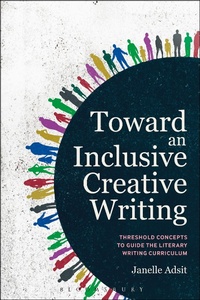
Toward an Inclusive Creative Writing
Threshold Concepts to Guide the Literary Writing Curriculum
1st Edition
Published on 5. October 2017
208 pages
978-1-350-02388-8 (ISBN)
Description

The creative writing workshop has existed since the early part of the 20th century, but does it adequately serve the students who come to it today? While the workshop is often thought of as a form of student-centered pedagogy, it turns out that workshop conversations serve to marginalize a range of aesthetic orientations and the cultural histories to which they belong. Given the shifting demographics of higher education, it is time to re-evaluate the creative writing curriculum and move literary writing pedagogy toward a more inclusive, equitable model.
Toward an Inclusive Creative Writing makes the argument that creative writing stands upon problematic assumptions about what counts as valid artistic production, and these implicit beliefs result in exclusionary pedagogical practices. To counter this tendency of creative writing, this book proposes a revised curriculum that rests upon 12 threshold concepts that can serve to transform the teaching of literary writing craft. The book also has a companion website www.criticalcreativewriting.org offering supplemental materials such as lesson plans and course materials.
The ebook editions of this book are available open access under a CC BY-NC-ND 4.0 licence on bloomsburycollection.com. Open access was funded by Knowledge Unlatched.
More details
Edition
1. Auflage
Language
English
Place of publication
London
United Kingdom
Publishing group
Bloomsbury Publishing PLC
Target group
Professional and scholarly
Illustrations
1 b/w illustration
File size
5,32 MB
ISBN-13
978-1-350-02388-8 (9781350023888)
Copyright in bibliographic data and cover images is held by Nielsen Book Services Limited or by the publishers or by their respective licensors: all rights reserved.
Schweitzer Classification
Other editions
Additional editions
Janelle Adsit
Toward an Inclusive Creative Writing
Threshold Concepts to Guide the Literary Writing Curriculum
Book
04/2019
Bloomsbury Academic
€62.08
Shipment within 15-20 days
Person
Janelle Adsit is Associate Professor of Creative Writing at California State Polytechnic University, Humboldt, USA She is editor of Critical Creative Writing: Essential Readings on the Writer's Craft (2018) and author of the book Toward an Inclusive Creative Writing: Threshold Concepts to Guide the Literary Writing Curriculum (2017).
Content
Introduction
Discussions of Diversity and Inclusion in Creative Writing
Threshold Concepts to Guide the Literary Writing Curriculum
Toward an Inclusive Creative Writing Pedagogy
1. Privileged Assumptions and Assumptions of Privilege
What the VIDA Count Tells about Teaching
Exclusionary Constructions of the Writer's Life
Finding a Voice
The Lonely Writer
Leisure and Unalienated Labor
The Writer as Exceptional
Mapping Pedagogical Constructions of the Writer
Progressive Pedagogical Approaches
Humanist Pedagogical Approaches
Professionalizing Pedagogical Approaches
Auditioning Pedagogical Approaches
Experimental Pedagogical Approaches
Therapeutic Pedagogical Approaches
Populism and Elitism in Creative Writing
Exclusionary Assumptions about Writers and Writing
2. Marginalized Aesthetics
Policing Intention: Polemics against Polemics
Policing Taste: Ideologies of Craft
Policing Emotion: Scorn of Excess
The Diversity of the Textual Landscape
3. The Threshold Concepts in Creative Writing
Concept 1: Attention
Concept 2: Creativity
Concept 3: Authorship
Concept 4: Language
Concept 5: Genre
Concept 6: Craft
Concept 7: Community
Concept 8: Evaluation
Concept 9: Representation
Concept 10: Resistance
Concept 11: Theory
Concept 12: Revision
Threshold Concepts and Learning Outcomes
4. Toward an Inclusive Pedagogy
Starting Points
Reading
Workshop
Evaluation and Grading
Coda: Reimagining Creative Writing's Institutional Practices
Appendix A - List of Craft Texts Surveyed in Chapters One and Two
Appendix B - Sample Syllabus
Notes
Index
Discussions of Diversity and Inclusion in Creative Writing
Threshold Concepts to Guide the Literary Writing Curriculum
Toward an Inclusive Creative Writing Pedagogy
1. Privileged Assumptions and Assumptions of Privilege
What the VIDA Count Tells about Teaching
Exclusionary Constructions of the Writer's Life
Finding a Voice
The Lonely Writer
Leisure and Unalienated Labor
The Writer as Exceptional
Mapping Pedagogical Constructions of the Writer
Progressive Pedagogical Approaches
Humanist Pedagogical Approaches
Professionalizing Pedagogical Approaches
Auditioning Pedagogical Approaches
Experimental Pedagogical Approaches
Therapeutic Pedagogical Approaches
Populism and Elitism in Creative Writing
Exclusionary Assumptions about Writers and Writing
2. Marginalized Aesthetics
Policing Intention: Polemics against Polemics
Policing Taste: Ideologies of Craft
Policing Emotion: Scorn of Excess
The Diversity of the Textual Landscape
3. The Threshold Concepts in Creative Writing
Concept 1: Attention
Concept 2: Creativity
Concept 3: Authorship
Concept 4: Language
Concept 5: Genre
Concept 6: Craft
Concept 7: Community
Concept 8: Evaluation
Concept 9: Representation
Concept 10: Resistance
Concept 11: Theory
Concept 12: Revision
Threshold Concepts and Learning Outcomes
4. Toward an Inclusive Pedagogy
Starting Points
Reading
Workshop
Evaluation and Grading
Coda: Reimagining Creative Writing's Institutional Practices
Appendix A - List of Craft Texts Surveyed in Chapters One and Two
Appendix B - Sample Syllabus
Notes
Index
