

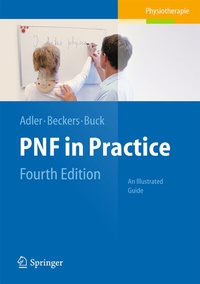
PNF in Practice
Description

- The PNF approach, presented in a fully illustrated hands-on guide, including 650 photos
- Focus on practical aspects of patient evaluation and treatment
- ICF and Motor Learning and how these concepts are applied in PNF
- Provides a systematic and easily accessible guide to learning and understanding PNF as a practical tool and using it to full effect in patient treatment
New for this edition: new fully-color textbook design for more user-friendly learning experience; fully revised introductory chapter on the PNF basics, now including discussion and demonstration of ICF and Motor Learning aspects in detailed case study; throughout chapters, new additional case studies that help visualize the application of PNF techniques in promoting the patients' everyday-life motor skills on activity and participation levels.
Reviews / Votes
From the reviews of the fourth edition:
"This book explains the use of proprioceptive neuromuscular facilitation (PNF) in the treatment of patients with various impairments. . an excellent reference for physical therapy students as well as physical therapists at all levels. . This book clearly explains the rationales for, and uses of, PNF. . The photos illustrating the different techniques with well-written instructions are the true strength of this book." (Jeff Yaver, Doody's Book Reviews, February, 2014)
More details
Other editions
New editions
Additional editions
Previous edition
Persons
Susan Adler: Certified as Physical Therapist at Northwestern University, Chicago, Illinois; Master of Science in Physical Therapy at the University of Southern California, Los Angeles; PNF education in 1962 at the Kaiser Foundation Rehabilitation Center in Vallejo, California Worked and taught with MaggieKnott; International PNF senior instructor of the IPNFA. Developed and led PNF courses in the USA and Europe
Dominiek Beckers: Master of Physical Therapy, Movement Science and Rehabilitation at the University of Leuven, Belgium in 1975; Physical Therapist at the Rehabilitation Center of Hoensbroek, The Netherlands since 1975; International PNF instructor since 1984; Instructor SCI Rehabilitation; Author of numerous books and articles
Math Buck: Certified as Physical Therapist at the Hoge School in Heerlen,The Netherlands in 1972; Physical Therapist at the Rehabilitation Center of Hoensbroek,The Netherlands, since 1973; International PNF instructorof the IPNFA since 1984. Currently a senior instructor and honorary member of the IPNFA; Co-author of numerous books and articles
