

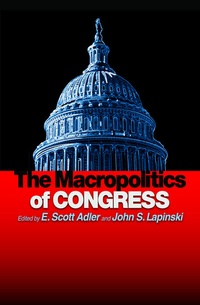
The Macropolitics of Congress
Macropolitics of Congress
1st Edition
Published on 16. October 2011
288 pages
978-1-4008-4120-2 (ISBN)
Description

How do public laws, treaties, Senate confirmations, and other legislative achievements help us to gain insight into how our governmental system performs?
This well-argued book edited by Scott Adler and John Lapinski is the first to assess our political institutions by looking at what the authors refer to as legislative accomplishment. The book moves beyond current research on Congress that focuses primarily on rules, internal structure, and the microbehavior of individual lawmakers, to look at the mechanisms that govern how policy is enacted and implemented in the United States. It includes essays on topics ranging from those dealing with the microfoundations of congressional output, to large N empirical analyses that assess current theories of lawmaking, to policy-centered case studies.
All of the chapters take a Congress-centered perspective on macropolicy while still appreciating the importance of other branches of government in explaining policy accomplishment. The Macropolitics of Congress shines light on promising pathways for the exploration of such key issues as the nature of political representation. It will make a significant contribution to the study of Congress and, more generally, to our understanding of American politics. Contributors include E. Scott Adler, David Brady, Charles M. Cameron, Brandice Canes-Wrone, Robert S. Erikson, Grace R. Freedman, Valerie Heitshusen, John D. Huber, Ira Katznelson, Keith Krehbiel, John S. Lapinski, David Leblang, Michael B. MacKuen, David R. Mayhew, Nolan McCarty, Charles R. Shipan, James A. Stimson, and Garry Young.
This well-argued book edited by Scott Adler and John Lapinski is the first to assess our political institutions by looking at what the authors refer to as legislative accomplishment. The book moves beyond current research on Congress that focuses primarily on rules, internal structure, and the microbehavior of individual lawmakers, to look at the mechanisms that govern how policy is enacted and implemented in the United States. It includes essays on topics ranging from those dealing with the microfoundations of congressional output, to large N empirical analyses that assess current theories of lawmaking, to policy-centered case studies.
All of the chapters take a Congress-centered perspective on macropolicy while still appreciating the importance of other branches of government in explaining policy accomplishment. The Macropolitics of Congress shines light on promising pathways for the exploration of such key issues as the nature of political representation. It will make a significant contribution to the study of Congress and, more generally, to our understanding of American politics. Contributors include E. Scott Adler, David Brady, Charles M. Cameron, Brandice Canes-Wrone, Robert S. Erikson, Grace R. Freedman, Valerie Heitshusen, John D. Huber, Ira Katznelson, Keith Krehbiel, John S. Lapinski, David Leblang, Michael B. MacKuen, David R. Mayhew, Nolan McCarty, Charles R. Shipan, James A. Stimson, and Garry Young.
All prices
More details
Edition
Core Textbook
Language
English
Place of publication
Princeton, NJ
United States
Publishing group
De Gruyter
Target group
Professional and scholarly
Edition type
Digital original
Product notice
Reflowable
Illustrations
21 line illus. 19 tables.
File size
0,84 MB
ISBN-13
978-1-4008-4120-2 (9781400841202)
Schweitzer Classification
Other editions
Additional editions
E. Scott Adler | John S. Lapinski
The Macropolitics of Congress
Book
02/2006
Princeton University Press
€55.80
Article exhausted; check different version
E. Scott Adler | John S. Lapinski
The Macropolitics of Congress
Book
02/2006
Princeton University Press
€34.60
Article not available at the moment
Persons
E. Scott Adler is Associate Professor of Political Science at the University of Colorado, Boulder. His current research examines the factors that effect legislative activity and specialization by members of Congress over the course of their careers. He has published articles in the American Journal of Political Science, Legislative Studies Quarterly, and Urban Affairs Review, and is the author of Why Congressional Reforms Fail: Reelection and the House Committee System. John S. Lapinski is Assistant Professor of Political Science and Resident Fellow at the Institution for Social and Policy Studies at Yale University. His current research examines how preferences, environmental conditions, and institutional change affect lawmaking. He has published articles in the American Journal of Political Science, the Journal of Politics, and the British Journal of Political Science.
Content
List of Contributors ix
Acknowledgments xv
Introduction: Defining the Macropolitics of Congress by John S. Lapinski and E. Scott Adler 1
Part I: Theoretical Approaches to the Macropolitics of Congress
Chapter 1: Macropolitics and Micromodels: Cartels and Pivots Reconsidered by Keith Krehbiel 21
Chapter 2: Bureaucratic Capacity and Legislative Performance by John D. Huber and Nolan McCarty 50
Part II: The Macropolitics of Representation
Chapter 3: Public Opinion and Congressional Policy: A Macro-Level Perspective by Robert S. Erikson, Michael B. MacKuen, and James A. Stimson 79
Chapter 4: The Substance of Representation: Studying Policy Content and Legislative Behavior by Ira Katznelson and John S. Lapinski 96
Part III: Testing Theories of Macropolitics across Time
Chapter 5: Macropolitics and Changes in the U.S. Code: Testing Competing Theories of Policy Production, 1874-1946 by Valerie Heitshusen and Garry Young 129
Chapter 6: Does Divided Government Increase the Size of the Legislative Agenda? by Charles R. Shipan 151
Part IV: Macropolitics and Public Policy
Chapter 7: The Macropolitics of Telecommunications Policy, 1899-1998: Lawmaking, Policy Windows, and Agency Control by Grace R. Freedman and Charles M. Cameron 173
Chapter 8: The Influence of Congress and the Courts over the Bureaucracy: An Analysis of Wetlands Policy by Brandice Canes-Wrone 195
Chapter 9: Legislative Bargaining and the Macroeconomy by E. Scott Adler and David Leblang 211
Part V: Understanding the Macropolitics of Congress
Chapter 10: Lawmaking and History by David R. Mayhew 241
Chapter 11: Rational Choice, History, and the Dynamics of Congress by David Brady 251
Index 259
Acknowledgments xv
Introduction: Defining the Macropolitics of Congress by John S. Lapinski and E. Scott Adler 1
Part I: Theoretical Approaches to the Macropolitics of Congress
Chapter 1: Macropolitics and Micromodels: Cartels and Pivots Reconsidered by Keith Krehbiel 21
Chapter 2: Bureaucratic Capacity and Legislative Performance by John D. Huber and Nolan McCarty 50
Part II: The Macropolitics of Representation
Chapter 3: Public Opinion and Congressional Policy: A Macro-Level Perspective by Robert S. Erikson, Michael B. MacKuen, and James A. Stimson 79
Chapter 4: The Substance of Representation: Studying Policy Content and Legislative Behavior by Ira Katznelson and John S. Lapinski 96
Part III: Testing Theories of Macropolitics across Time
Chapter 5: Macropolitics and Changes in the U.S. Code: Testing Competing Theories of Policy Production, 1874-1946 by Valerie Heitshusen and Garry Young 129
Chapter 6: Does Divided Government Increase the Size of the Legislative Agenda? by Charles R. Shipan 151
Part IV: Macropolitics and Public Policy
Chapter 7: The Macropolitics of Telecommunications Policy, 1899-1998: Lawmaking, Policy Windows, and Agency Control by Grace R. Freedman and Charles M. Cameron 173
Chapter 8: The Influence of Congress and the Courts over the Bureaucracy: An Analysis of Wetlands Policy by Brandice Canes-Wrone 195
Chapter 9: Legislative Bargaining and the Macroeconomy by E. Scott Adler and David Leblang 211
Part V: Understanding the Macropolitics of Congress
Chapter 10: Lawmaking and History by David R. Mayhew 241
Chapter 11: Rational Choice, History, and the Dynamics of Congress by David Brady 251
Index 259

