

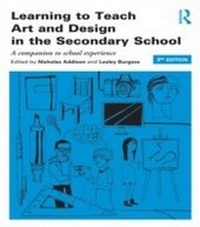
Learning to Teach Art and Design in the Secondary School
A companion to school experience
3rd Edition
Published on 24. October 2014
268 pages
978-1-317-61342-8 (ISBN)
Description

Learning to Teach Art and Design in the Secondary School is established as the key text for all those preparing to become art and design teachers in the secondary school. It explores a range of approaches to teaching and learning and provides a conceptual and practical framework for understanding the diverse nature of art and design in the secondary school curriculum.
Written by experts in the field, it aims to inform and inspire, to challenge orthodoxies and encourage a freshness of vision. It provides support and guidance for learning and teaching in art and design, suggesting strategies to motivate and engage pupils in making, discussing and evaluating visual and material culture.
The third edition has been comprehensively updated and re-structured in light of the latest theory, research and policy in the field and includes new chapters surveying assessment and examinations, and exploring identity and diversity in art and design. Essential topics include:
Ways of learning in art and design
Planning for teaching and learning
Critical studies and methods for investigating art and design
Inclusion
Assessment
Issues in craft and design education
Drawing & sculpture
Your own continuing professional development.
Including suggestions for further reading and a range of tasks designed to encourage you to reflect critically on your practice, Learning to Teach Art and Design in the Secondary School addresses issues for student teachers and mentors on all initial teacher education courses in Art and Design. It will also be of relevance and value to teachers in school with designated responsibility for supervision.
Written by experts in the field, it aims to inform and inspire, to challenge orthodoxies and encourage a freshness of vision. It provides support and guidance for learning and teaching in art and design, suggesting strategies to motivate and engage pupils in making, discussing and evaluating visual and material culture.
The third edition has been comprehensively updated and re-structured in light of the latest theory, research and policy in the field and includes new chapters surveying assessment and examinations, and exploring identity and diversity in art and design. Essential topics include:
Ways of learning in art and design
Planning for teaching and learning
Critical studies and methods for investigating art and design
Inclusion
Assessment
Issues in craft and design education
Drawing & sculpture
Your own continuing professional development.
Including suggestions for further reading and a range of tasks designed to encourage you to reflect critically on your practice, Learning to Teach Art and Design in the Secondary School addresses issues for student teachers and mentors on all initial teacher education courses in Art and Design. It will also be of relevance and value to teachers in school with designated responsibility for supervision.
More details
Series
Edition
3rd edition
Language
English
Place of publication
London
United Kingdom
Publishing group
Taylor & Francis Ltd
Target group
College/higher education
Professional and scholarly
Edition type
Revised edition
Illustrations
30 s/w Abbildungen, 7 s/w Tabellen, 22 s/w Photographien bzw. Rasterbilder, 8 s/w Zeichnungen
7 Tables, black and white; 8 Line drawings, black and white; 22 Halftones, black and white; 30 Illustrations, black and white
ISBN-13
978-1-317-61342-8 (9781317613428)
Copyright in bibliographic data and cover images is held by Nielsen Book Services Limited or by the publishers or by their respective licensors: all rights reserved.
Schweitzer Classification
Other editions
Additional editions
Nicholas Addison | Lesley Burgess
Learning to Teach Art and Design in the Secondary School
A companion to school experience
Book
11/2014
3rd Edition
Routledge
€207.98
Article exhausted; check for reprint
Nicholas Addison | Lesley Burgess
Learning to Teach Art and Design in the Secondary School
A companion to school experience
Book
10/2014
3rd Edition
Routledge
€75.50
Article exhausted; check for reprint
Persons
Nicholas Addison is a lecturer at the University of the Arts, London, UK.
Lesley Burgess is a senior lecturer in art, design and museology at the Institute of Education, University of London, UK.
Lesley Burgess is a senior lecturer in art, design and museology at the Institute of Education, University of London, UK.
Content
1 Introduction
Nicholas Addison and Lesley Burgess
2 Art and Design Teachers' Professional Development
Richard Hickman and Madeleine Brens
3 Learning in Art and Design Education
Nicholas Addison and Lesley Burgess with Victoria Kinsella, Dean Kenning
Unit 3.1 the relationship between learning and teaching
3.2 theories of learning and their implications for art and design
3.3 activity theory; (Victoria Kinsella)
3.4 experiential learning
3.5 affect and the aesthetic
3.6 language, motivation and learning
3.7 thinking through art: the social body mind map; (Dean Kenning)
3.8 enabling learning: transforming subject knowledge into pedagogy
4 Planning for Learning and Teaching
David Gee and Lesley Burgess
Unit 4.1 Curriculum Planning
Unit 4.2 Practice in ITE Art and design
5 Assessment and Examinations in Art and Design
Andy Ash and Kate Schofield with John Steers
Unit 5.1 Overview of assessment: principles and practice
Unit 5.2 Assessment in art and design
Unit 5.3 Art and design examinations
Unit 5.4 Reconsidering assessment for learning in art and design (John Steers)
6 Issues in Craft and Design Education
Lesley Burgess and Kate Schofield with Helen Charman
Unit 6.1 Craft
Unit 6.2 Design
Unit 6.3 Sustainable design: design can change the world (Helen Charman)
7 Attitudes to Making
Unit 7.1 Drawing: Lines of Possibility
Claire Robins
Unit 7.2 Sculpture in secondary schools
Andy Ash
8 Critical Studies
Nicholas Addison
Unit 8.1 The purposes of critical studies
Unit 8.2 Exploring methods for investigating art and design: developing visual and aesthetic literacy
9 Inclusion in Art and design
Unit 9.1 Claire Penketh
Unit 9.2 John Johnson
10 Towards a Plural Curriculum
Unit 10.1 Enhanced Identities in Diversity
Paul Dash
Unit 10.2 Histories and canons as forms of identity
Nicholas Addison
Unit 10.3 Investigation and Diversity
Nicholas Addison
Nicholas Addison and Lesley Burgess
2 Art and Design Teachers' Professional Development
Richard Hickman and Madeleine Brens
3 Learning in Art and Design Education
Nicholas Addison and Lesley Burgess with Victoria Kinsella, Dean Kenning
Unit 3.1 the relationship between learning and teaching
3.2 theories of learning and their implications for art and design
3.3 activity theory; (Victoria Kinsella)
3.4 experiential learning
3.5 affect and the aesthetic
3.6 language, motivation and learning
3.7 thinking through art: the social body mind map; (Dean Kenning)
3.8 enabling learning: transforming subject knowledge into pedagogy
4 Planning for Learning and Teaching
David Gee and Lesley Burgess
Unit 4.1 Curriculum Planning
Unit 4.2 Practice in ITE Art and design
5 Assessment and Examinations in Art and Design
Andy Ash and Kate Schofield with John Steers
Unit 5.1 Overview of assessment: principles and practice
Unit 5.2 Assessment in art and design
Unit 5.3 Art and design examinations
Unit 5.4 Reconsidering assessment for learning in art and design (John Steers)
6 Issues in Craft and Design Education
Lesley Burgess and Kate Schofield with Helen Charman
Unit 6.1 Craft
Unit 6.2 Design
Unit 6.3 Sustainable design: design can change the world (Helen Charman)
7 Attitudes to Making
Unit 7.1 Drawing: Lines of Possibility
Claire Robins
Unit 7.2 Sculpture in secondary schools
Andy Ash
8 Critical Studies
Nicholas Addison
Unit 8.1 The purposes of critical studies
Unit 8.2 Exploring methods for investigating art and design: developing visual and aesthetic literacy
9 Inclusion in Art and design
Unit 9.1 Claire Penketh
Unit 9.2 John Johnson
10 Towards a Plural Curriculum
Unit 10.1 Enhanced Identities in Diversity
Paul Dash
Unit 10.2 Histories and canons as forms of identity
Nicholas Addison
Unit 10.3 Investigation and Diversity
Nicholas Addison
