

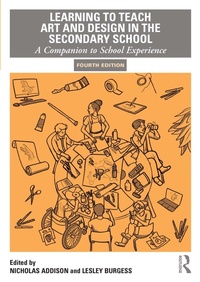
Learning to Teach Art and Design in the Secondary School
A Companion to School Experience
4th Edition
Published on 3. December 2024
272 pages
978-1-040-25256-7 (ISBN)
Description

Learning to Teach Art and Design in the Secondary School is the key text for all those preparing to become art and design teachers in secondary school. It explores a range of approaches to teaching and learning, and provides a conceptual and practical framework for understanding the diverse nature of art and design in the secondary school curriculum.
Written by experts in the field, it aims to inform and inspire, challenge orthodoxies and encourage a freshness of vision. It provides support and guidance for learning and teaching in art and design, suggesting strategies to motivate and engage pupils in making, discussing and evaluating visual and material culture.
This fourth edition has been comprehensively updated and re-structured in light of the latest theory, research and policy in the field and includes new chapters exploring diversity, identity and inclusion, attitudes to making and teaching as an artistic practice.
Essential topics include:
Ways of learning in art and design
Teaching as an artistic practice
Planning for teaching and learning
Diversity and inclusion
Sustainable design
Assessment and examinations
Critical studies
Professional development in the gallery
Supporting each chapter are suggestions for further reading and tasks designed to encourage you to reflect critically on your practice.
Learning to Teach Art and Design in the Secondary School addresses issues for all student teachers and mentors on initial teacher education courses in Art and Design. It is also of relevance and value to teachers in schools with designated responsibility for supervision.
Written by experts in the field, it aims to inform and inspire, challenge orthodoxies and encourage a freshness of vision. It provides support and guidance for learning and teaching in art and design, suggesting strategies to motivate and engage pupils in making, discussing and evaluating visual and material culture.
This fourth edition has been comprehensively updated and re-structured in light of the latest theory, research and policy in the field and includes new chapters exploring diversity, identity and inclusion, attitudes to making and teaching as an artistic practice.
Essential topics include:
Ways of learning in art and design
Teaching as an artistic practice
Planning for teaching and learning
Diversity and inclusion
Sustainable design
Assessment and examinations
Critical studies
Professional development in the gallery
Supporting each chapter are suggestions for further reading and tasks designed to encourage you to reflect critically on your practice.
Learning to Teach Art and Design in the Secondary School addresses issues for all student teachers and mentors on initial teacher education courses in Art and Design. It is also of relevance and value to teachers in schools with designated responsibility for supervision.
More details
Series
Edition
4th edition
Language
English
Place of publication
London
United Kingdom
Publishing group
Taylor & Francis Ltd
Target group
College/higher education
Professional and scholarly
Illustrations
5 Tables, black and white; 30 Halftones, black and white; 30 Illustrations, black and white
File size
8,91 MB
ISBN-13
978-1-040-25256-7 (9781040252567)
Copyright in bibliographic data and cover images is held by Nielsen Book Services Limited or by the publishers or by their respective licensors: all rights reserved.
Schweitzer Classification
Other editions
Additional editions
Nicholas Addison | Lesley Burgess
Learning to Teach Art and Design in the Secondary School
A Companion to School Experience
Book
12/2024
4th Edition
Routledge
€197.70
Shipment within 10-20 days
Nicholas Addison | Lesley Burgess
Learning to Teach Art and Design in the Secondary School
A Companion to School Experience
Book
12/2024
4th Edition
Routledge
€46.50
Shipment within 10-20 days
Persons
Nicholas Addison is an Honorary Associate Professor at the Institute of Education, University College London, UK.
Lesley Burgess is an Honorary Associate Professor at the Institute of Education, University College London, UK.
Lesley Burgess is an Honorary Associate Professor at the Institute of Education, University College London, UK.
Content
1 Introduction
Nicholas Addison and Lesley Burgess
2 Teaching as Artist Practice
Henry Ward
3 Learning in Art and Design Education
Nicholas Addison and Lesley Burgess; Victoria Kinsella; Dean Kenning
Unit 3.1 The Relationship between Learning and Teaching
Unit 3.2 Theories of Learning and Their Implications for Art and Design
Unit 3.3 Activity Theory
Victoria KinsellaUnit 3.4 Experiential Learning
Unit 3.5 Affect and the Aesthetic
Unit 3.6 Language and Learning
Unit 3.7 Thinking through Art: The Social Body Mind Map
Dean Kenning
Unit 3.8 Enabling Learning: Transforming Subject Knowledge into Pedagogy
4 Planning for Learning and Teaching
Carol Wild
Unit 4.1 Curriculum Planning
Unit 4.2 Practice in ITE Art and Design
5 Assessment in Art and Design
John Steers; Nicholas Addison
Unit 5.1 Reconsidering Assessment for Learning in Art and Design
John SteersUnit 5.2 Assessment and Examinations
Nicholas Addison
Unit 5.4 The Necessity of Assessment
Nicholas Addison
6 Sustainable Design: Design Can Save the World
Helen Charman and Holly Burton
Unit 6.1 What Is Sustainable Design, and Why Teach It?
Unit 6.2 Sustainable Design in Practice
7 Attitudes to Making
Dennis Atkinson; Jennifer Blunden and Claire Robins; Bill Leslie
Unit 7.1 Children's Drawing Practices: The Instauration of Cosmicities and Pedagogies of Taking Care
Dennis Atkinson
Unit 7.2 Writing Matters
Jennifer Blunden and Claire RobinsUnit 7.2 Collaborative, Experimental Approaches to Sculpture
Bill Leslie
8 Diversity
Tanveer Ahmed and Jane Trowell; Alan Cusack; Tabitha Millett; Claire Penketh
Unit 8.1 Whiteness in the Art and Design Classroom
Tanveer Ahmed and Jane Trowell
Unit 8.2 Conversations, Conflict and Vulnerability in the Art Room
Alan Cusack
Unit 8.3 Queering LGBTQ+ Policy in UK Art and Design Education
Tabitha MillettUnit 8.4 Special Educational Needs and Disability
Claire Penketh
9 Critical Studiesin Art and Design
Neil Walton; Sylvia Theuri; Paul Dash
Unit 9.1 Critical Studies and Art and Design: An Introduction
Neil Walton
Unit 9.2 Enhanced Identities in Diversity
Paul Dash
Unit 9.3 Student Identities in Art and Design Education
Sylvia Theuri
10 Professional Development in the Gallery
Emily Pringle and Maddy Gilliam
Nicholas Addison and Lesley Burgess
2 Teaching as Artist Practice
Henry Ward
3 Learning in Art and Design Education
Nicholas Addison and Lesley Burgess; Victoria Kinsella; Dean Kenning
Unit 3.1 The Relationship between Learning and Teaching
Unit 3.2 Theories of Learning and Their Implications for Art and Design
Unit 3.3 Activity Theory
Victoria KinsellaUnit 3.4 Experiential Learning
Unit 3.5 Affect and the Aesthetic
Unit 3.6 Language and Learning
Unit 3.7 Thinking through Art: The Social Body Mind Map
Dean Kenning
Unit 3.8 Enabling Learning: Transforming Subject Knowledge into Pedagogy
4 Planning for Learning and Teaching
Carol Wild
Unit 4.1 Curriculum Planning
Unit 4.2 Practice in ITE Art and Design
5 Assessment in Art and Design
John Steers; Nicholas Addison
Unit 5.1 Reconsidering Assessment for Learning in Art and Design
John SteersUnit 5.2 Assessment and Examinations
Nicholas Addison
Unit 5.4 The Necessity of Assessment
Nicholas Addison
6 Sustainable Design: Design Can Save the World
Helen Charman and Holly Burton
Unit 6.1 What Is Sustainable Design, and Why Teach It?
Unit 6.2 Sustainable Design in Practice
7 Attitudes to Making
Dennis Atkinson; Jennifer Blunden and Claire Robins; Bill Leslie
Unit 7.1 Children's Drawing Practices: The Instauration of Cosmicities and Pedagogies of Taking Care
Dennis Atkinson
Unit 7.2 Writing Matters
Jennifer Blunden and Claire RobinsUnit 7.2 Collaborative, Experimental Approaches to Sculpture
Bill Leslie
8 Diversity
Tanveer Ahmed and Jane Trowell; Alan Cusack; Tabitha Millett; Claire Penketh
Unit 8.1 Whiteness in the Art and Design Classroom
Tanveer Ahmed and Jane Trowell
Unit 8.2 Conversations, Conflict and Vulnerability in the Art Room
Alan Cusack
Unit 8.3 Queering LGBTQ+ Policy in UK Art and Design Education
Tabitha MillettUnit 8.4 Special Educational Needs and Disability
Claire Penketh
9 Critical Studiesin Art and Design
Neil Walton; Sylvia Theuri; Paul Dash
Unit 9.1 Critical Studies and Art and Design: An Introduction
Neil Walton
Unit 9.2 Enhanced Identities in Diversity
Paul Dash
Unit 9.3 Student Identities in Art and Design Education
Sylvia Theuri
10 Professional Development in the Gallery
Emily Pringle and Maddy Gilliam
