


Strategic Intelligence in the Cold War and Beyond
1st Edition
Published on 15. September 2014
178 pages
978-1-317-63769-1 (ISBN)
Description

Strategic Intelligence in the Cold War and Beyond looks at the many events, personalities, and controversies in the field of intelligence and espionage since the end of World War II. A crucial but often neglected topic, strategic intelligence took on added significance during the protracted struggle of the Cold War.
In this accessible volume, Jefferson Adams places these important developments in their historical context, taking a global approach to themes including
various undertakings from both sides in the Cold War, with emphasis on covert action and deception operations
controversial episodes involving Cuba, Chile, Nicaragua, Vietnam, Poland, and Afghanistan as well as numerous lesser known occurrences.
three Cold War spy profiles which explore the role of human psychology in intelligence work
the technological dimension
spies in fiction, film and television
developments in the intelligence organizations of both sides in the decade following the fall of the Berlin wall
Supplemented by suggestions for further reading, a glossary of key terms, and a timeline of important events, this is an essential read for all those interested in the modern history of espionage.
In this accessible volume, Jefferson Adams places these important developments in their historical context, taking a global approach to themes including
various undertakings from both sides in the Cold War, with emphasis on covert action and deception operations
controversial episodes involving Cuba, Chile, Nicaragua, Vietnam, Poland, and Afghanistan as well as numerous lesser known occurrences.
three Cold War spy profiles which explore the role of human psychology in intelligence work
the technological dimension
spies in fiction, film and television
developments in the intelligence organizations of both sides in the decade following the fall of the Berlin wall
Supplemented by suggestions for further reading, a glossary of key terms, and a timeline of important events, this is an essential read for all those interested in the modern history of espionage.
Reviews / Votes
"A meticulous scholar, Jefferson Adams has written a detailed but fast-paced account of the evolution of strategic intelligence from the end of World War II to the collapse of the Soviet Union and its aftermath. Although the book covers a wide spectrum of issues and deals with a long list of countries, Adams is such a fine writer that he retains the undivided attention of the reader. He is a leader in the field of intelligence studies."Igor Lukes, Boston University
"Strategic Intelligence in the Cold War and Beyond is a valuable contribution to the intelligence literature."
Hayden Peake in Studies in Intelligence
"It avoids inundating the student-reader with the trappings of an over-researched monograph and provides the professor's 'take' on many Cold War events. . . . The book would make a fine supplemental reading in a course offering in-depth coverage of the Cold War but lacking the linkage to intelligence."
J. Ransom Clark, International Journal of Intelligence and Counterintelligence Sehepunkte
"All in all this easily read volume provides a substantive introduction. Even someone well acquainted with the subject is occasionally surprised."
Armin Wagner, Sehepunkte "A meticulous scholar, Jefferson Adams has written a detailed but fast-paced account of the evolution of strategic intelligence from the end of World War II to the collapse of the Soviet Union and its aftermath. Although the book covers a wide spectrum of issues and deals with a long list of countries, Adams is such a fine writer that he retains the undivided attention of the reader. He is a leader in the field of intelligence studies."
Igor Lukes, Boston University
"Strategic Intelligence in the Cold War and Beyond is a valuable contribution to the intelligence literature."
Hayden Peake in Studies in Intelligence
"It avoids inundating the student-reader with the trappings of an over-researched monograph and provides the professor's 'take' on many Cold War events. . . . The book would make a fine supplemental reading in a course offering in-depth coverage of the Cold War but lacking the linkage to intelligence."
J. Ransom Clark, International Journal of Intelligence and Counterintelligence
"All in all this easily read volume provides a substantive introduction. Even someone well acquainted with the subject is occasionally surprised."
Armin Wagner, Sehepunkte
More details
Series
Language
English
Place of publication
London
United Kingdom
Publishing group
Taylor & Francis Ltd
Target group
College/higher education
File size
1,84 MB
ISBN-13
978-1-317-63769-1 (9781317637691)
Copyright in bibliographic data and cover images is held by Nielsen Book Services Limited or by the publishers or by their respective licensors: all rights reserved.
Schweitzer Classification
Other editions
Additional editions
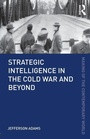
Jefferson Adams
Strategic Intelligence in the Cold War and Beyond
Book
08/2014
1st Edition
Routledge
€66.60
Shipment within 15-20 days
Jefferson Adams
Strategic Intelligence in the Cold War and Beyond
Book
08/2014
1st Edition
Routledge
€231.00
Shipment within 15-20 days
Person
Jefferson Adams is professor of European history at Sarah Lawrence College. His publications include Beyond the Wall: Memoirs of an East and West German Spy (ed., 1992) and Historical Dictionary of German Intelligence (2009). He is also the senior editor of The International Journal of Intelligence and Counterintelligence.
Content
Abbreviations
1 Introduction
2 The Players
3 The Early Years
4 The Struggle Deepens
5 Three Profiles of Cold War Spies
6 Espionage in Fiction and Film
7 The Climax of the Cold War
8 The Aftermath
Notes
Glossary
Chronology
Suggested further reading
Index
1 Introduction
2 The Players
3 The Early Years
4 The Struggle Deepens
5 Three Profiles of Cold War Spies
6 Espionage in Fiction and Film
7 The Climax of the Cold War
8 The Aftermath
Notes
Glossary
Chronology
Suggested further reading
Index
