


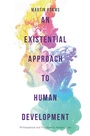
An Existential Approach to Human Development
Philosophical and Therapeutic Perspectives
1st Edition
Published on 11. August 2018
229 pages
978-1-137-50474-6 (ISBN)
Available for download
Description

This textbook reviews for the first time the thinking of six major existential philosophers, Soren Kierkegaard, Friedrich Nietzsche, Martin Heidegger, Jean-Paul Sartre, Maurice Merleau-Ponty, and Simone de Beauvoir with respect to their ideas about human development. Martin Adams presents a philosophical and psychological analysis, and critically evaluates the different ways that existential philosophy can illuminate the way we all strive for meaning and purpose in life. Written in a detailed, well-structured manner, this text offers a fundamentally different way to understand not only life in general but the practice of psychotherapy in particular.
More details
Language
English
Place of publication
London
United Kingdom
Publishing group
Bloomsbury Publishing PLC
ISBN-13
978-1-137-50474-6 (9781137504746)
Copyright in bibliographic data and cover images is held by Nielsen Book Services Limited or by the publishers or by their respective licensors: all rights reserved.
Schweitzer Classification
Other editions
Additional editions
Book
08/2018
Bloomsbury Academic
€49.20
Shipment within 10-20 days
Content
- Cover
- Contents
- Acknowledgements
- Introduction
- Part I
- 1 A Short History of Human Development
- Human development in mythology
- The medieval period
- Shakespeare
- The Enlightenment
- Modernism
- Natural science and stage theory
- 2 Thinking Phenomenologically and Existentially about Human Development
- Phenomenology
- Phenomenology and human development
- The language of human development
- Principles of existential philosophy
- Defining human development existentially and phenomenologically
- Part II
- 3 Søren Kierkegaard (1813-55)
- Living with faith
- Philosophy
- Objectivity and subjectivity
- Kierkegaard and human development
- The Aesthetic sphere of existence
- Sexuality
- Temporality
- The Ethical sphere of existence
- The Religious sphere of existence
- Addiction
- The paradox of the self in relationships
- 4 Friedrich Nietzsche (1844-1900)
- Living with power
- Reading Nietzsche
- Philosophy
- 'God is dead'
- Christianity and slave morality
- The body
- The human spirit
- Nietzsche and human development
- The three metamorphoses
- The 'last man'
- Time, temporality and eternal recurrence
- 5 Martin Heidegger (1889-1976)
- Living in time
- Philosophy
- Temporality and anxiety
- Authenticity and inauthenticity
- Heidegger and human development
- The meaning and development of death awareness
- Three dimensions of temporality
- The future
- The past
- The present
- Authenticity and our relationship with the material world
- Thrownness and the development of Dasein
- 6 Jean-Paul Sartre (1905-1980)
- Living with nothingness
- Philosophy
- Sartre and human development
- The sense-of-self and the original project
- The influence of early experience
- The Look
- The visual look
- The touch
- The word
- Relationships with others
- Laing: engulfment, implosion and petrification
- Engulfment
- Implosion
- Petrification
- Mutuality and love
- 7 Maurice Merleau-Ponty (1908-1961)
- Living with embodiment
- Philosophy
- Perception and embodiment
- Merleau-Ponty and human development
- Early experience: primary undifferentiation
- The mirror and the world of others
- De-centering and re-centering
- Language acquisition
- Embodiment and imagination
- Incompleteness and loss
- Acquisition of a sense of perspective
- The changing effect of the look
- Narcissism
- Later development
- Sympathy and empathy
- Love
- Masculinity, femininity and the development of difference
- Pregnancy
- Gendered space
- 8 Simone de Beauvoir (1908-1986)
- Living with others
- Philosophy
- Freedom, ethics and ambiguity
- Freedom, violence and other people
- Beauvoir and human development
- The development of freedom and morality
- Childhood
- Adolescence
- Adulthood
- Becoming a woman
- Objectification and the development of gender identity
- Infancy and childhood
- Puberty and adolescence
- Adulthood
- Motherhood
- Growing old(er)
- Part III
- 9 Implications for Therapeutic Practice
- Working with age
- Working with young(er) people
- Working with old(er) people
- Working with truth, narrative and the sense-of-self
- Working with beginnings and endings
- Working with embodiment
- Working with randomness and chance
- Working with adversity
- The skills learning process
- Working with love
- Working with freedom, responsibility and choice
- Conclusion
- References
- Index

