Comparative Skeletal Anatomy
Description

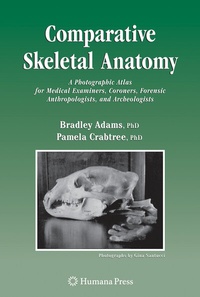
Forensic scientists working with human skeletal remains must be able to differentiate between human and non-human bones. Comparative Skeletal Anatomy: A Photographic Atlas for Medical Examiners, Coroners, Forensic Anthropologists, and Archaeologists fills a void in the literature by providing a comprehensive photographic guide of both human and non-human bones that is useful to those working in the fields of archaeology or the forensic sciences. This volume is a photographic atlas of common animal bones and is the first to focus comparatively on both human and animal osteology. Throughout this groundbreaking text, animal bones are photographed alongside the corresponding human bone, allowing the reader to observe size and shape variations. The goal of this guide is to help experienced archaeologists and forensic scientists distinguish human remains from common animal species, including horses, cows, goats, rabbits, chickens, ducks, sheep, and pigs, among others. Comprehensive and timely, Comparative Skeletal Anatomy: A Photographic Atlas for Medical Examiners, Coroners, Forensic Anthropologists, and Archaeologists is sure to become an essential reference for all forensic scientists and archeologists working with human skeletal remains.
Reviews / Votes
From the reviews:
"The goal is to provide the medico-legal community a resource for the comparison and discrimination of animal and human bone. As the first book of its kind, Comparative Skeletal Anatomy is a well-organized and useful contribution to the forensic literature. . a systematic and logical means of visually comparing the morphology and size of human bones to common animal counterparts. . is both a useful resource for archaeologists and medico-legal specialists, as well as a valuable training text for students of human anatomy and osteology." (Tracy L. Rogers, Canadian Society of Forensic Science Journal, August, 2008)
More details
Other editions
Additional editions