

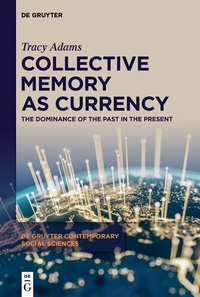
Collective Memory as Currency
Description

Why is the past so dominant in the present? This book conceptualizes collective memory as currency, a medium of exchange, a system in common use, and one that is traded between and within nations. Bringing together contemporary case studies and multidisciplinary scholarship, this volume shows how past events are used and perceived as a commodity and a substantially fungible marketable item produced to satisfy wants or needs, their supply or demand being a part of one universal market.
This book provides readers with a broader understanding of the power of the past in the present. Specific past events are incarnated into collective memories that can transform into iconic, almost mythical stories that can be employed to help make sense of the present. Through evoking, constructing and reconstructing, selectively highlighting certain aspects or perspectives of prominent past events, these collective memories become a significant resource that actors and publics turn to in times of need. As currency, these memories provide a service. As currency, they can also relatively easily travel between collectives, since it is commonly understood that the past has value in the present, and that this value is similarly utilized in various countries around the world.
More details
Other editions
Additional editions
Person
Tracy Adams, PhD, is a research affiliate at the Center for Cultural Sociology at Yale University. Her research interests include the intersection of memory, conflict, culture and politics and how meaning is constructed through interactive processes of negotiation. As a cultural and political sociologist, she builds theory through rich qualitative case studies, using memory studies as a framework to provide better understanding of societal concerns such as identity, narrative, and boundaries. Adams has been published in high-ranking journals such as the
British Journal of Sociology
, the
International Journal of Cultural Sociology
,
Sociological Forum
,
Media, Culture & Society
, and
Memory Studies
, and several edited books.
Adams has taught courses in the area of antisemitism and Holocaust memory and is the recipient of numerous awards, research scholarships, fellowships and grants. She holds a PhD in Sociology and Anthropology, an MA with honors in Conflict Research, Management and Resolution, and a BA in Psychology and International Relations, all from the Hebrew University of Jerusalem.
Content
- Intro
- Contents
- Chapter One Theorizing Collective Memory as Currency
- Chapter Two Holocaust Memory as Exemplar
- Chapter Three Analogical Memory
- Chapter Four Collective Memory in an Age of Digital Transformations - A Different Kind of Currency?
- Chapter Five De-commemoration Practices
- Chapter Six Concluding Remarks - Towards the fourth wave of Memory Studies?
- References
- Index
