

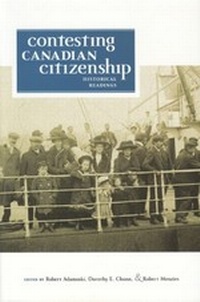
Contesting Canadian Citizenship
Historical Readings
1st Edition
Published on 29. April 2013
432 pages
978-1-4426-0249-6 (ISBN)
Description

Over the past 15 years, the citizenship debate in political and social theory has undergone an extraordinary renaissance. To date, much of the writing on citizenship, within and beyond Canada, has been oriented toward the development of theory, or has concentrated on contemporary issues and examples. This collection of essays adopts a different approach by contextualizing and historicizing the citizenship debate, through studies of various aspects of the rise of social citizenship in Canada. Focusing on the formative years from the late 19th through mid-20th century, contributors examine how emerging discourse and practices in diverse areas of Canadian social life created a widely engaged, but often deeply contested, vision of the new Canadian citizen.
The original essays examine key developments in the fields of welfare, justice, health, childhood, family, immigration, education, labour, media, popular culture and recreation, highlighting the contradictory nature of Canadian citizenship. The implications of these projects for the daily lives of Canadians, their identities, and the forms of resistance that they mounted, are central themes. Contributing authors situate their historical accounts in both public and private domains, their analyses emphasizing the mutual permeability of state and civil(ian) life. These diverse investigations reveal that while Canadian citizenship conveys crucial images of identity, security, and participatory democracy within the ongoing project of nation building, it is also interlaced with the projects of a hierarchical social structure and exclusionary political order. This collection explores the origins and evolution of Canadian citizenship in historical context. It also introduces the more general dilemmas and debates in social history and political theory that inevitably inform these inquiries.
The original essays examine key developments in the fields of welfare, justice, health, childhood, family, immigration, education, labour, media, popular culture and recreation, highlighting the contradictory nature of Canadian citizenship. The implications of these projects for the daily lives of Canadians, their identities, and the forms of resistance that they mounted, are central themes. Contributing authors situate their historical accounts in both public and private domains, their analyses emphasizing the mutual permeability of state and civil(ian) life. These diverse investigations reveal that while Canadian citizenship conveys crucial images of identity, security, and participatory democracy within the ongoing project of nation building, it is also interlaced with the projects of a hierarchical social structure and exclusionary political order. This collection explores the origins and evolution of Canadian citizenship in historical context. It also introduces the more general dilemmas and debates in social history and political theory that inevitably inform these inquiries.
More details
Language
English
Place of publication
Toronto
Canada
Target group
College/higher education
Professional and scholarly
Edition type
Digital original
File size
25,26 MB
ISBN-13
978-1-4426-0249-6 (9781442602496)
Copyright in bibliographic data and cover images is held by Nielsen Book Services Limited or by the publishers or by their respective licensors: all rights reserved.
Schweitzer Classification
Other editions
Additional editions
Robert Adamoski | Dorothy E. Chunn | Robert Menzies
Contesting Canadian Citizenship
Historical Readings
Book
08/2002
Broadview Press Ltd
€49.50
Shipment within 3-4 weeks
Persons
Robert Adamoski teaches in the Criminology Department at Kwantlen University College.
Dorothy E. Chunn is a professor emerita of sociology in the Department of Sociology and Anthropology at Simon Fraser University.
Robert Menzies is a member of the School of Criminology at Simon Fraser University.
Dorothy E. Chunn is a professor emerita of sociology in the Department of Sociology and Anthropology at Simon Fraser University.
Robert Menzies is a member of the School of Criminology at Simon Fraser University.
Content
Acknowledgments Part I: Citizenship in Theory and History
1. Rethinking the Citizen in Canadian Social History (Robert Menzies, Dorothy E. Chunn and Robert Adamoski)
2. Three Stories of Canadian Citizenship (Janine Brodie)
Part II: Constituting the Canadian Citizen
3. 'The Citizenship Debates': The 1885 Franchise Act (Veronica Strong-Boag)
4. From the Nation to the Citizen: Quebec Historical Writing and the Shaping of Identity (Ronald Rudin)
5. Indigenous Citizenship and History in Canada: Between Denial and Imposition (Claude Denis)
Part III: Domesticity, Industry and Nationhood
6. Scaffolding Citizenship: Housing Reform and Nation Formation in Canada, 1900-1950 (Sean Purdy)
7. Unemployment and the New Industrial Citizenship: A Review of the Ontario Unemployment Commission, 1916 (Jennifer Stephen)
8. Indispensable but not a Citizen: The Housewife in the Great Depression (Denyse Baillargeon)
9. Time, Swimming Pools, and Citizenship: The Emergence of Leisure Rights in Mid-Twentieth Century Canada (Shirley Tillotson)
Part IV: Pedagogies of Belonging and Exclusion
10. "The Good Citizen": Masculinity and Citizenship at Frontier College, 1899-1933 (Lorna R. McLean)
11. Education for Motherhood: Creating Modern Mothers and Model Citizens (Katherine Arnup)
12. Constructing Normal Citizens: Sex Advice for Postwar Teens (Mary Louise Adams)
13. Black Nova Scotian Women's Schooling and Citizenship: An Education of Violence (Bernice Moreau)
Part V: The Boundaries of Citizenship
14. The Child - The Citizen - The Nation: The Rhetoric and Experience of Wardship in Early Twentieth Century British Columbia (Robert Adamoski)
15. Creating Social and Moral Citizens: Defining and Treating Delinquent Boys and Girls in English Canada, 1920-65 (Joan Sangster)
16. Sex And Citizenship: (Hetero)Sexual Offences, Law and 'White' Settler Society in British Columbia, 1885-1940 (Dorothy E. Chunn)
17. 'Unfit' Citizens and the BC Royal Commission on Mental Hygiene, 1925-28 (Robert Menzies)
Contributors
Index
1. Rethinking the Citizen in Canadian Social History (Robert Menzies, Dorothy E. Chunn and Robert Adamoski)
2. Three Stories of Canadian Citizenship (Janine Brodie)
Part II: Constituting the Canadian Citizen
3. 'The Citizenship Debates': The 1885 Franchise Act (Veronica Strong-Boag)
4. From the Nation to the Citizen: Quebec Historical Writing and the Shaping of Identity (Ronald Rudin)
5. Indigenous Citizenship and History in Canada: Between Denial and Imposition (Claude Denis)
Part III: Domesticity, Industry and Nationhood
6. Scaffolding Citizenship: Housing Reform and Nation Formation in Canada, 1900-1950 (Sean Purdy)
7. Unemployment and the New Industrial Citizenship: A Review of the Ontario Unemployment Commission, 1916 (Jennifer Stephen)
8. Indispensable but not a Citizen: The Housewife in the Great Depression (Denyse Baillargeon)
9. Time, Swimming Pools, and Citizenship: The Emergence of Leisure Rights in Mid-Twentieth Century Canada (Shirley Tillotson)
Part IV: Pedagogies of Belonging and Exclusion
10. "The Good Citizen": Masculinity and Citizenship at Frontier College, 1899-1933 (Lorna R. McLean)
11. Education for Motherhood: Creating Modern Mothers and Model Citizens (Katherine Arnup)
12. Constructing Normal Citizens: Sex Advice for Postwar Teens (Mary Louise Adams)
13. Black Nova Scotian Women's Schooling and Citizenship: An Education of Violence (Bernice Moreau)
Part V: The Boundaries of Citizenship
14. The Child - The Citizen - The Nation: The Rhetoric and Experience of Wardship in Early Twentieth Century British Columbia (Robert Adamoski)
15. Creating Social and Moral Citizens: Defining and Treating Delinquent Boys and Girls in English Canada, 1920-65 (Joan Sangster)
16. Sex And Citizenship: (Hetero)Sexual Offences, Law and 'White' Settler Society in British Columbia, 1885-1940 (Dorothy E. Chunn)
17. 'Unfit' Citizens and the BC Royal Commission on Mental Hygiene, 1925-28 (Robert Menzies)
Contributors
Index
