

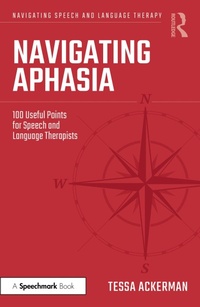
Navigating Aphasia
100 Useful Points for Speech and Language Therapists
1st Edition
Published on 22. July 2025
270 pages
978-1-040-34970-0 (ISBN)
Description

Navigating Aphasia provides the reader with a starting point for working with people with aphasia; presenting key, practical points to consider in the clinical management of this client group.
With a focus on both the language impairment and the consequences of aphasia, this book is packed with easily accessible, applied advice about assessment and therapy from an experienced aphasia clinician. Key sections include:
* Understanding aphasia
* Clinical management
* Assessment
* Approaches to therapy
* Language and cognition
* Living with aphasia.
Concluding with an appendix featuring useful books, websites and professional organisations, this is an essential, practical and comprehensive guide for newly qualified and student speech and language therapists, as well as those new to the world of aphasia.
With a focus on both the language impairment and the consequences of aphasia, this book is packed with easily accessible, applied advice about assessment and therapy from an experienced aphasia clinician. Key sections include:
* Understanding aphasia
* Clinical management
* Assessment
* Approaches to therapy
* Language and cognition
* Living with aphasia.
Concluding with an appendix featuring useful books, websites and professional organisations, this is an essential, practical and comprehensive guide for newly qualified and student speech and language therapists, as well as those new to the world of aphasia.
Reviews / Votes
"Navigating Aphasia is like having an expert clinical mentor sitting with you, guiding from each page about working empathically and holistically with people with aphasia and their families. Tessa Ackerman generously shares her deep clinical experience through this book. She has organised her "100 useful points" into 10 chapters addressing often asked questions about understanding, assessing and managing aphasia. She accompanies practical information with useful contemporary references, resources, links, and frameworks. There is much wisdom in this small book. If you buy a hard copy of anything, this is a good choice; keep it in your work bag and expect it to be well-thumbed and dog-eared before long." - Deborah Hersh, Professor of Speech Pathology, Curtin University, Australia."Part of Routledge's "Navigating Speech and Language Therapy" series, this guide is a practical handbook for students and newly qualified speech and language therapists working with people with aphasia. As well as covering the understanding of and approaches to assessment and management of aphasia, it offers straightforward tips and advice on developing rapport and framing key messages, for example about recovery. It succeeds in delivering a comprehensive yet concise and accessible basic guide to aphasia management, as well as demystifying how one deals with more challenging clinical scenarios. This book will prove an invaluable foundation for building clinical skills." - Louise Lander, Highly Specialist Speech and Language Therapist, Moor Green Outpatient Brain Injury Unit, Birmingham Community Healthcare NHS Foundation Trust
"Navigating Aphasia is a fantastic addition for newly qualified SLTs and SLT students. It provides an excellent reference tool for less experienced clinicians, enabling them to quickly find clear, succinct explanations for a wide range of clinical terms relevant to clinical practice in the field of aphasia. Readers will find the structure of the book useful; walking through various aspects of aphasia including assessment and management approaches as well as clinical and therapeutic skills, co-occurring communication and cognitive diagnoses as well as the impact of living with aphasia. Readers are helpfully signposted to a range of useful resources to further deepen their knowledge; overall an excellent resource for all new Speech and Language Therapists!" - Dee Webster, University Teacher, Highly Specialist Speech and Language Therapist and Higher Education Academy Senior Fellow, University of Sheffield
More details
Series
Edition
1. Auflage
Language
English
Place of publication
London
United Kingdom
Publishing group
Taylor & Francis Ltd
Target group
College/higher education
Professional and scholarly
Illustrations
2 Line drawings, black and white; 2 Illustrations, black and white
File size
0,49 MB
ISBN-13
978-1-040-34970-0 (9781040349700)
Copyright in bibliographic data and cover images is held by Nielsen Book Services Limited or by the publishers or by their respective licensors: all rights reserved.
Schweitzer Classification
Other editions
Additional editions
Book
07/2025
1st Edition
Routledge
€202.50
Shipment within 10-20 days
Book
07/2025
1st Edition
Routledge
€36.70
Shipment within 10-20 days
Person
Tessa Ackerman is a speech and language therapist with over 30 years clinical experience working with adults with aphasia and other acquired disorders of communication. She studied at the University of Leeds, Leeds Polytechnic and the University of York, including postgraduate research on perseveration in aphasia. She has taught undergraduate and postgraduate speech and language therapy students in hospitals, clinics and at universities in the UK. She worked for the NHS for 21 years, including leading a rehabilitation team. For the past 14 years she has worked as an independent speech and language therapist and director of ACT for Yorkshire Ltd. and continues to work with people with aphasia.
Content
Introduction
1. Causes of Aphasia
2. Approaches to Understanding Aphasia
3. Aphasia Management
4. Assessment
5. Aphasia and Cognitive Impairments
6. Clinical Diagnosis: Associated Communication Disorders
7. Treatments
8. The Therapist, The Therapeutic Relationship and Different Roles
9. Therapy
10. Living with Aphasia
11. Psychological Impact of Aphasia and Support
Appendices
1. Causes of Aphasia
2. Approaches to Understanding Aphasia
3. Aphasia Management
4. Assessment
5. Aphasia and Cognitive Impairments
6. Clinical Diagnosis: Associated Communication Disorders
7. Treatments
8. The Therapist, The Therapeutic Relationship and Different Roles
9. Therapy
10. Living with Aphasia
11. Psychological Impact of Aphasia and Support
Appendices
