

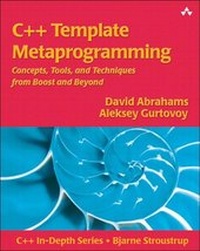
C++ Template Metaprogramming
Concepts, Tools, and Techniques from Boost and Beyond, Portable Documents
1st Edition
Published on 10. March 2021
408 pages
978-0-321-62395-9 (ISBN)
Description

C++ Template Metaprogramming sheds light on the most powerful idioms of today's C++, at long last delivering practical metaprogramming tools and techniques into the hands of the everyday programmer.
A metaprogram is a program that generates or manipulates program code. Ever since generic programming was introduced to C++, programmers have discovered myriad "template tricks" for manipulating programs as they are compiled, effectively eliminating the barrier between program and metaprogram. While excitement among C++ experts about these capabilities has reached the community at large, their practical application remains out of reach for most programmers. This book explains what metaprogramming is and how it is best used. It provides the foundation you'll need to use the template metaprogramming effectively in your own work.
This book is aimed at any programmer who is comfortable with idioms of the Standard Template Library (STL). C++ power-users will gain a new insight into their existing work and a new fluency in the domain of metaprogramming. Intermediate-level programmers who have learned a few advanced template techniques will see where these tricks fit in the big picture and will gain the conceptual foundation to use them with discipline. Programmers who have caught the scent of metaprogramming, but for whom it is still mysterious, will finally gain a clear understanding of how, when, and why it works. All readers will leave with a new tool of unprecedented power at their disposal-the Boost Metaprogramming Library.
Note: CD materials are only available with the print edition.
A metaprogram is a program that generates or manipulates program code. Ever since generic programming was introduced to C++, programmers have discovered myriad "template tricks" for manipulating programs as they are compiled, effectively eliminating the barrier between program and metaprogram. While excitement among C++ experts about these capabilities has reached the community at large, their practical application remains out of reach for most programmers. This book explains what metaprogramming is and how it is best used. It provides the foundation you'll need to use the template metaprogramming effectively in your own work.
This book is aimed at any programmer who is comfortable with idioms of the Standard Template Library (STL). C++ power-users will gain a new insight into their existing work and a new fluency in the domain of metaprogramming. Intermediate-level programmers who have learned a few advanced template techniques will see where these tricks fit in the big picture and will gain the conceptual foundation to use them with discipline. Programmers who have caught the scent of metaprogramming, but for whom it is still mysterious, will finally gain a clear understanding of how, when, and why it works. All readers will leave with a new tool of unprecedented power at their disposal-the Boost Metaprogramming Library.
Note: CD materials are only available with the print edition.
All prices
More details
Edition
1. Auflage
Language
English
Place of publication
Boston
United States
Publishing group
Pearson Education (US)
Target group
College/higher education
File size
7,65 MB
ISBN-13
978-0-321-62395-9 (9780321623959)
Copyright in bibliographic data and cover images is held by Nielsen Book Services Limited or by the publishers or by their respective licensors: all rights reserved.
Schweitzer Classification
Other editions
Additional editions
David Abrahams | Aleksey Gurtovoy
C++ Template Metaprogramming
Concepts, Tools, and Techniques from Boost and Beyond
Book
12/2004
Addison Wesley
€56.00
Shipment within 10-20 days
Persons
David Abrahams is a founding member and moderator of the Boost C++ library development group. Dave has been an ANSI/ISO C++ committee member since 1996, where he is best known for contributing a theory, specification, and implementation of exception handling for the C++ standard library. His company, Boost Consulting, provides Boost-related support and development services and professional training in the art of software construction.
Aleksey Gurtovoy is a technical lead for MetaCommunications and a contributing member of the Boost C++ community. Aleksey is the original author of the Boost Metaprogramming Library. He has been working with C++ since 1993, and holds a M.S. degree in computer science from Krasnoyarsk Technical State University, Russia.
Aleksey Gurtovoy is a technical lead for MetaCommunications and a contributing member of the Boost C++ community. Aleksey is the original author of the Boost Metaprogramming Library. He has been working with C++ since 1993, and holds a M.S. degree in computer science from Krasnoyarsk Technical State University, Russia.
Content
Preface.
Acknowledgments.
Making the Most of This Book.
1. Introduction.
Getting Started.
So What's a Metaprogram?
Metaprogramming in the Host Language.
Metaprogramming in C++.
Why Metaprogramming?
When Metaprogramming?
Why a Metaprogramming Library?
2. Traits and Type Manipulation.
Type Associations.
Metafunctions.
Numerical Metafunctions.
Making Choices at Compile Time.
A Brief Tour of the Boost Type Traits Library.
Nullary Metafunctions.
Metafunction Definition.
History.
Details.
Exercises.
3. A Deeper Look at Metafunctions.
Dimensional Analysis.
Higher-Order Metafunctions.
Handling Placeholders.
More Lambda Capabilities.
Lambda Details.
Details.
Exercises.
4. Integral Type Wrappers and Operations.
Boolean Wrappers and Operations.
Integer Wrappers and Operations.
Exercises.
5. Sequences and Iterators.
Concepts.
Sequences and Algorithms.
Iterators.
Iterator Concepts.
Sequence Concepts.
Sequence Equality.
Intrinsic Sequence Operations.
Sequence Classes.
Integral Sequence Wrappers.
Sequence Derivation.
Writing Your Own Sequence.
Details.
Exercises.
6. Algorithms.
Algorithms, Idioms, Reuse, and Abstraction.
Algorithms in the MPL.
Inserters.
Fundamental Sequence Algorithms.
Querying Algorithms.
Sequence Building Algorithms.
Writing Your Own Algorithms.
Details.
Exercises.
7. Views and Iterator Adaptors.
A Few Examples.
View Concept.
Iterator Adaptors.
Writing Your Own View.
History.
Exercises.
8. Diagnostics.
Debugging the Error Novel.
Using Tools for Diagnostic Analysis.
Intentional Diagnostic Generation.
History.
Details.
Exercises.
9. Crossing the Compile-Time/Runtime Boundary.
for each.
Implementation Selection.
Object Generators.
Structure Selection.
Class Composition.
(Member) Function Pointers as Template Arguments.
Type Erasure.
The Curiously Recurring Template Pattern.
Explicitly Managing the Overload Set.
The "sizeof Trick".
Summary.
Exercises.
10. Domain-Specific Embedded Languages.
A Little Language.
Goes a Long Way.
DSLs, Inside Out.
C++ as the Host Language.
Blitz++ and Expression Templates.
General-Purpose DSELs.
The Boost Spirit Library.
Summary.
Exercises.
11. A DSEL DesignWalkthrough.
Finite State Machines.
Framework Design Goals.
Framework Interface Basics.
Choosing a DSL.
Implementation.
Analysis.
Language Directions.
Exercises.
Appendix A. An Introduction to Preprocessor Metaprogramming.
Motivation.
Fundamental Abstractions of the Preprocessor.
Preprocessor Library Structure.
Preprocessor Library Abstractions.
Exercise.
Appendix B. The typename and template Keywords.
The Issue.
The Rules.
Appendix C. Compile-Time Performance.
The Computational Model.
Managing Compilation Time.
The Tests.
Appendix D. MPL Portability Summary.
Bibliography.
Index.
Acknowledgments.
Making the Most of This Book.
1. Introduction.
Getting Started.
So What's a Metaprogram?
Metaprogramming in the Host Language.
Metaprogramming in C++.
Why Metaprogramming?
When Metaprogramming?
Why a Metaprogramming Library?
2. Traits and Type Manipulation.
Type Associations.
Metafunctions.
Numerical Metafunctions.
Making Choices at Compile Time.
A Brief Tour of the Boost Type Traits Library.
Nullary Metafunctions.
Metafunction Definition.
History.
Details.
Exercises.
3. A Deeper Look at Metafunctions.
Dimensional Analysis.
Higher-Order Metafunctions.
Handling Placeholders.
More Lambda Capabilities.
Lambda Details.
Details.
Exercises.
4. Integral Type Wrappers and Operations.
Boolean Wrappers and Operations.
Integer Wrappers and Operations.
Exercises.
5. Sequences and Iterators.
Concepts.
Sequences and Algorithms.
Iterators.
Iterator Concepts.
Sequence Concepts.
Sequence Equality.
Intrinsic Sequence Operations.
Sequence Classes.
Integral Sequence Wrappers.
Sequence Derivation.
Writing Your Own Sequence.
Details.
Exercises.
6. Algorithms.
Algorithms, Idioms, Reuse, and Abstraction.
Algorithms in the MPL.
Inserters.
Fundamental Sequence Algorithms.
Querying Algorithms.
Sequence Building Algorithms.
Writing Your Own Algorithms.
Details.
Exercises.
7. Views and Iterator Adaptors.
A Few Examples.
View Concept.
Iterator Adaptors.
Writing Your Own View.
History.
Exercises.
8. Diagnostics.
Debugging the Error Novel.
Using Tools for Diagnostic Analysis.
Intentional Diagnostic Generation.
History.
Details.
Exercises.
9. Crossing the Compile-Time/Runtime Boundary.
for each.
Implementation Selection.
Object Generators.
Structure Selection.
Class Composition.
(Member) Function Pointers as Template Arguments.
Type Erasure.
The Curiously Recurring Template Pattern.
Explicitly Managing the Overload Set.
The "sizeof Trick".
Summary.
Exercises.
10. Domain-Specific Embedded Languages.
A Little Language.
Goes a Long Way.
DSLs, Inside Out.
C++ as the Host Language.
Blitz++ and Expression Templates.
General-Purpose DSELs.
The Boost Spirit Library.
Summary.
Exercises.
11. A DSEL DesignWalkthrough.
Finite State Machines.
Framework Design Goals.
Framework Interface Basics.
Choosing a DSL.
Implementation.
Analysis.
Language Directions.
Exercises.
Appendix A. An Introduction to Preprocessor Metaprogramming.
Motivation.
Fundamental Abstractions of the Preprocessor.
Preprocessor Library Structure.
Preprocessor Library Abstractions.
Exercise.
Appendix B. The typename and template Keywords.
The Issue.
The Rules.
Appendix C. Compile-Time Performance.
The Computational Model.
Managing Compilation Time.
The Tests.
Appendix D. MPL Portability Summary.
Bibliography.
Index.
