

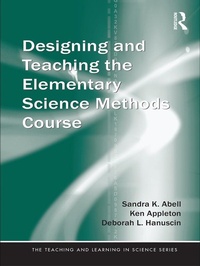
Designing and Teaching the Elementary Science Methods Course
Published on 25. February 2010
320 pages
978-1-135-28135-9 (ISBN)
Description

What do aspiring and practicing elementary science teacher education faculty need to know as they plan and carry out instruction for future elementary science teachers? This scholarly and practical guide for science teacher educators outlines the theory, principles, and strategies needed, and provides classroom examples anchored to those principles. The theoretical and empirical foundations are supported by scholarship in the field, and the practical examples are derived from activities, lessons, and units field-tested in the authors' elementary science methods courses.
Designing and Teaching the Elementary Science Methods Course is grounded in the theoretical framework of pedagogical content knowledge (PCK), which describes how teachers transform subject matter knowledge into viable instruction in their discipline. Chapters on science methods students as learners, the science methods course curriculum, instructional strategies, methods course assessment, and the field experience help readers develop their PCK for teaching prospective elementary science teachers. "Activities that Work" and "Tools for Teaching the Methods Course" provide useful examples for putting this knowledge into action in the elementary science methods course.
Designing and Teaching the Elementary Science Methods Course is grounded in the theoretical framework of pedagogical content knowledge (PCK), which describes how teachers transform subject matter knowledge into viable instruction in their discipline. Chapters on science methods students as learners, the science methods course curriculum, instructional strategies, methods course assessment, and the field experience help readers develop their PCK for teaching prospective elementary science teachers. "Activities that Work" and "Tools for Teaching the Methods Course" provide useful examples for putting this knowledge into action in the elementary science methods course.
More details
Series
Language
English
Place of publication
London
United Kingdom
Publishing group
Taylor & Francis Ltd
Target group
College/higher education
Illustrations
11 s/w Tabellen
11 Tables, black and white
File size
3,08 MB
ISBN-13
978-1-135-28135-9 (9781135281359)
Copyright in bibliographic data and cover images is held by Nielsen Book Services Limited or by the publishers or by their respective licensors: all rights reserved.
Schweitzer Classification
Other editions
Additional editions
Sandra Abell | Ken Appleton | Deborah Hanuscin
Designing and Teaching the Elementary Science Methods Course
Book
02/2010
1st Edition
Routledge
€262.60
Shipment within 10-20 days
Sandra Abell | Ken Appleton | Deborah Hanuscin
Designing and Teaching the Elementary Science Methods Course
Book
02/2010
1st Edition
Routledge
€77.00
Shipment within 10-20 days
Persons
Sandra K. Abell is Curators' Professor of Science Education at the University of Missouri, US, where she directs the university's Science Education Center.
Ken Appleton is semi-retired as an Adjunct Associate Professor at Central Queensland University, Australia.
Deborah L. Hanuscin is Assistant Professor of Elementary Education at the University of Missouri, US, where she holds a joint appointment in the Department of Physics & Astronomy and Department of Learning, Teaching, & Curriculum.
Ken Appleton is semi-retired as an Adjunct Associate Professor at Central Queensland University, Australia.
Deborah L. Hanuscin is Assistant Professor of Elementary Education at the University of Missouri, US, where she holds a joint appointment in the Department of Physics & Astronomy and Department of Learning, Teaching, & Curriculum.
Content
Contents
Preface
Acknowledgement
Introduction
Part I: Theoretical, Contextual, and Pedagogical Foundations for the Elementary Science Methods Course
1. Perspectives of Teacher Learning
Views about Learning and Teaching
Ideas about Knowledge
Learning Theories
A View of Learning
An Example Application to a Science Methods Course
Conclusion
More to Explore
References
2. The Context for Elementary Science Teacher Preparation
Who is Responsible for Educating Elementary Science Teachers?
The Policy Context: Goals and Standards for Elementary Science Teacher Education
The Program Context: Elementary Teacher Education
The Program Context: Science Courses
The Program Context: Field Experience and Partnerships with Local Schools
Conclusion
More to Explore
References
3. Orientations to Teaching Science Teachers
Introduction
What are Orientations to Teaching Teachers?
Some Orientations to Teaching Science Teachers
The Reflection Orientation and the Science Methods Course
Conclusion
Tools for Teaching Elementary Science Methods
References
4. Understanding the Elementary Science Methods Student
Introduction
Prospective Teachers as Learners
Prospective Teachers' Knowledge for Science Teaching
Understanding Your Methods Students
Conclusion
More to Explore
References
5. Curriculum and Resources for Elementary Science Teacher Education
Aims and Goals for the Science Methods Course
The Methods Course Curriculum-What to Include?
Selecting Resources and Materials
Facilities and Equipment
Communicating Your Expectations to Students: The Course Syllabus
Conclusion
Tools for Teaching the Elementary Science Methods Course
More to Explore
References
6. Instructional Strategies for the Elementary Science Methods Course
Aspects of PCK Pertinent to this Chapter
Your Orientation to Learning and Teaching
Environment
General Pedagogy
Teaching Models
Teaching How to Plan
Conclusion
More to Explore
References
7: Assessment Strategies for the Elementary Methods Course
Purposes and Examples of Assessment in the Elementary Science Methods Course
Principles of Effective Assessment
Scoring and Grading Assignments
Putting it All Together: Designing a Methods Course Assignment
Conclusion
Tools for Teaching Elementary Science Methods
More to Explore
References
8: Field Experiences in Elementary Science Methods
Benefits of Field Experiences
Addressing Challenges to the Science Methods Field Experience
Various Models of Science Methods Field Experiences
Student Reflection on the Field Experience
Conclusion: Design Principles for Science Methods Field Experiences
Tools for Teaching Elementary Science Methods
References
Part II: Activities that Work for the Elementary Science Methods Course
ATW 1: Learning about the 5E Learning Cycle: Magnetism
ATW 2: The Interactive Approach: Floating & Sinking
ATW 3: Inquiring into Guided and Open Inquiry: Insect Study
ATW 4: Eliciting Student Ideas: The Human Body
ATW 5: Using Models and Analogies: Electric Circuits
ATW 6: Learning about Discourse: Light and Shadows
ATW 7: Integrating Language Arts and Science: The Water Cycle
ATW 8: Seamless Assessment: The Moon Investigation
About the Authors
Index
Preface
Acknowledgement
Introduction
Part I: Theoretical, Contextual, and Pedagogical Foundations for the Elementary Science Methods Course
1. Perspectives of Teacher Learning
Views about Learning and Teaching
Ideas about Knowledge
Learning Theories
A View of Learning
An Example Application to a Science Methods Course
Conclusion
More to Explore
References
2. The Context for Elementary Science Teacher Preparation
Who is Responsible for Educating Elementary Science Teachers?
The Policy Context: Goals and Standards for Elementary Science Teacher Education
The Program Context: Elementary Teacher Education
The Program Context: Science Courses
The Program Context: Field Experience and Partnerships with Local Schools
Conclusion
More to Explore
References
3. Orientations to Teaching Science Teachers
Introduction
What are Orientations to Teaching Teachers?
Some Orientations to Teaching Science Teachers
The Reflection Orientation and the Science Methods Course
Conclusion
Tools for Teaching Elementary Science Methods
References
4. Understanding the Elementary Science Methods Student
Introduction
Prospective Teachers as Learners
Prospective Teachers' Knowledge for Science Teaching
Understanding Your Methods Students
Conclusion
More to Explore
References
5. Curriculum and Resources for Elementary Science Teacher Education
Aims and Goals for the Science Methods Course
The Methods Course Curriculum-What to Include?
Selecting Resources and Materials
Facilities and Equipment
Communicating Your Expectations to Students: The Course Syllabus
Conclusion
Tools for Teaching the Elementary Science Methods Course
More to Explore
References
6. Instructional Strategies for the Elementary Science Methods Course
Aspects of PCK Pertinent to this Chapter
Your Orientation to Learning and Teaching
Environment
General Pedagogy
Teaching Models
Teaching How to Plan
Conclusion
More to Explore
References
7: Assessment Strategies for the Elementary Methods Course
Purposes and Examples of Assessment in the Elementary Science Methods Course
Principles of Effective Assessment
Scoring and Grading Assignments
Putting it All Together: Designing a Methods Course Assignment
Conclusion
Tools for Teaching Elementary Science Methods
More to Explore
References
8: Field Experiences in Elementary Science Methods
Benefits of Field Experiences
Addressing Challenges to the Science Methods Field Experience
Various Models of Science Methods Field Experiences
Student Reflection on the Field Experience
Conclusion: Design Principles for Science Methods Field Experiences
Tools for Teaching Elementary Science Methods
References
Part II: Activities that Work for the Elementary Science Methods Course
ATW 1: Learning about the 5E Learning Cycle: Magnetism
ATW 2: The Interactive Approach: Floating & Sinking
ATW 3: Inquiring into Guided and Open Inquiry: Insect Study
ATW 4: Eliciting Student Ideas: The Human Body
ATW 5: Using Models and Analogies: Electric Circuits
ATW 6: Learning about Discourse: Light and Shadows
ATW 7: Integrating Language Arts and Science: The Water Cycle
ATW 8: Seamless Assessment: The Moon Investigation
About the Authors
Index
