

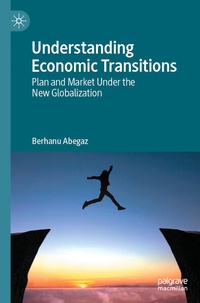
Understanding Economic Transitions
Description

Understanding Economic Transitions provides a self-contained, comprehensive, and authoritative treatment of modern economic systems. This textbook has four features of particular use to students: (i) Using the prism of comparative institutionalism, it melds theory andevidence to revisit the varieties of planned and market-driven systems today; (ii) It takes economic planning seriously in theory and practice (central, cooperative, or indicative) as the most prominent marker of the ever-changing boundaries between state and market; (iii) It focuses on the dynamics of systemic transition in formerly socialist countries by contextualizing them in terms of the whence (central planning), the how (modalities of transition), and the whither (illiberal or liberal capitalism) of politico-economic transformation; and (iv) It examines the profound impact on these structural processes of the post-1990 phase of economic globalization. With its clear, comprehensive content and useful pedagogical features, this textbook will prepare students to understand how economies transition and why.
More details
Other editions
Additional editions
Person
Content
PART ONE: THEORIES OF COMPARATIVE ECONOMICS.- 1. Economic Systems.- 2. Economic Planning in Various Settings.- PART TWO: TWO CANONICAL STATE SOCIALISMS.- 3. The Soviet CPE I: The Process of Planning.- 4. The Soviet CPE II: The Process of Implementation.- 5. The Chinese CPE: Planning in an Industrializing Economy.- PART THREE: SYSTEMIC TRANSITION IN THEORY AND PRACTICE.- 6. The Market-oriented Transition: Theory.- 7. The Isolationist Russian Road to Capitalism.- 8. The Nationalist Chinese Road to Capitalism.- 9. Two Integrationist Variants: Poland and Vietnam.- PART FOUR: TRANSITION UNDER THE NEW GLOBALIZATION.- 10. Market Integration in the Age of Global Value Chains.- 11. The Developmental State and Political Capitalism.- 12. Comparative Economics Redux.
