

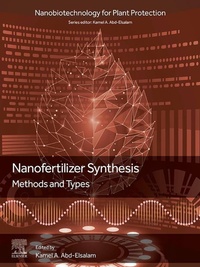
Nanofertilizer Synthesis: Methods and Types
Published on 29. February 2024
425 pages
978-0-443-13536-1 (ISBN)
Description

Nano-Fertilizer Synthesis and Types¿discusses the production of a variety of nano-fertilizers, including biological, chemical, and mechanical types. Nano-fertilizers aid in nutrition control by increasing nutrient consumption efficiency as nutrients are bonded to nano-dimensional adsorbents, which in turn release nutrients considerably more slowly than traditional fertilizers.
As the nano-fertilizer sector advances, one approach is to concentrate on macro elements (N, P, K), as switching to nano-fertilizers may result in significant environmental benefits by replacing the majority of these nutrients. Furthermore, the biosynthesis of nanomaterials employing bacteria, algae, yeast, fungus, actinomycetes, and plants has opened up a new field of study for the creation of inorganic nanoparticles as environmentally benign fertilizers. Because of the several-fold increase in the surface-to-volume ratio of nano-forms of nutrients, and their appropriateness for foliar application, where environmental losses are further decreased, nano-fertilizers may achieve higher efficiency. However, before nano-fertilizers are manufactured and commercialized, further research should be conducted to assess their impact for both humans and the environment. While there are some nano-fertilizer products available, the nano-fertilizer production industry still requires additional public and private sector support and development.
Nano-Fertilizers Synthesis and Types presents the latest information, highlights the benefits and impacts of each, and provides a single-volume resource to help effectively and efficiently identify options based on use-case. Exploring the topic from the various mechanistic types to the relevant regulatory, safety, and economic aspects, this volume will be appropriate for those working with and researching new nano-fertilizers.
- Guides in the identification of appropriate nano-fertilizer options based on use-case
- Addresses both target plant and environmental considerations
- Includes economic and regulatory insights
More details
Other editions
Additional editions
Kamel A. Abd-Elsalam
Nanofertilizer Synthesis: Methods and Types
Book
02/2024
Elsevier
€184.50
Shipment within 15-20 days
Content
1. Nanofertilizers for sustainable agriculture: Note from the editor 2. Types of nanofertitlzers 3. The production of nanofertilizers using physical and chemical methods? 4. Biosynthesis of Nanofertilizers 5. Inorganic nanofertilizers production and characterization 6. Hybrid Nanofertilizer 7. Nanoclay and Zeolite based Nanofertilizers 8. Bionanoparticles as a safe fertilizer 9. Biopolymers based nanofertilizers 10. Chitosan nanoparticles fertilizers 11. Nitrogen-based nanofertilizers 12. NPK¿nanofertilizers 13. Sulfur, and magnesium-based nanofertilizers 14. Silver-based nanofertilizers 15. Zinc-based nanofertilizers 16. Carbon nanotubes fertilizers 17. Cu-based nanofertilizers 18. Phosphorus¿nanofertilizer 19. Fertilizers nano bio and or nanoencapsulations 20. Synthesis of trace elements loaded nano-fertilizers and their benefits in agriculture 21. Micro Nano-Biochar fertilizers 22. Physiological and Molecular basis of seed priming with nano materials 23. Nano-stabilizers for growth improvement. 24. Nanomaterial based controlled release fertilizers 25. Mode of action of nanofertilizers and their role in nutrient budgeting: Quality and attribute perspectives 26. Methods of formulating and producing nanofertilizers 27. Nano-fertilizers: Types and Mechanisms 28. Economic and commercialization aspects of nonfertilizer applications
