


Gender, Language and the Periphery
Grammatical and social gender from the margins
1st Edition
Published on 16. December 2016
417 pages
978-90-272-6683-5 (ISBN)
Description

This volume aims to demonstrate that the centre/periphery tension allows for a theory of gender understood as a power relationship with implications for a political analysis of language structures, language uses and linguistic resistances. All of the 12 chapters included in this volume work on understudied languages such as Moldovan, Lakota, Cantonese, Bajjika, Croatian, Hebrew, Arabic, Ciluba, Cantonese, Cypriot Greek, Korean, Malaysian, Basque and Belarusian and they all explore from the margins different dimensions of social gender in grammar. The diversity of languages is reflected in the range of theoretical frameworks (linguistic anthropology, systemic functional linguistics, contrastive syntactical analysis to name a few) used by the authors in order to apprehend the fluidity of gender(-ed) language and identity, to highlight the social constraints on daily discourse and to identify discourses that resist gender norms. This book will be highly relevant for students and researchers working on the interface of gender with morpho-syntax, semantics, pragmatics and discourse analysis.
More details
Other editions
Additional editions
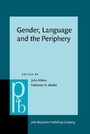
Julie Abbou | Fabienne H. Baider
Gender, Language and the Periphery
Grammatical and social gender from the margins
Book
12/2016
John Benjamins Publishing Co
€123.50
Shipment within 10-15 days
Content
- Intro
- Gender, Language and the Periphery
- Editorial page
- Title page
- LCC data
- Table of contents
- Periphery, gender, language: An introduction
- 1. From centre to margin
- 2. Minor phenomena and minorisation: The structure in question
- 2.1 Theorising the minor
- 2.2 Structure, meaning and power
- 2.3 Gender structures and linguistic structures
- 3. De-territorialising and decolonising linguistics
- 3.1 De-territorialising linguistics
- 3.2 Decolonising linguistics
- 3.3 Toward a transversal methodology
- 4. Undoing grammatical gender
- 5. Intersectional peripheries
- 6. Conclusion
- References
- Part I. Undoing grammatical gender
- Trying to change a gender-marked language: Classical vs. Modern Hebrew
- 1. Introduction
- 1.1 Grammatical gender and social context
- 1.2 Grammatical gender and linguistic change
- 2. Grammatical gender in Classical Hebrew
- 2.1 Function words
- 2.2 Content words
- 3. Grammatical gender in Modern Hebrew
- 4. Linguistic changes regarding gender
- 4.1 Gender neutralization
- 4.2 Gender feminization
- 5. Masculinization as a new trend
- 6. Conclusions
- References
- Gender marking and the feminine imaginary in Arabic
- 1. Introduction
- 2. Gendering language and speech
- 2.1 Description of gender in Classical Arabic
- 2.2 Grammarian discourse and gender: A social and linguistic imaginary
- 3. Feminisation and masculinisation of nouns and adjectives
- 3.1 Feminisation of professional titles in Classical Arabic and Tunisian
- 3.2 Masculinised feminine and feminized masculine: 'The rebellious adjectives'
- 4. The construction of the feminine imaginary?
- A poststructuralist approach to structural gender linguistics: Initial considerations
- 1. Introduction
- 2. A poststructuralist approach to gendered language structures
- 3. Methodological considerations
- 4. De-essentialisation through cross-linguistic analysis: Gender categories in English, German and Croatian
- 5. De-essentialisation through historical linguistic analysis
- 6. De-essentialisation through analysis of the usage patterns of particular personal reference forms
- 7. Conclusion
- References
- A hermeneutical approach to gender linguistic materiality: Semiotic and structural categ
- 1. Introduction
- 2. Interplay between grammatical, semantic and social features of the gender categorisation
- 2.1 Gender and classification systems
- 2.2 Towards a hermeneutical reading of grammatical gender
- 3. Methodological consequences: An inter-level and interlingual approach
- 4. Linguistic gender in English
- 5. Linguistic gender in Cantonese
- 5.1 Sociolinguistic elements of Cantonese
- 5.2 Lexicon: Relational terms and keys
- 5.3 Morphology: Sentence particles
- 5.4 Syntax: The written pronominal system and its evolution
- 6. Gender translation: An English/Cantonese comparative survey
- 6.1 Corpus presentation
- 6.2 Written Cantonese: Contextualisation
- 6.3 Data analysis
- 6.4 Analysis sum-up
- 7. Conclusion
- Acknowledgement
- References
- Gender bias in Bantu languages: The case of Cilubà (L31)
- 1. Introduction
- 1.1 Typology and sociolinguistics of Cilubà
- 1.2 Gender representations and bias in language: Theoretical and methodological considerations
- 2. Gender representation and bias in morpho-syntax
- 2.1 Grammatical agreement and gender in Cilubà
- 2.2 Semantic roles
- 2.3 Class-prefix
- 3. Systemic lexical gender representation and bias in Cilubà
- 3.1 Personal proper names
- 3.2 Common personal names
- 3.3 Male as norm
- 4. Lexis in discourse: Connotations of non-personal nouns
- 4.1 Connotations of the masculine
- 4.2 Connotations of the feminine
- 4.3 Masculine-feminine contrastive connotations
- 5. Rhetorical use of gender: The linguistic construction of gender stereotypes
- 5.1 Metaphors
- 5.2 Male vs. female stereotypical portrayal
- 5.3 Gender presuppositions
- 5.4 Taboo and euphemism
- 5.5 Gender representation and bias in phraseology
- 6. Conclusion
- References
- Appendixes
- Appendix 1 - Singular-plural pairing in Cilubà
- Appendix 2 - Concord of variable forms
- The representation of gender in Bajjika grammar and discourse
- 1. Introduction
- 2. Background
- 2.1 The Bajjika language and community
- 2.2 Gender in Indo-Aryan languages
- 3. The expression of gender in Bajjika grammar
- 3.1 Dispersal of gender in Bajjika grammar
- 3.2 Gender in nominal forms
- 3.3 Verb-morphology
- 3.4 Particle
- 4. Gender in spoken and written discourse - A variation in mode
- 5. Conclusion and discussion
- References
- Appendices
- Appendix 1 - Gender-distinguishable noun categories with examples
- Appendix 2 - Examples of nouns where gender cannot be distinguished
- Appendix 3 - A selection of kinship terms
- Appendix 4 - Gender distinction in caste-based professions
- Appendix 5 - Abbreviations
- The lexical paradigm based on sex distinction and the semantics of its constituents in English and Belarusian
- 1. Introduction
- 2. Description of the study
- 2.1 The object of the study
- 2.2 Methodology
- 3. The lexical paradigm based on sex distinction in the English language
- 3.1 The perceptual properties
- 3.2 Psychological and behavioural properties
- 3.3 Physiological properties
- 3.4 Animal vs. human gender-based features in English
- 4. The lexical paradigm based on sex distinction in the Belarusian language
- 5. English and Belarusian comparison
- 5.1 Physiological gender-based features in Belarusian and English
- 5.2 Psychological and behavioural gender-based features in Belarusian and English
- 6. Discussion
- 6.1 Summary of findings
- 6.2 Interpretation of the findings
- 7. Conclusions
- References
- Sources of language data
- Part II. Intersectional peripheries
- When She and He become It: The use of grammatical gender in the Greek of the Armenians of Cyprus
- 1. Introduction: Grammatical gender and language acquisition
- 2. The study
- 3. The grammatical gender system in Greek and Armenian
- 4. Results
- 5. Discussion
- References
- Lakota men's and women's speech: Gender, metapragmatic discourse, and language revitalization
- 1. Introduction
- 2. Background
- 3. Methods
- 4. Implicit metapragmatic discourse: Early 20th century narratives
- 4.1 Methods
- 4.2 Analysis and results
- 4.3 Lakota metapragmatics of the early 20th century
- 5. Explicit metapragmatic discourse: Revitalizing Lakota
- 5.1 Methods
- 5.2 "Incorrect" speech, acculturation, and loss
- 5.3 Two different (gendered) ways of speaking
- 5.4 Gender-indexing enclitics as pragmatically equivalent
- 5.5 Lakota metapragmatics of the 21st century
- 6. Conclusion
- References
- "Moldovan" and feminist language politics: Two distinct peripheral linguistic markets
- 1. Introduction
- 2. Peripheral linguistics
- 2.1 Moldova, Moldovan and Moldovans - on what periphery?
- 2.2 Moldovan Sociolinguistics and peripheral linguistic practice
- 3. Research methodology
- 3.1 An overview of grammatical gender in Romanian
- 3.2 Gender and linguistic practices
- 3.3 Feminism and language
- 4. Gendering Moldovan/Romanian: Results of the workshop
- 4.1 Neutralization
- 4.2 Double gendering
- 5. Just an experiment? Regarding the status of the data
- 6. Conclusions and future research directions
- References
- Laws
- Literature
- Internet sources
- Eastern boys and girls! Comparative linguistic anthropologies of lesbian and gay communities, Kuala Lumpur and Sorwool
- 1. Introduction
- 1.1 Context
- 1.2 Data collection and corpus
- 1.3 Methodology
- 2. Kuala Lumpur
- 2.1 Sociologies and culturalogies
- 2.2 Linguistic practices of Malay gay communities
- 3. Sorwool
- 3.1 Sociocultural models
- 3.2 Lesbian and gay networks
- 3.3 Linguistic practices of gay and lesbian communities in Sorwool
- 4. Discussion
- References
- Harlots and whores but not lovers: Dressing down the pronoun for a female addressee in a Basque Old Testament
- 1. Introduction
- 2. The pronominal system in Basque
- 3. Source and methods
- 3.1 Duvoisin's Bible (1859-1965)
- 3.2 Methods
- 3.3 A note on translation
- 4. Findings
- 4.1 The Book of Psalms
- 4.2 The Latter Prophets
- 5. Conclusion
- References
- Appendixes
- Appendix 1 - Text 2 - Isaiah 47: 1-15
- Appendix 2 - Text 4 - Ezekiel 23: 21-34
- Appendix 3 - Text 5 - III Kings 3: 22
- About the contributors
- Index of languages
- Index of names
- Index of subjects
