


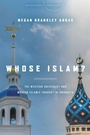
Whose Islam?
The Western University and Modern Islamic Thought in Indonesia
Published on 8. June 2021
280 pages
978-1-5036-2794-9 (ISBN)
Available for download
Description

In this incisive new book, Megan Brankley Abbas argues that the Western university has emerged as a significant space for producing Islamic knowledge and Muslim religious authority. For generations, Indonesia's foremost Muslim leaders received their educations in Middle Eastern madrasas or the archipelago's own Islamic schools. Starting in the mid-twentieth century, however, growing numbers traveled to the West to study Islam before returning home to assume positions of political and religious influence. Whose Islam? examines the far-reaching repercussions of this change for major Muslim communities as well as for Islamic studies as an academic discipline.
As Abbas details, this entanglement between Western academia and Indonesian Islam has not only forged powerful new transnational networks but also disrupted prevailing modes of authority in both spheres. For Muslim intellectuals, studying Islam in Western universities provides opportunities to experiment with academic disciplines and to reimagine the faith, but it also raises troubling questions about whether and how to protect the Islamic tradition from Western encroachment. For Western academics, these connections raise pressing ethical questions about their own roles in the global politics of development and Islamic religious reform. Drawing on extensive archival research from around the globe, Whose Islam? provides a unique perspective on the perennial tensions between insiders and outsiders in religious studies.
As Abbas details, this entanglement between Western academia and Indonesian Islam has not only forged powerful new transnational networks but also disrupted prevailing modes of authority in both spheres. For Muslim intellectuals, studying Islam in Western universities provides opportunities to experiment with academic disciplines and to reimagine the faith, but it also raises troubling questions about whether and how to protect the Islamic tradition from Western encroachment. For Western academics, these connections raise pressing ethical questions about their own roles in the global politics of development and Islamic religious reform. Drawing on extensive archival research from around the globe, Whose Islam? provides a unique perspective on the perennial tensions between insiders and outsiders in religious studies.
Reviews / Votes
"Abbas writes vividly and with a clarity and verve that make both mundane historical events and technically daunting theoretical debates accessible, engaging, and recognizably important. This is one of the most interesting works in Islamic education and Islamic studies in recent years. Its combination of literary clarity and intellectual sophistication is a rare one."-Robert Hefner, Boston University "A groundbreaking contribution to the global intellectual history of Islamic Studies, showing the entanglements of Cold War-era North American universities with the transformation of religious education in postcolonial Indonesia. Whose Islam? invites us to rethink the politics of the connections between the Western academic study of religion and modern Muslim engagement with Islamic tradition."-Cemil Aydin, University of North Carolina, Chapel Hill "Megan Brankley Abbas has written an altogether remarkable and impressive analysis of the entanglements of Indonesian Islam and Western universities. It is readable, bold in its argument, and detailed in all the ways that good history should be."-Philip Fountain, The Developing Economies "[Whose Islam?] makes important contributions to the study of Islamic higher education in Indonesia. It is carefully researched and well written and will be particularly useful for Indonesia specialists unfamiliar with Islamic education in the country as well as for Islamic Studies scholars unfamiliar with Indonesia."-Mark R. Woodward, Pacific Affairs "This detailed and carefully nuanced book provides an excellent analysis of the relationship between the Western university and modern Islamic thought, with a focus on Indonesia."-Ronald Lukens-Bull, SOJOURNMore details
Series
Edition
New edition
Language
English
Place of publication
Palo Alto
United States
Target group
Professional and scholarly
Edition type
New edition
ISBN-13
978-1-5036-2794-9 (9781503627949)
Copyright in bibliographic data and cover images is held by Nielsen Book Services Limited or by the publishers or by their respective licensors: all rights reserved.
Schweitzer Classification
Other editions
Additional editions
Book
06/2021
Stanford University Press
€121.50
Shipment within 15-20 days
Person
Megan Brankley Abbas is Assistant Professor of Religion at Colgate University.
Content
Introduction: N/A
1. Building a Modern Islamic College
2. McGill University as a "Midwife for the Islamic Reformation"
3. A Fusionist Transformation at the Ministry of Religious Affairs
4. Islam and Development, Chicago-Style
5. The Specter of Academic Imperialism
Conclusion: The Future of Islamic Studies
1. Building a Modern Islamic College
2. McGill University as a "Midwife for the Islamic Reformation"
3. A Fusionist Transformation at the Ministry of Religious Affairs
4. Islam and Development, Chicago-Style
5. The Specter of Academic Imperialism
Conclusion: The Future of Islamic Studies

