

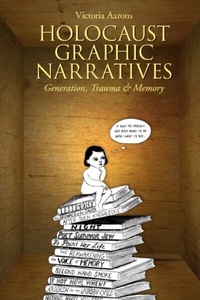
Holocaust Graphic Narratives
Generation, Trauma, and Memory
1st Edition
Published on 19. December 2019
256 pages
978-1-9788-0257-5 (ISBN)
Description

In Holocaust Graphic Narratives, Victoria Aarons demonstrates the range and fluidity of this richly figured genre. Employing memory as her controlling trope, Aarons analyzes the work of the graphic novelists and illustrators, making clear how they extend the traumatic narrative of the Holocaust into the present and, in doing so, give voice to survival in the wake of unrecoverable loss. In recreating moments of traumatic rupture, dislocation, and disequilibrium, these graphic narratives contribute to the evolving field of Holocaust representation and establish a new canon of visual memory. The intergenerational dialogue established by Aarons' reading of these narratives speaks to the on-going obligation to bear witness to the Holocaust. Examined together, these intergenerational works bridge the erosions created by time and distance. As a genre of witnessing, these graphic stories, in retracing the traumatic tracks of memory, inscribe the weight of history on generations that follow.
Reviews / Votes
"Holocaust Graphic Novels is a gem. The author is a master of her subject, discussing the many contributions made by graphic Holocaust novels with great erudition. In Aarons' intelligent and insightful readings, the caesura induced by the Shoah continues to send intergenerational psychological shock waves."- Alan Berger, author of Children of Job: American Second-Generation Witnesses to the Holocaust
"Holocaust Graphic Narratives brims with shrewd perceptions, making a necessary case for the significance of this formerly marginalized medium in its grappling with the impossible task of remembrance."- Philip Roth Studies
"Holocaust Graphic Narratives offers a brilliant analysis of central, representative works that have appeared in the wake of Spiegelman's Maus and provides a vital way for us to re-envision the landscape of post-Holocaust testimony."- Eric Sundquist, author of Strangers in the Land: Blacks, Jews, Post-Holocaust America
"Holocaust Graphic Narratives is a thoroughly engaging exploration of the history and memory, with applications far beyond comic studies. In what should become a commonly assigned and suggested text, Aarons opens the doors to new ways of approaching the act of bearing witness through graphic narratives."- Journal of Graphic Novels and Comics
"Aarons has made a significant contribution to the discourse surrounding graphic narratives dealing with the Shoah. Her discussion of the relationship between word and image is always enlightening...Aarons has offered her readers an intellectual road map with which to read the ever-increasing number of third- and-as the prophet Joel foretold-soon-to-be fourth-generation of Holocaust graphic narratives."- Shofar
"[Aaron's] use of memory as a lens and her selection of contemporary graphic narratives make this an insightful and important exploration of the ways in which the medium of the graphic novel is ideally suited for examining the Holocaust and other such complex narratives. Highly recommended."- Choice
This is the book that many of us have been waiting for. Aarons's brilliant book offers readers genuinely exciting theoretical and deeply revelatory close explorations of both image and language in a wide range of Holocaust graphic narratives. The author's critical insights into the profound intersectionality of modern Jewish identity, language, memory, modern midrash and testimony are dazzlingly sophisticated, her prose always lucid and appealing. This nuanced and pathbreaking study should be at the top of the list for anyone curious about how graphic artists explore their subjectivities in relation to the weight of painful history; Aarons provides a truly essential resource for classrooms and scholars of the Holocaust as well as intergenerational trauma and commemoration in a wide variety of contexts.- Ranen Omer-Sherman, author of Imagining the Kibbutz: Visions of Utopia in Literature & Film
"Aarons shows how the graphic novel's rich juxtapositions of text and image extends the monumental arc of the Holocaust's photographic legacy from the immutable past into the subjective and ever-evolving present." - H-Net
More details
Language
English
Place of publication
New Brunswick NJ
United States
Target group
College/higher education
Illustrations
39
ISBN-13
978-1-9788-0257-5 (9781978802575)
Copyright in bibliographic data and cover images is held by Nielsen Book Services Limited or by the publishers or by their respective licensors: all rights reserved.
Schweitzer Classification
Other editions
Additional editions
Book
12/2019
Rutgers University Press
€33.00
Shipment within 3-4 weeks
Person
Victoria Aarons holds the position of O.R. and Eva Mitchell Distinguished Professor of Literature at Trinity University, where she teaches courses on American Jewish and Holocaust literatures.
Content
Contents
Acknowledgments
Introduction: Holocaust Graphic Narratives: Visual Testimonies of Memory
1 The Performance of Memory: Miriam Katin's We Are On Our Own,
A Child Survivor's (Auto)Biographical Memoir
2 Memory Frames: Mendel's Daughter, A Second-Generation Perspective
3 "Replacing absence with memory": Bernice Eisenstein's Graphic Memoir
I Was the Child of Holocaust Survivors
4 Flying Couch: A Third-Generation Tapestry of Memory
5 Yossel: April 19, 1943: Possible Histories
6 Visual Landscapes of Memory: Fracturing Time and Space
Epilogue: An Inheritance of Memory
Acknowledgments
Notes
Bibliography
Index
About the Author
Acknowledgments
Introduction: Holocaust Graphic Narratives: Visual Testimonies of Memory
1 The Performance of Memory: Miriam Katin's We Are On Our Own,
A Child Survivor's (Auto)Biographical Memoir
2 Memory Frames: Mendel's Daughter, A Second-Generation Perspective
3 "Replacing absence with memory": Bernice Eisenstein's Graphic Memoir
I Was the Child of Holocaust Survivors
4 Flying Couch: A Third-Generation Tapestry of Memory
5 Yossel: April 19, 1943: Possible Histories
6 Visual Landscapes of Memory: Fracturing Time and Space
Epilogue: An Inheritance of Memory
Acknowledgments
Notes
Bibliography
Index
About the Author
