

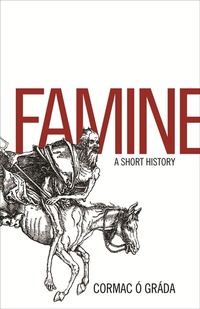
Famine
A Short History
1st Edition
Published on 7. June 2021
344 pages
978-1-4008-2989-7 (ISBN)
Description

Famine remains one of the worst calamities that can befall a society. Mass starvation--whether it is inflicted by drought or engineered by misguided or genocidal economic policies--devastates families, weakens the social fabric, and undermines political stability. Cormac Ó Gráda, the acclaimed author who chronicled the tragic Irish famine in books like Black '47 and Beyond, here traces the complete history of famine from the earliest records to today.
Combining powerful storytelling with the latest evidence from economics and history, Ó Gráda explores the causes and profound consequences of famine over the past five millennia, from ancient Egypt to the killing fields of 1970s Cambodia, from the Great Famine of fourteenth-century Europe to the famine in Niger in 2005. He enriches our understanding of the most crucial and far-reaching aspects of famine, including the roles that population pressure, public policy, and human agency play in causing famine; how food markets can mitigate famine or make it worse; famine's long-term demographic consequences; and the successes and failures of globalized disaster relief. Ó Gráda demonstrates the central role famine has played in the economic and political histories of places as different as Ukraine under Stalin, 1940s Bengal, and Mao's China. And he examines the prospects of a world free of famine.
This is the most comprehensive history of famine available, and is required reading for anyone concerned with issues of economic development and world poverty.
Combining powerful storytelling with the latest evidence from economics and history, Ó Gráda explores the causes and profound consequences of famine over the past five millennia, from ancient Egypt to the killing fields of 1970s Cambodia, from the Great Famine of fourteenth-century Europe to the famine in Niger in 2005. He enriches our understanding of the most crucial and far-reaching aspects of famine, including the roles that population pressure, public policy, and human agency play in causing famine; how food markets can mitigate famine or make it worse; famine's long-term demographic consequences; and the successes and failures of globalized disaster relief. Ó Gráda demonstrates the central role famine has played in the economic and political histories of places as different as Ukraine under Stalin, 1940s Bengal, and Mao's China. And he examines the prospects of a world free of famine.
This is the most comprehensive history of famine available, and is required reading for anyone concerned with issues of economic development and world poverty.
More details
Language
English
Place of publication
Princeton, NJ
United States
Publishing group
De Gruyter
Target group
Professional and scholarly
Edition type
Digital original
Product notice
Reflowable
Illustrations
7 halftones. 16 line illus. 11 tables.
ISBN-13
978-1-4008-2989-7 (9781400829897)
Schweitzer Classification
Other editions
Person
Cormac ÓGráda is professor of economics at University College Dublin. His books include Jewish Ireland in the Age of Joyce (Princeton), Black '47 and Beyond: The Great Irish Famine in History, Economy, and Memory (Princeton), and Ireland: A New Economic History, 1780-1939.
Content
- Cover Page
- Half-title Page
- Title Page
- Copyright Page
- Dedication Page
- Contents
- List of Figures and Tables
- Acknowledgments
- Chapter I: The Third Horseman
- The Ultimate Check
- Time and Place
- How Common Were Famines in the Past?
- Remembering Famine
- Chapter II: The Horrors of Famine
- Crime
- Slavery
- Prostitution, Infanticide, and Child Abandonment
- Cannibalism
- Chapter III: Prevention and Coping
- Famine Foods
- Country Misers and Calculating Merchants
- Migration
- Chapter IV: Famine Demography
- Hierarchies of Suffering
- How Many Died?
- Gender and Age
- Missing Births
- What Do People Die of during Famines?
- Long-term Impacts
- Chapter V: Markets and Famines
- Profiteers
- French Économistes and Adam Smith
- Markets and Famines in Practice
- Transport
- Conclusion
- Chapter VI: Entitlements: Bengal and Beyond
- Bengal
- Food Supply and Market Failure
- Winners and Losers
- Conclusion
- Chapter VII: Public and Private Action
- Feeding the Starving
- Means of Relief
- Corruption
- NGOs and the Globalization of Relief
- Famine Relief as State Aid
- Chapter VIII: The "Violence of Government"
- War by Another Means
- The USSR
- The Chinese Famine of 1959-61
- Ethiopia and North Korea
- Chapter IX: An End to Famine?
- Agricultural Trends
- Climate and Desertification
- Where Backwardness Persists
- A Stitch in Time
- References
- Index
