

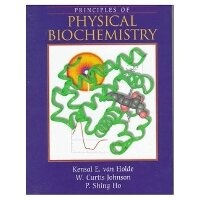
Principles of Physical Biochemistry
Published on 19. January 1998
Book
Hardback
657 pages
978-0-13-720459-5 (ISBN)
Description
Appropriate for one- or two-term courses in Biophysical Chemistry. Usually taught at the senior/graduate level. Prerequisite: Introductory Physical Chemistry.
This text offers the most up-to-date look at the theory and techniques used in the study of the physical chemistry of biological and biochemical molecules. Ken van Holde is one of the leading experts in biophysical chemistry and a well-known author (he is co-author of an introductory biochemistry text).
This text offers the most up-to-date look at the theory and techniques used in the study of the physical chemistry of biological and biochemical molecules. Ken van Holde is one of the leading experts in biophysical chemistry and a well-known author (he is co-author of an introductory biochemistry text).
More details
Language
English
Place of publication
United States
Publishing group
Pearson Education (US)
Target group
Professional and scholarly
Dimensions
Width: 243 mm
Thickness: 35 mm
Weight
1195 gr
ISBN-13
978-0-13-720459-5 (9780137204595)
Copyright in bibliographic data and cover images is held by Nielsen Book Services Limited or by the publishers or by their respective licensors: all rights reserved.
Schweitzer Classification
Other editions
New editions
Kensal E. van Holde | Curtis Johnson | Pui Shing Ho
Principles of Physical Biochemistry
United States Edition
Book
05/2005
2nd Edition
Pearson
€167.94
Article exhausted; check for reprint
Content
Preface.
I. MACROMOLECULAR STRUCTURE AND DYNAMICS.
1. Biological Macromolecules.
2. Thermodynamic Principles.
3. Molecular Thermodynamics.
4. Statistical Mechanics.
5. Methods for the Separation and Characterization of Macromolecules.
6. X-Ray Diffraction.
7. Scattering from Solutions of Macromolecules.
II. SPECTROSCOPY
8. Quantum Mechanics and Spectroscopy.
9. Absorption Spectroscopy.
10. Linear and Circular Dichroism.
11. Emission Spectroscopy.
12. Nuclear Magnetic Resonance Spectroscopy.
III. SOLUTION BEHAVIOR OF MACROMOLECULES.
13. Macromolecules in Solution: Thermodynamics and Equilibria.
14. Thermodynamics of Transport Processes.
15. Chemical Equilibria Involving Macromolecules.
Solutions to Odd-Numbered Exercises.
Index.
I. MACROMOLECULAR STRUCTURE AND DYNAMICS.
1. Biological Macromolecules.
2. Thermodynamic Principles.
3. Molecular Thermodynamics.
4. Statistical Mechanics.
5. Methods for the Separation and Characterization of Macromolecules.
6. X-Ray Diffraction.
7. Scattering from Solutions of Macromolecules.
II. SPECTROSCOPY
8. Quantum Mechanics and Spectroscopy.
9. Absorption Spectroscopy.
10. Linear and Circular Dichroism.
11. Emission Spectroscopy.
12. Nuclear Magnetic Resonance Spectroscopy.
III. SOLUTION BEHAVIOR OF MACROMOLECULES.
13. Macromolecules in Solution: Thermodynamics and Equilibria.
14. Thermodynamics of Transport Processes.
15. Chemical Equilibria Involving Macromolecules.
Solutions to Odd-Numbered Exercises.
Index.