

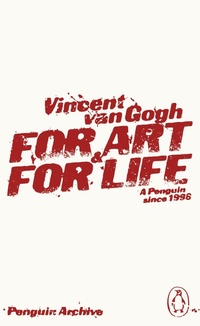
For Art and for Life
Published on 17. April 2025
Book
Paperback/Softback
176 pages
978-0-241-75246-3 (ISBN)
Description
90 classic titles celebrating 90 years of Penguin Books
Few artists' letters are as self-revelatory as Vincent van Gogh's. From the humanistic inspiration behind The Potato Eaters to his long-time obsession with painting the vision that eventually became The Starry Night, the letters in this selection paint an intense personal narrative of his artistic development and creative process across the years. They reveal a man of great spiritual and emotional depths who - in his own words - did everything 'for art and for life itself'.
Few artists' letters are as self-revelatory as Vincent van Gogh's. From the humanistic inspiration behind The Potato Eaters to his long-time obsession with painting the vision that eventually became The Starry Night, the letters in this selection paint an intense personal narrative of his artistic development and creative process across the years. They reveal a man of great spiritual and emotional depths who - in his own words - did everything 'for art and for life itself'.
More details
Series
Language
English
Place of publication
London
United Kingdom
Publishing group
Penguin Books Ltd
Dimensions
Height: 177 mm
Width: 108 mm
Thickness: 15 mm
Weight
110 gr
ISBN-13
978-0-241-75246-3 (9780241752463)
Copyright in bibliographic data and cover images is held by Nielsen Book Services Limited or by the publishers or by their respective licensors: all rights reserved.
Schweitzer Classification
Other editions
Additional editions
Person
Vincent Van Gogh was a Dutch post-Impressionist painter whose work has had far-reaching influence on 20th-century art and beyond. Born to upper middle-class parents, he trained to become a pastor, and did not start painting until his twenties, travelling to The Hague, London, Paris and, famously, Arles. Most of his best-known works were completed during the last two years of his life. Van Gogh suffered from poor mental health and spent over a year in an asylum. On 27 July 1890, he shot himself at the scene of his last painting, the foreboding Cornfields with Flight of Birds. He died two days later.