


The Design of Sites
Patterns, Principles, and Processes for Crafting a Customer-Centered Web Experience
Published on 5. August 2002
Book
Paperback/Softback
816 pages
978-0-201-72149-2 (ISBN)
Description
Based upon extensive, ground-breaking research, The Design of Sites introduces a comprehensive, pattern-based approach to making web sites truly customer-centered. Using the 101 patterns presented here, Web and business professionals can learn from the industry's experience and best practices, and dramatically improve customer satisfaction and retention. The authors have chronicled visitors' behavior to find the patterns that emerge from experiences ranging from navigation to e-shopping, and to discover how individual site visits fit into users' larger goals of finding information and making purchasing decisions. Drawing on this research, The Design of Sites introduces proven principles, processes, and patterns for building customer-centered Web sites. Their patterns encompass virtually every key issue, including: creating powerful home pages; managing content; simplifying layouts and navigation; optimizing performance, and much more. For all Web designers, developers and decision-makers seeking to maximize the business value of their Web sites.
More details
Language
English
Place of publication
Boston
United States
Publishing group
Pearson Education (US)
Target group
College/higher education
Dimensions
Height: 234 mm
Width: 188 mm
Thickness: 31 mm
Weight
1206 gr
ISBN-13
978-0-201-72149-2 (9780201721492)
Copyright in bibliographic data and cover images is held by Nielsen Book Services Limited or by the publishers or by their respective licensors: all rights reserved.
Schweitzer Classification
Other editions
New editions
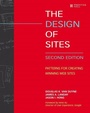
Douglas van Duyne | James Landay | Jason Hong
Design of Sites, The
Patterns for Creating Winning Web Sites
Book
12/2006
2nd Edition
Prentice Hall
€60.50
Article is exhausted; no reprint

Douglas K. van Duyne | James A. Landay | Jason I. Hong
The Design of Sites
A Pattern Language for the Web
Book
07/2006
2nd Edition
Addison Wesley
Unfortunately, price unknown
Article is exhausted; no reprint
Persons
Douglas van Duyne is senior director of customer experience products and design at Keynote Systems, the worldwide leader in Web performance measurement and management systems. He was the cofounder, president, and CEO of NetRaker, a leader in customer experience management solutions, prior to NetRaker's acquisition by Keynote in April 2004. Doug has more than twenty years of entrepreneurial, management, and software design experience.
Doug's management experience includes positions at GO Corporation, an early portable computing developer, and software product design at KidSoft, a pioneering e-commerce company before the advent of Web-based shopping. As principal of Dune Design Group, Inc., he consulted on major Web site design projects for Intel, Safeway, Cooking.com, and healthshop.com.
Doug studied computer science, physics, visual arts, and music at the University of California, Berkeley, and he has a B. S. in computer science.
James A. Landay is a professor of computer science at the University of California, Berkeley, where he teaches courses in human-computer interaction. He is also the CTO and cofounder of NetRaker.
Jason I. Hong is a researcher at the University of California, Berkeley. He has worked at IBM Research, Fuji Xerox Palo Alto Laboratories, and Xerox Research, and is a consultant for eDealFinder.com.
Doug's management experience includes positions at GO Corporation, an early portable computing developer, and software product design at KidSoft, a pioneering e-commerce company before the advent of Web-based shopping. As principal of Dune Design Group, Inc., he consulted on major Web site design projects for Intel, Safeway, Cooking.com, and healthshop.com.
Doug studied computer science, physics, visual arts, and music at the University of California, Berkeley, and he has a B. S. in computer science.
James A. Landay is a professor of computer science at the University of California, Berkeley, where he teaches courses in human-computer interaction. He is also the CTO and cofounder of NetRaker.
Jason I. Hong is a researcher at the University of California, Berkeley. He has worked at IBM Research, Fuji Xerox Palo Alto Laboratories, and Xerox Research, and is a consultant for eDealFinder.com.
Content
Foreword.
Preface.
Acknowledgments.
I. FOUNDATIONS OF WEB SITE DESIGN.
1. Customer-Centered Web Design.
2. Making the Most of Web Design Patterns.
3. Knowing Your Customers: Principles and Techniques.
4. Involving Customers with Iterative Design.
5. Processes for Developing Customer-Centered Sites.
II. PATTERNS.
Pattern Group A: Site Genres.
Personal e-Commerce.
News Mosaics.
Community Conference.
Self-Service Governments.
Non-Profits as Networks of Help.
Grassroots Information Sites.
Valuable Company Sites.
Educational Forums.
Stimulating Arts and Entertainment.
Web Apps That Work.
Enabling Intranets.
Pattern Group B: Creating a Navigation Framework.
Multiple Ways to Navigate.
Browsable Content.
Hierarchical Organization.
Task-Based Organization.
Alphabetical Organization.
Chronological Organization.
Popularity-Based Organization.
Category Pages.
Site Accessibility.
Pattern Group C: Creating a Powerful Homepage.
Homepage Portal.
Upfront Value Proposition.
Pattern Group D: Writing and Managing Content.
Page Templates.
Content Modules.
Headlines and Blurbs.
Personalized Content.
Message Boards.
Writing For Search Engines.
Inverse-Pyramid Writing Style.
Printable Pages.
Distinctive HTML Titles.
Internationalized and Localized Content.
Pattern Group E: Building Trust and Credibility.
Site Branding.
E-mail Subscriptions.
Fair Information Practices.
Privacy Policy.
About Us.
Secure Connections.
Pattern Group F: Basic E-Commerce.
Quick-Flow Checkout.
Clean Product Details.
Shopping Cart.
Quick Address Selection.
Quick Shipping Method Selection.
Payment Method.
Order Summary.
Order Confirmation and Thank You.
Easy Returns.
Pattern Group G: Advanced E-Commerce.
Featured Products.
Cross-Selling and Up-Selling.
Personalized Recommendations.
Recommendation Community.
Multiple Destinations.
Gift Giving.
Order Tracking and History.
Pattern Group H: Helping Customers Complete Tasks.
Process Funnel.
Sign-In/New Account.
Guest Account.
Account Management.
Persistent Customer Sessions.
Pop-Up Windows.
Frequently Asked Questions.
Context-Sensitive Help.
Pattern Group I: Designing Effective Layouts.
Grid Layout.
Above the Fold.
Clear First Reads.
Expanding-Width Screen Size.
Fixed-Width Screen Size.
Consistent Sidebars of Related Content.
Pattern Group J: Making Site Search Fast and Relevant.
Search Action Module.
Straightforward Search Forms.
Organized Search Results.
Pattern Group K: Making Navigation Easy.
Unified Browsing Hierarchy.
Navigation Bar.
Tab Rows.
Action Buttons.
High-Visibility Action Buttons.
Location Bread crumbs.
Embedded Links.
External Links.
Descriptive, Longer Link Names.
Obvious Links.
Familiar Language.
Preventing Errors.
Meaningful Error Messages.
Page Not Found.
Pattern Group L: Speeding Up Your Site.
Low Number of Files.
Fast-Downloading Images.
Separate Tables.
HTML Power.
Reusable Images.
III. APPENDIXES.
A. Running Usability Evaluations.
B. Sample Web Site Evaluation Plan.
C. Sample Consent Form.
D. Sample Observer Form.
E. Online Research.
Glossary.
Resources.
Credits.
About the Authors.
Index. 020172149XT08282002
Preface.
Acknowledgments.
I. FOUNDATIONS OF WEB SITE DESIGN.
1. Customer-Centered Web Design.
2. Making the Most of Web Design Patterns.
3. Knowing Your Customers: Principles and Techniques.
4. Involving Customers with Iterative Design.
5. Processes for Developing Customer-Centered Sites.
II. PATTERNS.
Pattern Group A: Site Genres.
Personal e-Commerce.
News Mosaics.
Community Conference.
Self-Service Governments.
Non-Profits as Networks of Help.
Grassroots Information Sites.
Valuable Company Sites.
Educational Forums.
Stimulating Arts and Entertainment.
Web Apps That Work.
Enabling Intranets.
Pattern Group B: Creating a Navigation Framework.
Multiple Ways to Navigate.
Browsable Content.
Hierarchical Organization.
Task-Based Organization.
Alphabetical Organization.
Chronological Organization.
Popularity-Based Organization.
Category Pages.
Site Accessibility.
Pattern Group C: Creating a Powerful Homepage.
Homepage Portal.
Upfront Value Proposition.
Pattern Group D: Writing and Managing Content.
Page Templates.
Content Modules.
Headlines and Blurbs.
Personalized Content.
Message Boards.
Writing For Search Engines.
Inverse-Pyramid Writing Style.
Printable Pages.
Distinctive HTML Titles.
Internationalized and Localized Content.
Pattern Group E: Building Trust and Credibility.
Site Branding.
E-mail Subscriptions.
Fair Information Practices.
Privacy Policy.
About Us.
Secure Connections.
Pattern Group F: Basic E-Commerce.
Quick-Flow Checkout.
Clean Product Details.
Shopping Cart.
Quick Address Selection.
Quick Shipping Method Selection.
Payment Method.
Order Summary.
Order Confirmation and Thank You.
Easy Returns.
Pattern Group G: Advanced E-Commerce.
Featured Products.
Cross-Selling and Up-Selling.
Personalized Recommendations.
Recommendation Community.
Multiple Destinations.
Gift Giving.
Order Tracking and History.
Pattern Group H: Helping Customers Complete Tasks.
Process Funnel.
Sign-In/New Account.
Guest Account.
Account Management.
Persistent Customer Sessions.
Pop-Up Windows.
Frequently Asked Questions.
Context-Sensitive Help.
Pattern Group I: Designing Effective Layouts.
Grid Layout.
Above the Fold.
Clear First Reads.
Expanding-Width Screen Size.
Fixed-Width Screen Size.
Consistent Sidebars of Related Content.
Pattern Group J: Making Site Search Fast and Relevant.
Search Action Module.
Straightforward Search Forms.
Organized Search Results.
Pattern Group K: Making Navigation Easy.
Unified Browsing Hierarchy.
Navigation Bar.
Tab Rows.
Action Buttons.
High-Visibility Action Buttons.
Location Bread crumbs.
Embedded Links.
External Links.
Descriptive, Longer Link Names.
Obvious Links.
Familiar Language.
Preventing Errors.
Meaningful Error Messages.
Page Not Found.
Pattern Group L: Speeding Up Your Site.
Low Number of Files.
Fast-Downloading Images.
Separate Tables.
HTML Power.
Reusable Images.
III. APPENDIXES.
A. Running Usability Evaluations.
B. Sample Web Site Evaluation Plan.
C. Sample Consent Form.
D. Sample Observer Form.
E. Online Research.
Glossary.
Resources.
Credits.
About the Authors.
Index. 020172149XT08282002