

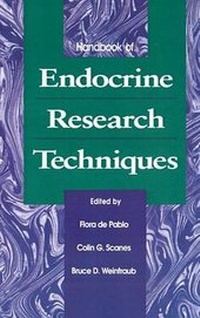
Handbook of Endocrine Research Techniques
Published on 15. December 1993
Book
Hardback
599 pages
978-0-12-209920-5 (ISBN)
Description
Written by experts in the field, Handbook of Endocrine Research Techniques is currently the only single source of up-to-date methods and strategies particularly useful in endocrinological research. As a resource for both the novice and experienced investigator, the book includes chapters which provide an introduction to the area, general concepts, detailed protocols, and extensive references.
More details
Language
English
Place of publication
San Diego
United States
Publishing group
Elsevier Science Publishing Co Inc
Target group
Professional and scholarly
Dimensions
Height: 229 mm
Width: 152 mm
Weight
990 gr
ISBN-13
978-0-12-209920-5 (9780122099205)
Copyright in bibliographic data and cover images is held by Nielsen Book Services Limited or by the publishers or by their respective licensors: all rights reserved.
Schweitzer Classification
Other editions
Additional editions
Flora de Pablo | Colin G. Scanes | Bruce D. Weintraub
Handbook of Endocrine Research Techniques
E-Book
12/1993
Academic Press
€143.00
Available for download
Persons
Dr. Colin G. Scanes is Professor Emeritus of Ecology, Evolution & Behavior at the University of Wisconsin, Milwaukee. He obtained his PhD from the University of Wales and his DSc from Hull University. His research interests include anthrozoology; animal physiology, nutrition, and production; and veterinary medicine. He has received numerous awards for his research in animal and agricultural sciences, most recently from the American Society of Animal Science. In addition to faculty positions with the University of Wisconsin, Iowa State University, and Mississippi State University, Dr. Scanes has worked various federal positions with the USDA, SANREM CRSP, DOE, and EPA FQPA. He has led the development of more than a dozen books, including the first edition of Animals and Human Society and seven editions of Sturkie's Avian Physiology.
Content
Hormone Assays. Radioimmunoassay (RIA): Concept and Types. Immunoradiometric (IRMA) Assays. Enzyme-Linked Immunoabsorbent Assays (ELISA). Development and Characterization of Polyclonal and Monoclonal Antibodies. Isolation of Polypeptide Hormones. Reverse Hemolytic Plaque Assays. Capillary Electrophoresis Coupled to Fluorescence Detection for the Determination of Multiple Neuropeptides. Immunoreactive Heterogeneity in Peptide Measurement. Why Use a Flow Cytometer for Endocrine Cell Analysis? Identification and Characterization of Insulin-Like Growth Factor Binding Proteins. Histochemical and in Situ Approaches. Localization of Peptides. Electron Microscopic Immunocytochemical Approaches to the Localization of Ligands, Receptors, Transducers, And Transporters. In Situ Hybridization for Hormone and Receptor Expression. Techniques for Receptors and Signal Transductors. Plasma Membrane Isolation Strategies for Cell Surface Receptors. Tyrosine Kinase Receptors. Involvement of Protein Tyrosine Phosphatase Activity in the Regulation of Insulin's Signal Transduction. Techniques for Evaluating Protein Kinase C in Intact Cells. Identification and Quantification of G Proteins. Determination of Adenylyl Cyclase Catalytic Activity. Intracellular Mediators of Peptide Hormone Action. Free Calcium Measurements. Molecular Techniques and Specific Model Systems. Approaches for the Purification, Quantitation, And Interpretation of Hormone and Receptor Mrnas. The Use of PCR in Endocrine Research. Detection of Mutations in Hormone Receptor Genes. Techniques to Study Regulation of Gene Expression. Transgenic Animals. The Use of Non-Mammalian Models. Proliferation Induced By Growth Factors in Mammalian Fetal Cells. Analysis of Hormones and Receptors in Embryogenesis.