


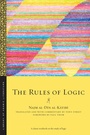
The Rules of Logic
Published on 14. October 2025
Book
Paperback/Softback
504 pages
978-1-4798-4068-7 (ISBN)
Description
A classic textbook on the study of logic
In the Muslim East, logic was an integral part of the syllabus of schools and found to be especially helpful for legal studies. It was at this time that The Rules of Logic was composed by Najm al-Din al-Katibi, a scholar of the Shafi?i school of law.
The Rules of Logic is the most widely read introduction to logic in the Arabic-speaking world. It has probably enjoyed a longer shelf-life than any other logic textbook ever written, having been in use by madrasah students from the early eighth/fourteenth century up until the present day. Building on the theories of Avicenna, al-Razi, and other pioneers of logic, al-Katibi discusses the many pitfalls of building arguments and setting out unambiguous claims in natural language. The enduring nature of the text is a testament to al-Katibi and his impact on concepts of formal discourse and argument. This new translation of The Rules of Logic brings to both an Arabic and English readership an influential text that has shaped the work of scholars of logic for centuries.
An English-only edition, including an informative commentary on the text by translator Tony Street.
In the Muslim East, logic was an integral part of the syllabus of schools and found to be especially helpful for legal studies. It was at this time that The Rules of Logic was composed by Najm al-Din al-Katibi, a scholar of the Shafi?i school of law.
The Rules of Logic is the most widely read introduction to logic in the Arabic-speaking world. It has probably enjoyed a longer shelf-life than any other logic textbook ever written, having been in use by madrasah students from the early eighth/fourteenth century up until the present day. Building on the theories of Avicenna, al-Razi, and other pioneers of logic, al-Katibi discusses the many pitfalls of building arguments and setting out unambiguous claims in natural language. The enduring nature of the text is a testament to al-Katibi and his impact on concepts of formal discourse and argument. This new translation of The Rules of Logic brings to both an Arabic and English readership an influential text that has shaped the work of scholars of logic for centuries.
An English-only edition, including an informative commentary on the text by translator Tony Street.
Reviews / Votes
"A valuable resource for anyone interested in medieval philosophy." - Medievalists.net"[Al-Katibi's] discussion of what is essentially post-Aristotelian logic will be intelligible to anyone familiar with the basics of the traditional subject." - Al-Ahram Weekly
More details
Series
Language
English
Place of publication
New York
United States
Target group
Professional and scholarly
Product notice
Paperback (trade)
Dimensions
Height: 210 mm
Width: 140 mm
Thickness: 28 mm
Weight
558 gr
ISBN-13
978-1-4798-4068-7 (9781479840687)
Copyright in bibliographic data and cover images is held by Nielsen Book Services Limited or by the publishers or by their respective licensors: all rights reserved.
Schweitzer Classification
Other editions
Additional editions
Persons
Najm al-Din al-Katibi (Author)
Born in Qazvin, Najm al-Din al-Katibi (b. 600/1204) was a Persian philosopher and scholar who was a member of the Shafi?i school of law. His most famous work aside from The Rules of Logic is Philosophy of the Source, a text about physics and metaphysics.
Tony Street (Edited and Translated by)
Tony Street is Assistant Director of Research in Islamic Studies at the University of Cambridge's Faculty of Divinity and is a Fellow of Clare Hall.
Born in Qazvin, Najm al-Din al-Katibi (b. 600/1204) was a Persian philosopher and scholar who was a member of the Shafi?i school of law. His most famous work aside from The Rules of Logic is Philosophy of the Source, a text about physics and metaphysics.
Tony Street (Edited and Translated by)
Tony Street is Assistant Director of Research in Islamic Studies at the University of Cambridge's Faculty of Divinity and is a Fellow of Clare Hall.