

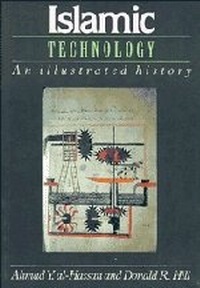
Islamic Technology
An Illustrated History
Published on 19. March 1987
Book
Hardback
320 pages
978-0-521-26333-7 (ISBN)
Description
Although the contributions of Islamic civilisations to science have long been recognised, the application of this scientific expertise to technology had been neglected until the publication of this then pioneering 1986 text. The book begins to remedy that neglect, first by celebrating the richness and ingenuity of the world of Islamic technology and then by pointing the way forward to its more detailed exploration. Lavishly illustrated, this book explores the major technological achievements of Islamic civilisations, namely the public works of civil engineering, the machines and mechanical devices which served to control water, provide power, serve as instruments or to amuse.
Reviews / Votes
'... a wide-ranging survey of the technology used by Muslims in the Medieval period - and also today ... It deserves to succeed in bringing its subject to a new audience in the West as well as instilling pride in past achievements in the Middle East.' History TodayMore details
Language
English
Place of publication
Cambridge
United Kingdom
Target group
College/higher education
Professional and scholarly
Dimensions
Height: 247 mm
Width: 174 mm
Thickness: 26 mm
Weight
960 gr
ISBN-13
978-0-521-26333-7 (9780521263337)
Copyright in bibliographic data and cover images is held by Nielsen Book Services Limited or by the publishers or by their respective licensors: all rights reserved.
Schweitzer Classification
Other editions
New editions
Book
01/1992
Cambridge University Press
€58.80
Shipment within 15-20 days
Additional editions
Book
01/1992
Cambridge University Press
€58.80
Shipment within 15-20 days
Persons
Content
List of illustrations; Preface and acknowledgements; 1. Introduction; 2. Mechanical engineering; 3. Civil engineering; 4. Military technology; 5. Ships and navigation; 6. Chemical technology; 7. Textiles, paper and leather; 8. Agriculture and food technology; 9. Mining and metallurgy; 10. Engineers and artisans; 11. Epilogue; Selected bibliography; Credits and permissions; Index.