


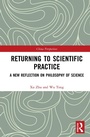
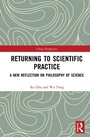
Returning to Scientific Practice
A New Reflection on Philosophy of Science
1st Edition
Published on 4. June 2019
Book
Hardback
332 pages
978-1-138-84697-5 (ISBN)
Description
This book is a result from a collective study on philosophy of scientific practice (PSP), which began around 2002 and still ongoing. There is an apparently increasing interest in scientific practice, influenced by the historicistic philosophy of science and the sociology of scientific knowledge (SSK). Prof. WU Tong and his research group believe that it is necessary for PSP to turn from the theory-dominant position to the practice dominance. PSP has also put forward the possibility of reinterpreting the epistemic status of local knowledge in Chinese tradition, which provides the most significant motivation to participate this study.
In this book, we have selected three main cases - namely, Chinese medicine, Fengshui, and Ethnobotany - to examine the effect of PSP. The aim of our collective study is not merely on theoretical construction of PSP, but also to consider the various applications of PSP, especially for re-interpreting and demonstrating the variety of local knowledge from traditional China, which seems to be a genuine contribution to the international enterprise of philosophy of science, particularly made by Chinese scholars.
In this book, we have selected three main cases - namely, Chinese medicine, Fengshui, and Ethnobotany - to examine the effect of PSP. The aim of our collective study is not merely on theoretical construction of PSP, but also to consider the various applications of PSP, especially for re-interpreting and demonstrating the variety of local knowledge from traditional China, which seems to be a genuine contribution to the international enterprise of philosophy of science, particularly made by Chinese scholars.
More details
Series
Language
English
Place of publication
London
United Kingdom
Publishing group
Taylor & Francis Ltd
Target group
College/higher education
Illustrations
29 s/w Abbildungen, 6 s/w Photographien bzw. Rasterbilder, 23 s/w Zeichnungen, 11 s/w Tabellen
11 Tables, black and white; 23 Line drawings, black and white; 6 Halftones, black and white; 29 Illustrations, black and white
Dimensions
Height: 234 mm
Width: 156 mm
Weight
703 gr
ISBN-13
978-1-138-84697-5 (9781138846975)
Copyright in bibliographic data and cover images is held by Nielsen Book Services Limited or by the publishers or by their respective licensors: all rights reserved.
Schweitzer Classification
Other editions
Additional editions

Book
12/2020
1st Edition
Routledge
€60.00
Shipment within 15-20 days
E-Book
05/2019
1st Edition
Routledge
€60.99
Available for download
E-Book
05/2019
1st Edition
Routledge
€60.99
Available for download
Persons
XU Zhu, Associate Professor in Department of Philosophy, ECNU. Research interests includes Epistemology, Philosophy of Action, Wittgenstein, and Philosophy of Social Science. The author of Understanding the Social: from Normativity to Mechanism (monograph published in Chinese) and several papers published both in Chinese and in English.
WU Tong, Professor of Philosophy of Science and Technology (tenured) in the STS Centre, Tsinghua University. Research interests include philosophy of scientific practice, philosophy of system and complexity, and local knowledge. The author of The Melody of Growth: the Self-Organizing Evolution of Science (monograph published in Chinese) and many influential papers in Chinese philosophy of science and technology.
WU Tong, Professor of Philosophy of Science and Technology (tenured) in the STS Centre, Tsinghua University. Research interests include philosophy of scientific practice, philosophy of system and complexity, and local knowledge. The author of The Melody of Growth: the Self-Organizing Evolution of Science (monograph published in Chinese) and many influential papers in Chinese philosophy of science and technology.
Content
List of figures
List of tables
Postscript
Introduction: towards philosophy of scientific practice
1 The origin of the concept of practice
2 Scientific practice: significance, types, and scopes
3 The nature of scientific practice
4 The nature of knowledge: local knowledge
5 Knowledge and power
6 The contextual normativity of scientific practice
7 Philosophy of scientific practice and naturalism (I)
8 Philosophy of scientific practice and naturalism (II)
9 Philosophy of scientific practice and relativism
10 Partnering the philosophy of scientific practice: the philosophy of scientific experimentation
11 New empiricism: a close relative of the philosophy of scientific practice
12 The starting point of scientific research: opportunity, question, or observation?
13 A new solution for an old problem: the relationships of observation, experiment, and theory
14 New studies on replicability of scientific experiments
15 Local knowledge (I): traditional Chinese medicine (TCM)
16 Local knowledge (II): Chinese theory of Fengshui
17 Local knowledge (III): ethnobotany
18 Conclusion: scientific practice in ongoing and unlimited process
References
Index
List of tables
Postscript
Introduction: towards philosophy of scientific practice
1 The origin of the concept of practice
2 Scientific practice: significance, types, and scopes
3 The nature of scientific practice
4 The nature of knowledge: local knowledge
5 Knowledge and power
6 The contextual normativity of scientific practice
7 Philosophy of scientific practice and naturalism (I)
8 Philosophy of scientific practice and naturalism (II)
9 Philosophy of scientific practice and relativism
10 Partnering the philosophy of scientific practice: the philosophy of scientific experimentation
11 New empiricism: a close relative of the philosophy of scientific practice
12 The starting point of scientific research: opportunity, question, or observation?
13 A new solution for an old problem: the relationships of observation, experiment, and theory
14 New studies on replicability of scientific experiments
15 Local knowledge (I): traditional Chinese medicine (TCM)
16 Local knowledge (II): Chinese theory of Fengshui
17 Local knowledge (III): ethnobotany
18 Conclusion: scientific practice in ongoing and unlimited process
References
Index