


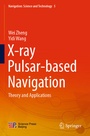
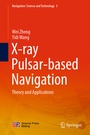
X-ray Pulsar-based Navigation
Theory and Applications
Published on 18. April 2020
Book
Hardback
XII, 222 pages
978-981-15-3292-4 (ISBN)
Description
This book discusses autonomous spacecraft navigation based on X-ray pulsars, analyzing how to process X-ray pulsar signals, how to simulate them, and how to estimate the pulse's time of arrival based on epoch folding. In turn, the book presents a range of X-ray pulsar-based spacecraft positioning/time-keeping/attitude determination methods. It also describes the error transmission mechanism of the X-ray pulsar-based navigation system and its corresponding compensation methods. Further, the book introduces readers to navigation based on multiple measurement information fusion, such as X-ray pulsar/traditional celestial body integrated navigation and X-ray pulsar/INS integrated navigation. As such, it offers readers extensive information on both the theory and applications of X-ray pulsar-based navigation, and reflects the latest developments in China and abroad.
More details
Series
Edition
2020 ed.
Language
English
Place of publication
Singapore
Singapore
Target group
Professional and scholarly
Illustrations
12 s/w Abbildungen, 137 farbige Abbildungen
XII, 222 p. 149 illus., 137 illus. in color.
Dimensions
Height: 241 mm
Width: 160 mm
Thickness: 19 mm
Weight
524 gr
ISBN-13
978-981-15-3292-4 (9789811532924)
DOI
10.1007/978-981-15-3293-1
Schweitzer Classification
Other editions
Additional editions
Book
04/2021
Springer
€106.99
Shipment within 3-4 weeks
E-Book
04/2020
1st Edition
Springer
€96.29
Available for download
Persons
The authors serve on the Flight Dynamics and Control Team at the National University of Defense Technology, which is one of the leading teams on X-ray pulsar-based navigation in China. They have been studying the theory and methodology of X-ray pulsar-based navigation since 2004.
Content
Introduction.- X-ray pulsar signal processing.- X-ray pulsar/multiple measurement information fused navigation.- Ground-based simulation and verification system for X-ray pulsar-based navigation.