

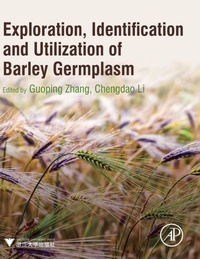
Exploration, Identification and Utilization of Barley Germplasm
Published on 4. December 2015
Book
Hardback
304 pages
978-0-12-802922-0 (ISBN)
Description
Exploration, Identification and Utilization of Barley Germplasm explores the timely global challenges related to barley production posed by the narrowing of biodiversity and problem soils, identifying elite genotypes which will enhance barley breeding and be essential to genetic and evolution studies.
The book covers the utilization of barley germplasm for improving the quality of both food and feed barley as well as exploring and utilizing varieties of germplasm that are tolerant to drought, waterlogged, salt, and acid soil. Chapters are devoted to prime strategies for future research, including identifying barley germplasm by applying Omics, exploring barley germplasm by means of the Focused Identification of Germplasm Strategy (FIGS), and creating barley germplasm through mutation.
Users will find this book to be a key research reference for both professionals and academics, providing a comprehensive update for established barley researchers that equips them with an understanding of the new methodologies needed for innovation and discovery, while also providing a helpful entry to the subject for young researchers and students.
The book covers the utilization of barley germplasm for improving the quality of both food and feed barley as well as exploring and utilizing varieties of germplasm that are tolerant to drought, waterlogged, salt, and acid soil. Chapters are devoted to prime strategies for future research, including identifying barley germplasm by applying Omics, exploring barley germplasm by means of the Focused Identification of Germplasm Strategy (FIGS), and creating barley germplasm through mutation.
Users will find this book to be a key research reference for both professionals and academics, providing a comprehensive update for established barley researchers that equips them with an understanding of the new methodologies needed for innovation and discovery, while also providing a helpful entry to the subject for young researchers and students.
More details
Language
English
Place of publication
San Diego
United States
Publishing group
Elsevier Science Publishing Co Inc
Target group
Professional and scholarly
Professional scientists, technicians and students who are engaged in crop genetics and breeding. Agronomists, plant geneticists and plant breeding professionals, crop and plant physiologists can use this book as a reference work.
Product notice
Laminated cover
Dimensions
Height: 249 mm
Width: 200 mm
Thickness: 22 mm
Weight
777 gr
ISBN-13
978-0-12-802922-0 (9780128029220)
Copyright in bibliographic data and cover images is held by Nielsen Book Services Limited or by the publishers or by their respective licensors: all rights reserved.
Schweitzer Classification
Other editions
Additional editions
Guoping Zhang | Chengdao Li
Exploration, Identification and Utilization of Barley Germplasm
E-Book
12/2015
Academic Press
€129.00
Available for download
Persons
Prof. Guoping Zhang is a Professor at Zhejiang University, China. His major research interests include: (1) identification and development of barley germplasm with abiotic stress tolerance (salinity, acid soils and drought) and high nutrient use efficiency, and (2) genotypic difference and molecular mechanisms of heavy metal accumulation and tolerance in plants. In the past two decades, He finished more than 30 research projects, including 13 granted by China Natural Science Foundations, and published more than 270 papers in peer-reviewed journals, with more than 6,000 citations. He once acted as a chairman of organizing committee for International Barley Genetics Symposium (2012-2016) and is now on the editorial board of several journals, including Journal of Agronomy and Crop Science, Plant Growth Regulation, and Journal of Integrative Agriculture. Dr. Chengdao Li is a barley breeder and molecular geneticist at Department of Agriculture, West Australia (DAWA), and guest professor of Zhejiang University, China. He has extensive international experience (China, Canada and Australia) on barley breeding and molecular genetics and finished more than 10 granted research programs on barley germplasm development and breeding, resulting in development and releasing of new barley varieties "Baudin?, and "Hamelin?, identification and characterization of more than 10 elite barley genotypes with high tolerance to abiotic stress and high malt qualities. He has published more than 60 papers and 4 books.
Content
1. Domestication of wild barley and improvement of cultivated barley2. Malt barley quality improvement and germplasm utilization3. Food barley quality improvement and germplasm utilization4. Feed barley quality improvement and germplasm utilization5. Functional chemical composition and germplasm utilization6. Exploration and utilization of salt tolerant barley germplasm7. Exploration and utilization of drought tolerant barley germplasm8. Exploration and utilization of waterlogging tolerant barley germplasm9. Exploration and utilization of acid soil tolerant barley germplasm10. Exploration and utilization of low temperature tolerant barley germplasm11. Application of Omics in identification of barley germplasm12. Focused Identification of Germplasm Strategy (FIGS) for exploration of barley germplasm13. Create barley germplasm through mutation