

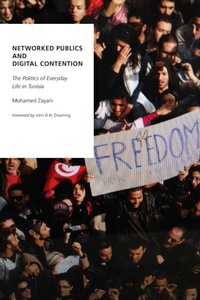
Networked Publics and Digital Contention
The Politics of Everyday Life in Tunisia
Published on 24. September 2015
Book
Paperback/Softback
304 pages
978-0-19-023977-0 (ISBN)
Description
How is the adoption of digital media in the Arab world affecting the relationship between the state and its subjects? What new forms of online engagement and strategies of resistance have emerged from the aspirations of digitally empowered citizens? Networked Publics and Digital Contention: The Politics of Everyday Life in Tunisia tells the compelling story of the concurrent evolution of technology and society in the Middle East. It brings into focus the intricate relationship between Internet development, youth activism, cyber resistance, and political participation. Taking Tunisia - the birthplace of the Arab uprisings - as a case study, it offers an ethnographically nuanced and theoretically grounded analysis of the digital culture of contention that developed in an authoritarian context. It broadens the focus from narrow debates about the role that social media played in the Arab uprisings toward a fresh understanding of how changes in media affect existing power relations. Based on extensive fieldwork, in-depth interviews with Internet activists, and immersive analyses of online communication, this book redirects our attention from institutional politics to the informal politics of everyday life. An original contribution to the political sociology of Arab media, Networked Publics and Digital Contention provides a unique perspective on how networked Arab publics negotiate agency, reconfigure political action, and reimagine citizenship.
Reviews / Votes
Networked Publics and Digital Contention is a comprehensive sociological, historical, and political probe of Tunisia's contemporary history in the Digital Age. It also offers a substantial contribution to the study of the region and its rapidly evolving definition of political processes, agency, and democratic culture in the age of global networks. Considering the ephemeral nature of online communication, the book not only preserves Internet history but also provides a much-need theorization of citizenship and sociopolitical experiences in twenty-first century MENA. * Mona Kasra, University of Virginia, Review of Middle Eastern Studies * Zayani has assembled an impressive array of data by interviewing a great number of Tunisian activists and analysing many internet pages as well as a whole range of digital information. It is a powerful reminder of how important the digital media and cyber- activist were for the contentious politics of the Middle East. * Stefan Berger, Moving the Social *More details
Series
Language
English
Place of publication
New York
United States
Target group
College/higher education
Dimensions
Height: 234 mm
Width: 156 mm
Thickness: 17 mm
Weight
501 gr
ISBN-13
978-0-19-023977-0 (9780190239770)
Copyright in bibliographic data and cover images is held by Nielsen Book Services Limited or by the publishers or by their respective licensors: all rights reserved.
Schweitzer Classification
Other editions
Additional editions
Book
09/2015
Oxford University Press Inc
€195.60
Shipment within 15-20 days
E-Book
08/2015
1st Edition
OUP eBook
€17.49
Available for download
E-Book
08/2015
1st Edition
OUP eBook
€15.49
Available for download
Person
Mohamed Zayani is Associate Professor of Critical Theory at the Georgetown University School of Foreign Service in Qatar and Director of the Media and Politics Program.
Content
Foreword Acknowledgements I. Introduction: On Digital Contention and Everyday Life II. The Mirage of Progress: A Nation's Unfulfilled Promise III. A Crisis of Authority: Offline Activism and Simmering Discontent IV. Cyber Activism Comes of Age: Activists, Diasporas and Networks V. The Politicization of the Blogosphere: When Diarists Become Activists VI. The Battle over Internet Control: From the Web to the Street VII. Mediatizing the Revolution: The Appeal of Social Networks VIII. Post-Revolutionary Dynamics: Changes and Challenges Appendix Notes References Index