

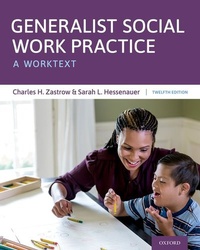
Generalist Social Work Practice
A Worktext
12th Edition
Published on 26. February 2021
Book
Paperback/Softback
440 pages
978-0-19-009342-6 (ISBN)
Description
Charles Zastrow - a leader in the field for over forty years - combines the key components of traditional and contemporary approaches to teaching social work practice into one comprehensive volume in the twelfth edition of this classic text.
Generalist Social Work Practice presents the knowledge, values, and skills needed for entry-level social work practice with individuals, groups, families, organizations, and communities. The text describes a variety of approaches to social work practice including assessment, intervention, and evaluation. A large number of skill building exercises are included so that readers can practice applying theoretical concepts. This book provides the theoretical and practical knowledge needed for students to become change agents.
Generalist Social Work Practice presents the knowledge, values, and skills needed for entry-level social work practice with individuals, groups, families, organizations, and communities. The text describes a variety of approaches to social work practice including assessment, intervention, and evaluation. A large number of skill building exercises are included so that readers can practice applying theoretical concepts. This book provides the theoretical and practical knowledge needed for students to become change agents.
More details
Edition
12th Revised edition
Language
English
Place of publication
New York
United States
Edition type
Revised edition
Dimensions
Height: 254 mm
Width: 203 mm
ISBN-13
978-0-19-009342-6 (9780190093426)
Copyright in bibliographic data and cover images is held by Nielsen Book Services Limited or by the publishers or by their respective licensors: all rights reserved.
Schweitzer Classification
Persons
Content
- Preface
- Acknowledgments
- 1. Overview of Social Work Practice
- Roles Performed by Social Workers
- The Relationship between Social Work and Social Welfare
- A Systems Perspective
- The Medical Model Versus the Ecological Model of Human Behavior
- Micro, Mezzo, and Macro Levels of Practice
- Knowledge, Skills, and Values Needed for Social Work Practice
- Social Work Competencies
- Text Objectives
- Which Intervention Strategies Should Social Workers Learn?
- Summary
- Exercises
- 2. Surviving and Enjoying Social Work
- Learning Objectives
- Students' Common Concerns
- Burnout, Stress, and Stress Management
- Enjoying Social Work and Your Life
- Summary
- Exercises
- 3. Social Work Values
- Learning Objectives
- Ethical Dilemmas in Social Work
- Value Dilemmas in Social Work
- Knowledge and Values
- Value Dilemmas of Clients and Social Workers
- Respect for the Dignity and Uniqueness of Individuals
- The Client's Right to Self-Determination
- Confidentiality
- New Technologies and Social Work
- Evidence-Based Practice
- Other Resources
- Summary
- Exercises
- 4. Assessment
- Learning Objectives
- Components of an Assessment
- The Strengths Perspective
- Sources of Information
- Knowledge Used in Making an Assessment
- Environmental Systems Emphasis
- Attending to Bio-Psycho-Social and Cultural Components in Assessment
- Guides for Assessing Problem Systems
- Summary
- Exercises
- 5. Social Work with Individuals: Interviewing
- Learning Objectives
- Three Types of Social Work Interviews
- Opening the First Interview
- Closing an Interview
- Questioning
- Being Aware of Microaggressions
- The Place of the Interview
- Note Taking
- Safety Guidelines for Social Workers
- Audio and Video Recording
- Video Recording for Training Purposes
- Summary
- Exercises
- 6. Social Work with Individuals: Problem Solving and Intervening
- Learning Objectives
- Working with Clients from the Social Worker's Perspective
- Clients' Reactions to Having a Personal Problem
- Working with a Social Worker from the Client's Perspective
- Summary
- Exercises
- 7. Social Work with Groups: Types of Groups and Guidelines for Leading Them
- Learning Objectives
- Types of Groups
- Group Development
- Leadership Theory
- Social Power Bases in Groups
- Personal Goals and Group Goals
- Group Norms
- Conformity
- Group Size
- How to Start, Lead, Terminate, and Evaluate Groups
- Conflict and Creativity
- Strategies for Resolving Conflicts
- Handling Disruptive Behavior
- Co-facilitating Groups
- Ending a Session
- Online Groups
- Evaluating a Group
- Legal Safeguards for Group Facilitators
- Summary
- Exercises
- 8. Social Work with Families
- Learning Objectives
- Social Work with Families
- Diversity of Family Forms
- Societal Functions of Families
- Family Assessment
- Aspects of Families for Workers to Focus On
- Family Problems and Social Work Services
- Summary
- Exercises
- 9. Social Work with Organizations
- Learning Objectives
- Understanding How to Work in an Organization
- Generalist Skills for Working in Organizations
- Culturally Effective Organizations
- Value Orientations in Organizational Decision Making
- Organizations and Self-Care
- Summary
- 10. Social Work Community Practice
- Learning Objectives
- Community and Community Practice
- A Brief History of Community Practice
- Models of Community Practice
- Engage With and Assess Your Community
- Force Field Analysis
- Generalist Community Practice Skills
- Community Assets Intervention Approach
- Evidence-Based Interventions and Evaluations with Communities
- Summary
- Exercises
- 11. Practice Evaluation and Program Evaluation
- Learning Objectives
- Formative Evaluation
- Process Evaluation
- Outcome Evaluation
- Program Evaluation
- Evidence-Based Practice
- The Ethics of Evaluation
- Summary
- Exercises
- 12. Social Work Practice with Diverse Individuals, Families, Groups, and Communities
- Learning Objectives
- Definitions of Key Terms
- Cultural Humility
- Generalist Skills for Working with Diverse Individuals, Families, Groups, and Communities
- Macro Social Work Practice For Addressing Diversity
- Summary
- Exercises
- 13. Spirituality and Religion in Social Work Practice
- Learning Objectives
- Spirituality and Religion
- Rationale for the Use of Spirituality and Religion in Social Work Practice
- Spiritual and Religious Assessments of Clients
- NASW Code of Ethics and Religion
- Spiritual and Religious Interventions with Clients
- Social Work and Religion in Limited Partnership
- Religion, Spirituality, Mindfulness and Self-Care in Social Work
- Summary
- Exercises
- 14. Transitions and Ending In Social Work Practice
- Learning Objectives
- Transitioning Clients to Another Service
- Termination
- Social Worker's Feelings Related to Termination
- Termination from Organizations and Communities
- Next Steps
- Summary
- Exercises
- Appendix
- Section 1: Rational Therapy, Cognitive-Behavioral Therapy (CBT), and Dialectical Behavioral Therapy
- Section 2: Behavior Therapy
- Section 3: Reality Therapy
- Section 4: Prominent Specific Intervention Techniques
- References
- Index
- Acknowledgments
- 1. Overview of Social Work Practice
- Roles Performed by Social Workers
- The Relationship between Social Work and Social Welfare
- A Systems Perspective
- The Medical Model Versus the Ecological Model of Human Behavior
- Micro, Mezzo, and Macro Levels of Practice
- Knowledge, Skills, and Values Needed for Social Work Practice
- Social Work Competencies
- Text Objectives
- Which Intervention Strategies Should Social Workers Learn?
- Summary
- Exercises
- 2. Surviving and Enjoying Social Work
- Learning Objectives
- Students' Common Concerns
- Burnout, Stress, and Stress Management
- Enjoying Social Work and Your Life
- Summary
- Exercises
- 3. Social Work Values
- Learning Objectives
- Ethical Dilemmas in Social Work
- Value Dilemmas in Social Work
- Knowledge and Values
- Value Dilemmas of Clients and Social Workers
- Respect for the Dignity and Uniqueness of Individuals
- The Client's Right to Self-Determination
- Confidentiality
- New Technologies and Social Work
- Evidence-Based Practice
- Other Resources
- Summary
- Exercises
- 4. Assessment
- Learning Objectives
- Components of an Assessment
- The Strengths Perspective
- Sources of Information
- Knowledge Used in Making an Assessment
- Environmental Systems Emphasis
- Attending to Bio-Psycho-Social and Cultural Components in Assessment
- Guides for Assessing Problem Systems
- Summary
- Exercises
- 5. Social Work with Individuals: Interviewing
- Learning Objectives
- Three Types of Social Work Interviews
- Opening the First Interview
- Closing an Interview
- Questioning
- Being Aware of Microaggressions
- The Place of the Interview
- Note Taking
- Safety Guidelines for Social Workers
- Audio and Video Recording
- Video Recording for Training Purposes
- Summary
- Exercises
- 6. Social Work with Individuals: Problem Solving and Intervening
- Learning Objectives
- Working with Clients from the Social Worker's Perspective
- Clients' Reactions to Having a Personal Problem
- Working with a Social Worker from the Client's Perspective
- Summary
- Exercises
- 7. Social Work with Groups: Types of Groups and Guidelines for Leading Them
- Learning Objectives
- Types of Groups
- Group Development
- Leadership Theory
- Social Power Bases in Groups
- Personal Goals and Group Goals
- Group Norms
- Conformity
- Group Size
- How to Start, Lead, Terminate, and Evaluate Groups
- Conflict and Creativity
- Strategies for Resolving Conflicts
- Handling Disruptive Behavior
- Co-facilitating Groups
- Ending a Session
- Online Groups
- Evaluating a Group
- Legal Safeguards for Group Facilitators
- Summary
- Exercises
- 8. Social Work with Families
- Learning Objectives
- Social Work with Families
- Diversity of Family Forms
- Societal Functions of Families
- Family Assessment
- Aspects of Families for Workers to Focus On
- Family Problems and Social Work Services
- Summary
- Exercises
- 9. Social Work with Organizations
- Learning Objectives
- Understanding How to Work in an Organization
- Generalist Skills for Working in Organizations
- Culturally Effective Organizations
- Value Orientations in Organizational Decision Making
- Organizations and Self-Care
- Summary
- 10. Social Work Community Practice
- Learning Objectives
- Community and Community Practice
- A Brief History of Community Practice
- Models of Community Practice
- Engage With and Assess Your Community
- Force Field Analysis
- Generalist Community Practice Skills
- Community Assets Intervention Approach
- Evidence-Based Interventions and Evaluations with Communities
- Summary
- Exercises
- 11. Practice Evaluation and Program Evaluation
- Learning Objectives
- Formative Evaluation
- Process Evaluation
- Outcome Evaluation
- Program Evaluation
- Evidence-Based Practice
- The Ethics of Evaluation
- Summary
- Exercises
- 12. Social Work Practice with Diverse Individuals, Families, Groups, and Communities
- Learning Objectives
- Definitions of Key Terms
- Cultural Humility
- Generalist Skills for Working with Diverse Individuals, Families, Groups, and Communities
- Macro Social Work Practice For Addressing Diversity
- Summary
- Exercises
- 13. Spirituality and Religion in Social Work Practice
- Learning Objectives
- Spirituality and Religion
- Rationale for the Use of Spirituality and Religion in Social Work Practice
- Spiritual and Religious Assessments of Clients
- NASW Code of Ethics and Religion
- Spiritual and Religious Interventions with Clients
- Social Work and Religion in Limited Partnership
- Religion, Spirituality, Mindfulness and Self-Care in Social Work
- Summary
- Exercises
- 14. Transitions and Ending In Social Work Practice
- Learning Objectives
- Transitioning Clients to Another Service
- Termination
- Social Worker's Feelings Related to Termination
- Termination from Organizations and Communities
- Next Steps
- Summary
- Exercises
- Appendix
- Section 1: Rational Therapy, Cognitive-Behavioral Therapy (CBT), and Dialectical Behavioral Therapy
- Section 2: Behavior Therapy
- Section 3: Reality Therapy
- Section 4: Prominent Specific Intervention Techniques
- References
- Index