

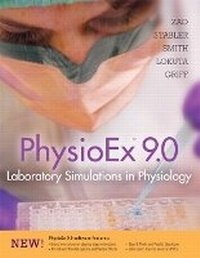
PhysioEx 9.0
Laboratory Simulations in Physiology
Published on 27. October 2011
Book
Mixed media product
208 pages
978-0-321-81557-6 (ISBN)
Description
PhysioEx (TM) 9.0: Laboratory Simulations in Physiology is an easy-to-use laboratory simulation software and lab manual that consists of 12 exercises containing 66 physiology lab activities that can be used to supplement or substitute wet labs. PhysioEx allows you to repeat labs as often as you like, perform experiments without harming live animals, and conduct experiments that are difficult to perform in a wet lab environment because of time, cost, or safety concerns.
The PhysioEx 9.0 software features a brand new online format with step-by-step instructions and assessment so that everything you need to do and complete your lab is located in one convenient place. New Pre-lab and Post-lab Quizzes for each activity and Stop & Think and Predict Questions within the steps of each experiment help students make the connection between the activities and the physiological concepts they demonstrate. Your answers to all of these questions and the results from the experiments can be saved in a PDF Lab Report. The PhysioEx 9.0 CD-ROM comes packaged with every new copy of the PhysioEx 9.0 lab manual. Each new copy of the PhysioEx 9.0 lab manual also includes access to the online version of PhysioEx 9.0.
Note: For PhysioEx 9.0, there is one version only of PhysioEx. We have combined the previous A&P and Physiology versions of PhysioEx into one product.
The PhysioEx 9.0 software features a brand new online format with step-by-step instructions and assessment so that everything you need to do and complete your lab is located in one convenient place. New Pre-lab and Post-lab Quizzes for each activity and Stop & Think and Predict Questions within the steps of each experiment help students make the connection between the activities and the physiological concepts they demonstrate. Your answers to all of these questions and the results from the experiments can be saved in a PDF Lab Report. The PhysioEx 9.0 CD-ROM comes packaged with every new copy of the PhysioEx 9.0 lab manual. Each new copy of the PhysioEx 9.0 lab manual also includes access to the online version of PhysioEx 9.0.
Note: For PhysioEx 9.0, there is one version only of PhysioEx. We have combined the previous A&P and Physiology versions of PhysioEx into one product.
More details
Language
English
Place of publication
United States
Publishing group
Pearson Education (US)
Target group
College/higher education
Dimensions
Height: 214 mm
Width: 272 mm
Thickness: 10 mm
Weight
492 gr
ISBN-13
978-0-321-81557-6 (9780321815576)
Copyright in bibliographic data and cover images is held by Nielsen Book Services Limited or by the publishers or by their respective licensors: all rights reserved.
Schweitzer Classification
Other editions
New editions
Peter Zao | Timothy N. Stabler | Lori A. Smith
PhysioEx 9.0
Laboratory Simulations in Physiology with 9.1 Update
Book
10/2013
Pearson
€45.45
Shipment within 10-20 days
Previous edition

Timothy N. Stabler | Peter Zao
PhysioEx 7.0 for Human Physiology
Laboratory Simulations in Physiology (text component)
Book
05/2008
Pearson
€17.32
Article exhausted; check for reprint
Content
Exercise 1: Cell Transport Mechanisms and Permeability
Activity 1: Simulating Dialysis (Simple Diffusion)
Activity 2: Simulated Facilitated Diffusion
Activity 3: Simulating Osmotic Pressure
Activity 4: Simulating Filtration
Activity 5: Simulating Active Transport
Exercise 2: Skeletal Muscle Physiology
Activity 1: The Muscle Twitch and the Latent Period
Activity 2: The Effect of Stimulus Voltage on Skeletal Muscle Contraction
Activity 3: The Effect of Stimulus Frequency on Skeletal Muscle Contraction
Activity 4: Tetanus in Isolated Skeletal Muscle
Activity 5: Fatigue in Isolated Skeletal Muscle
Activity 6: The Skeletal Muscle Length-Tension Relationship
Activity 7: Isotonic Contractions and the Load-Velocity Relationship
Exercise 3: Neurophysiology of Nerve Impulses
Activity 1: The Resting Membrane Potential
Activity 2: Receptor Potential
Activity 3: The Action Potential: Threshold
Activity 4: The Action Potential: Importance of Voltage-Gated Na+ channels
Activity 5: The Action Potential: Measuring Its Absolute and Relative Refractory Periods
Activity 6: The Action Potential: Coding for Stimulus Intensity
Activity 7: The Action Potential: Conduction Velocity
Activity 8: Chemical Synaptic Transmission and Neurotransmitter Release
Activity 9: The Action Potential: Putting It All Together
Exercise 4: Endocrine System Physiology
Activity 1: Metabolism and Thyroid Hormone
Activity 2: Plasma Glucose, Insulin, and Diabetes Mellitus
Activity 3: Hormone Replacement Therapy
Activity 4: Measuring Cortisol and Adrenocorticotropic Hormone
Exercise 5: Cardiovascular Dynamics
Activity 1: Studying the Effect of Blood Vessel Radius on Blood Flow Rate
Activity 2: Studying the Effect of Blood Viscosity on Blood Flow Rate
Activity 3: Studying the Effect of Blood Vessel Length on Blood Flow Rate
Activity 4: Studying the Effect of Blood Pressure on Blood Flow Rate
Activity 5: Compensation: Studying the Effect of Blood Vessel Radius on Pump Activity
Activity 6: Studying the Effect of Stroke Volume on Pump Activity
Activity 7: Compensation in Pathological Cardiovascular Conditions
Exercise 6: Cardiovascular Physiology
Activity 1: Investigating the Refractory Period of Cardiac Muscle
Activity 2: Examining the Effect of Vagus Nerve Stimulation
Activity 3: Examining the Effect of Temperature on Heart Rate
Activity 4: Examining the Effects of Chemical Modifiers on Heart Rate
Activity 5: Examining the Effects of Various Ions on Heart Rate
Exercise 7: Respiratory System Mechanics
Activity 1: Measuring Respiratory Volumes and Calculating Capacities
Activity 2: Comparative Spirometry
Activity 3: Effect of Surfactant and Intrapleural Pressure on Respiration
Exercise 8: Chemical and Physical Processes of Digestion
Activity 1: Assessing Starch Digestion by Salivary Amylase
Activity 2: Exploring Amylase Substrate Specificity
Activity 3: Assessing Pepsin Digestion of Protein
Activity 4: Assessing Lipase Digestion of Fat
Exercise 9: Renal System Physiology
Activity 1: Renal System Physiology
Activity 2: The Effect of Pressure on Glomerular Filtration
Activity 3: Renal Response to Altered Blood Pressure
Activity 4: Solute Gradients and Their Impact on Urine Concentration
Activity 5: Reabsorption of Glucose via Carrier Proteins
Activity 6: The Effect of Hormones on Urine Formation
Exercise 10: Acid-Base Balance
Activity 1: Hyperventilation
Activity 2: Rebreathing
Activity 3: Renal Responses to Respiratory Acidosis and Respiratory Alkalosis
Activity 4: Respiratory Responses to Metabolic Acidosis and Metabolic Alkalosis
Exercise 11: Blood Analysis
Activity 1: Hematocrit Determination
Activity 2: Erythrocyte Sedimentation Rate
Activity 3: Hemoglobin Determination
Activity 4: Blood Typing
Activity 5: Blood Cholesterol
Exercise 12: Serological Testing
Activity 1: Using Direct Fluorescent Antibody Technique to Test for Chlamydia
Activity 2: Comparing Samples with Ouchterlony Double Diffusion
Activity 3: Indirect Enzyme-Linked Immunosorbent Assay (ELISA)
Activity 4: Western Blotting Technique
Activity 1: Simulating Dialysis (Simple Diffusion)
Activity 2: Simulated Facilitated Diffusion
Activity 3: Simulating Osmotic Pressure
Activity 4: Simulating Filtration
Activity 5: Simulating Active Transport
Exercise 2: Skeletal Muscle Physiology
Activity 1: The Muscle Twitch and the Latent Period
Activity 2: The Effect of Stimulus Voltage on Skeletal Muscle Contraction
Activity 3: The Effect of Stimulus Frequency on Skeletal Muscle Contraction
Activity 4: Tetanus in Isolated Skeletal Muscle
Activity 5: Fatigue in Isolated Skeletal Muscle
Activity 6: The Skeletal Muscle Length-Tension Relationship
Activity 7: Isotonic Contractions and the Load-Velocity Relationship
Exercise 3: Neurophysiology of Nerve Impulses
Activity 1: The Resting Membrane Potential
Activity 2: Receptor Potential
Activity 3: The Action Potential: Threshold
Activity 4: The Action Potential: Importance of Voltage-Gated Na+ channels
Activity 5: The Action Potential: Measuring Its Absolute and Relative Refractory Periods
Activity 6: The Action Potential: Coding for Stimulus Intensity
Activity 7: The Action Potential: Conduction Velocity
Activity 8: Chemical Synaptic Transmission and Neurotransmitter Release
Activity 9: The Action Potential: Putting It All Together
Exercise 4: Endocrine System Physiology
Activity 1: Metabolism and Thyroid Hormone
Activity 2: Plasma Glucose, Insulin, and Diabetes Mellitus
Activity 3: Hormone Replacement Therapy
Activity 4: Measuring Cortisol and Adrenocorticotropic Hormone
Exercise 5: Cardiovascular Dynamics
Activity 1: Studying the Effect of Blood Vessel Radius on Blood Flow Rate
Activity 2: Studying the Effect of Blood Viscosity on Blood Flow Rate
Activity 3: Studying the Effect of Blood Vessel Length on Blood Flow Rate
Activity 4: Studying the Effect of Blood Pressure on Blood Flow Rate
Activity 5: Compensation: Studying the Effect of Blood Vessel Radius on Pump Activity
Activity 6: Studying the Effect of Stroke Volume on Pump Activity
Activity 7: Compensation in Pathological Cardiovascular Conditions
Exercise 6: Cardiovascular Physiology
Activity 1: Investigating the Refractory Period of Cardiac Muscle
Activity 2: Examining the Effect of Vagus Nerve Stimulation
Activity 3: Examining the Effect of Temperature on Heart Rate
Activity 4: Examining the Effects of Chemical Modifiers on Heart Rate
Activity 5: Examining the Effects of Various Ions on Heart Rate
Exercise 7: Respiratory System Mechanics
Activity 1: Measuring Respiratory Volumes and Calculating Capacities
Activity 2: Comparative Spirometry
Activity 3: Effect of Surfactant and Intrapleural Pressure on Respiration
Exercise 8: Chemical and Physical Processes of Digestion
Activity 1: Assessing Starch Digestion by Salivary Amylase
Activity 2: Exploring Amylase Substrate Specificity
Activity 3: Assessing Pepsin Digestion of Protein
Activity 4: Assessing Lipase Digestion of Fat
Exercise 9: Renal System Physiology
Activity 1: Renal System Physiology
Activity 2: The Effect of Pressure on Glomerular Filtration
Activity 3: Renal Response to Altered Blood Pressure
Activity 4: Solute Gradients and Their Impact on Urine Concentration
Activity 5: Reabsorption of Glucose via Carrier Proteins
Activity 6: The Effect of Hormones on Urine Formation
Exercise 10: Acid-Base Balance
Activity 1: Hyperventilation
Activity 2: Rebreathing
Activity 3: Renal Responses to Respiratory Acidosis and Respiratory Alkalosis
Activity 4: Respiratory Responses to Metabolic Acidosis and Metabolic Alkalosis
Exercise 11: Blood Analysis
Activity 1: Hematocrit Determination
Activity 2: Erythrocyte Sedimentation Rate
Activity 3: Hemoglobin Determination
Activity 4: Blood Typing
Activity 5: Blood Cholesterol
Exercise 12: Serological Testing
Activity 1: Using Direct Fluorescent Antibody Technique to Test for Chlamydia
Activity 2: Comparing Samples with Ouchterlony Double Diffusion
Activity 3: Indirect Enzyme-Linked Immunosorbent Assay (ELISA)
Activity 4: Western Blotting Technique