


Data Mining and Machine Learning
Fundamental Concepts and Algorithms
2nd Edition
Published on 30. January 2020
Book
Hardback
776 pages
978-1-108-47398-9 (ISBN)
Description
The fundamental algorithms in data mining and machine learning form the basis of data science, utilizing automated methods to analyze patterns and models for all kinds of data in applications ranging from scientific discovery to business analytics. This textbook for senior undergraduate and graduate courses provides a comprehensive, in-depth overview of data mining, machine learning and statistics, offering solid guidance for students, researchers, and practitioners. The book lays the foundations of data analysis, pattern mining, clustering, classification and regression, with a focus on the algorithms and the underlying algebraic, geometric, and probabilistic concepts. New to this second edition is an entire part devoted to regression methods, including neural networks and deep learning.
Reviews / Votes
'This book by Mohammed Zaki and Wagner Meira, Jr is a great option for teaching a course in data mining or data science. It covers both fundamental and advanced data mining topics, explains the mathematical foundations and the algorithms of data science, includes exercises for each chapter, and provides data, slides and other supplementary material on the companion website.' Gregory Piatetsky-Shapiro, Founder of the Association for Computing Machinery's Special Interest Group on Knowledge Discovery and Data Mining (ACM SIGKDD) 'World-class experts, providing an encyclopedic coverage of all datamining topics, from basic statistics to fundamental methods (clustering, classification, frequent itemsets), to advanced methods (SVD, SVM, kernels, spectral graph theory, deep learning). For each concept, the book thoughtfully balances the intuition, the arithmetic examples, as well the rigorous math details. It can serve both as a textbook, as well as a reference book.' Christos Faloutsos, Carnegie Mellon University, Pennsylvania, and winner of the ACM SIGKDD Innovation AwardMore details
Edition
2nd Revised edition
Language
English
Place of publication
Cambridge
United Kingdom
Target group
Professional and scholarly
Edition type
Revised edition
Illustrations
Worked examples or Exercises; 297 Line drawings, black and white
Dimensions
Height: 260 mm
Width: 183 mm
Thickness: 46 mm
Weight
1635 gr
ISBN-13
978-1-108-47398-9 (9781108473989)
Copyright in bibliographic data and cover images is held by Nielsen Book Services Limited or by the publishers or by their respective licensors: all rights reserved.
Schweitzer Classification
Other editions
Additional editions
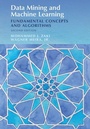
Mohammed J. Zaki | Wagner Meira, Jr
Data Mining and Machine Learning
Fundamental Concepts and Algorithms
E-Book
01/2020
2nd Edition
Cambridge University Press
€60.49
Available for download
Previous edition
Book
05/2014
Cambridge University Press
€64.36
Article exhausted; check for reprint
Persons
Mohammed J. Zaki is Professor of Computer Science at Rensselaer Polytechnic Institute, New York, where he also serves as Associate Department Head and Graduate Program Director. He has more than 250 publications and is an Associate Editor for the journal Data Mining and Knowledge Discovery. He is on the Board of Directors for Association for Computing Machinery's Special Interest Group on Knowledge Discovery and Data Mining (ACM SIGKDD). He has received the National Science Foundation CAREER Award, and the Department of Energy Early Career Principal Investigator Award. He is an ACM Distinguished Member, and IEEE Fellow.
Content
1. Data mining and analysis; Part I. Data Analysis Foundations: 2. Numeric attributes; 3. Categorical attributes; 4. Graph data; 5. Kernel methods; 6. High-dimensional data; 7. Dimensionality reduction; Part II. Frequent Pattern Mining: 8. Itemset mining; 9. Summarizing itemsets; 10. Sequence mining; 11. Graph pattern mining; 12. Pattern and rule assessment; Part III. Clustering: 13. Representative-based clustering; 14. Hierarchical clustering; 15. Density-based clustering; 16. Spectral and graph clustering; 17. Clustering validation; Part IV. Classification: 18. Probabilistic classification; 19. Decision tree classifier; 20. Linear discriminant analysis; 21. Support vector machines; 22. Classification assessment; Part V. Regression: 23. Linear regression; 24. Logistic regression; 25. Neural networks; 26. Deep learning; 27. Regression evaluation.