

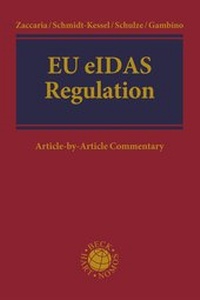
EU eIDAS-Regulation
Article-by-Article Commentary
Published on 9. January 2020
Book
Hardback
400 pages
978-1-5099-3803-2 (ISBN)
Description
This book provides rule-by-rule commentaries on the Regulation (EU) No 910/2014 of the European Parliament and of the Council of 23 July 2014 on electronic identification and trust services for electronic transactions in the internal market. The eIDAS regulation aims at proving a framework for secure and trustworthy electronic transactions in the EU. This volume offers comprehensive comments on all provisions of this regulation containing references to European scholarly writing. As a cross-border project this book is written by an international group of contributors and provides analysis from different European countries. In order to assess the arising legal issues the contributions to this book reflect both aspects of the eIDAS regulation: On one hand the technological-neutral approach intended by this regulation, but also the nevertheless technically determined definitions and provisions of this very specific field of law.
More details
Product info
Hardback
Language
English
Place of publication
Oxford
United Kingdom
Publishing group
Bloomsbury Publishing PLC
Target group
Professional and scholarly
Dimensions
Height: 246 mm
Width: 168 mm
Thickness: 26 mm
Weight
760 gr
ISBN-13
978-1-5099-3803-2 (9781509938032)
Schweitzer Classification
Other editions
Additional editions
Alessio Zaccaria | Martin Schmidt-Kessel | Reiner Schulze
EU eIDAS Regulation
Regulation (EU) 910/2014 on electronic identification and trust services for electronic transactions in the internal market. Article-by-Article Commentary
Book
12/2019
1st Edition
C.H.BECK
€200.00
Shipment within 5-7 days
Persons
Alessio Zaccaria was Full Professor of Civil Law at the University of Verona.
Martin Schmidt-Kessel is Director of the Research Center for Consumer Law and Professor for German and European Consumer Law, Private Law and Comparative Law, University of Bayreuth.
Reiner Schulze is Professor of German and European Civil Law at the Westphalian Wilhelms-University of Muenster and Director of the Centre of European Private Law.
Alberto M Gambino is Full Professor at European University of Rome and President of the Italian Academy of the Internet Code.
Martin Schmidt-Kessel is Director of the Research Center for Consumer Law and Professor for German and European Consumer Law, Private Law and Comparative Law, University of Bayreuth.
Reiner Schulze is Professor of German and European Civil Law at the Westphalian Wilhelms-University of Muenster and Director of the Centre of European Private Law.
Alberto M Gambino is Full Professor at European University of Rome and President of the Italian Academy of the Internet Code.
Content
PART 1
INTRODUCTION
A. General Remarks on Regulation (EU) No 910/2014 (Zaccaria)
B. The Legal Context of Regulation (EU) Nr. 910/2014 - The EU Response to Digitalisation (Schulze)
C. The choices of the eIDAS Regulation (Gambino)
D. Documentary formalism for the digital age - building trust (Schmidt-Kessel)
PART 2
COMMENTARY
Regulation (EU) No 910/2014 of the European Parliament and of the Council - Recitals
Chapter I. General provisions
Article 1. Subject matter
Article 2. Scope
Article 3. Definitions
Article 4. Internal market principle
Article 5. Data processing and protection
Chapter II. Electronic identification
Article 6. Mutual recognition
Article 7. Eligibility for notification of electronic identification schemes
Article 8. Assurance levels of electronic identification schemes
Article 9. Notification
Article 10. Security Breach
Article 11. Liability
Article 12. Cooperation and interoperability
Chapter III. Trust services
Section 1. General provisions
Article 13. Liability and burden of proof
Article 14. International aspects
Article 15. Accessibility for persons with disabilities
Article 16. Assurance levels of electronic identification schemes
Section 2. Supervision
Article 17. Supervisory body
Article 18. Mutual assistance
Article 19. Security requirements applicable to trust service providers
Section 3. Qualified trust services
Article 20. Supervision of qualified trust service providers
Article 21. Initiation of a qualified trust service
Article 22. Trusted lists
Article 23. EU trust mark for qualified trust services
Article 24. Requirements for qualified trust service providers
Section 4. Electronic signatures
Article 25. Legal effects of electronic signatures
Article 26. Requirements for advanced electronic signatures
Article 27. Electronic signatures in public services
Article 28. Qualified certificates for electronic signatures
Article 29. Requirements for Qualified Electronic Signature Creation Devices
Article 30. Certification of qualified electronic signature creation devices
Article 31. Publication of a list of certified qualified electronic signature creation devices
Article 32. Requirements for the validation of qualified electronic signatures
Article 33. Qualified validation service for qualified electronic signatures
Article 34. Qualified preservation service for qualified electronic signatures
Section 5. Electronic seals
Article 35. Legal effects of electronic seals
Article 36. Requirements for advanced electronic seals
Article 37. Electronic seals in public services
Article 38. Qualified certificates for electronic seals
Article 39. Qualified electronic seal creation devices
Article 40. Validation and preservation of qualified electronic seals
Section 6. Electronic time stamps
Article 41. Legal effect of electronic time stamps
Article 42. Requirements for qualified electronic time stamps
Section 7. Electronic registered delivery services
Article 43. Legal effect of an electronic registered delivery service
Article 44. Requirements for qualified electronic registered delivery services
Section 8. Website authentication
Article 45. Requirements for qualified certificates for website authentication
Chapter IV. Electronic documents
Article 46. Legal effects of electronic documents
Chapter V. Delegations of power and implementing provisions
Article 47. Exercise of the delegation
Article 48. Committee procedure
Chapter VI. Final provisions
Article 49. Review
Article 50. Repeal
Article 51. Transitional measures
Article 52. Entry into force
INTRODUCTION
A. General Remarks on Regulation (EU) No 910/2014 (Zaccaria)
B. The Legal Context of Regulation (EU) Nr. 910/2014 - The EU Response to Digitalisation (Schulze)
C. The choices of the eIDAS Regulation (Gambino)
D. Documentary formalism for the digital age - building trust (Schmidt-Kessel)
PART 2
COMMENTARY
Regulation (EU) No 910/2014 of the European Parliament and of the Council - Recitals
Chapter I. General provisions
Article 1. Subject matter
Article 2. Scope
Article 3. Definitions
Article 4. Internal market principle
Article 5. Data processing and protection
Chapter II. Electronic identification
Article 6. Mutual recognition
Article 7. Eligibility for notification of electronic identification schemes
Article 8. Assurance levels of electronic identification schemes
Article 9. Notification
Article 10. Security Breach
Article 11. Liability
Article 12. Cooperation and interoperability
Chapter III. Trust services
Section 1. General provisions
Article 13. Liability and burden of proof
Article 14. International aspects
Article 15. Accessibility for persons with disabilities
Article 16. Assurance levels of electronic identification schemes
Section 2. Supervision
Article 17. Supervisory body
Article 18. Mutual assistance
Article 19. Security requirements applicable to trust service providers
Section 3. Qualified trust services
Article 20. Supervision of qualified trust service providers
Article 21. Initiation of a qualified trust service
Article 22. Trusted lists
Article 23. EU trust mark for qualified trust services
Article 24. Requirements for qualified trust service providers
Section 4. Electronic signatures
Article 25. Legal effects of electronic signatures
Article 26. Requirements for advanced electronic signatures
Article 27. Electronic signatures in public services
Article 28. Qualified certificates for electronic signatures
Article 29. Requirements for Qualified Electronic Signature Creation Devices
Article 30. Certification of qualified electronic signature creation devices
Article 31. Publication of a list of certified qualified electronic signature creation devices
Article 32. Requirements for the validation of qualified electronic signatures
Article 33. Qualified validation service for qualified electronic signatures
Article 34. Qualified preservation service for qualified electronic signatures
Section 5. Electronic seals
Article 35. Legal effects of electronic seals
Article 36. Requirements for advanced electronic seals
Article 37. Electronic seals in public services
Article 38. Qualified certificates for electronic seals
Article 39. Qualified electronic seal creation devices
Article 40. Validation and preservation of qualified electronic seals
Section 6. Electronic time stamps
Article 41. Legal effect of electronic time stamps
Article 42. Requirements for qualified electronic time stamps
Section 7. Electronic registered delivery services
Article 43. Legal effect of an electronic registered delivery service
Article 44. Requirements for qualified electronic registered delivery services
Section 8. Website authentication
Article 45. Requirements for qualified certificates for website authentication
Chapter IV. Electronic documents
Article 46. Legal effects of electronic documents
Chapter V. Delegations of power and implementing provisions
Article 47. Exercise of the delegation
Article 48. Committee procedure
Chapter VI. Final provisions
Article 49. Review
Article 50. Repeal
Article 51. Transitional measures
Article 52. Entry into force