

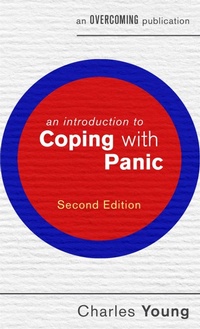
An Introduction to Coping with Panic, 2nd edition
Published on 6. April 2017
Book
Paperback/Softback
96 pages
978-1-4721-3853-8 (ISBN)
Description
Learn how to manage your feelings of panic
Panic disorder and panic attacks affect many people across the world. This self-help guide explains how panic develops and what keeps it going. This updated edition gives you clinically proven cognitive behavioural therapy (CBT) techniques to help you recognise the link between your thoughts and your panic:
How to spot and challenge thoughts that make you panic
Keeping a panic diary
Learn calming breathing techniques
Panic disorder and panic attacks affect many people across the world. This self-help guide explains how panic develops and what keeps it going. This updated edition gives you clinically proven cognitive behavioural therapy (CBT) techniques to help you recognise the link between your thoughts and your panic:
How to spot and challenge thoughts that make you panic
Keeping a panic diary
Learn calming breathing techniques
More details
Series
Language
English
Place of publication
London
United Kingdom
Publishing group
Little, Brown Book Group
Product notice
Paperback (mass)
Unsewn / adhesive bound
Illustrations
B&w integrated illustrations throughout
Dimensions
Height: 198 mm
Width: 130 mm
Thickness: 28 mm
Weight
272 gr
ISBN-13
978-1-4721-3853-8 (9781472138538)
Copyright in bibliographic data and cover images is held by Nielsen Book Services Limited or by the publishers or by their respective licensors: all rights reserved.
Schweitzer Classification
Other editions
Additional editions
Charles Young
An Introduction to Coping with Panic, 2nd edition
E-Book
04/2017
Robinson
€2.99
Available for download
Person
Dr Charles Young is based in the Department of Psychology at Rhodes University, South Africa, where he has co-ordinated professional training programmes in clinical and counselling psychology. He previously worked at the Primary Care Psychological Treatment Service in Cambridge, UK. Much of his work involves the provision of brief psychological approaches to alleviate anxiety and depression. He helped to develop a pioneering service in primary care based on self-help approaches to help alleviate a range of common psychological problems.