

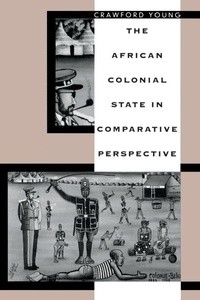
The African Colonial State in Comparative Perspective
Will be published approx. on 3. March 1997
Book
Paperback/Softback
368 pages
978-0-300-06879-5 (ISBN)
Description
In this comprehensive and original study, a distinguished specialist and scholar of African affairs argues that the current crisis in African development can be traced directly to European colonial rule, which left the continent with a "singularly difficult legacy" that is unique in modern history.
Crawford Young proposes a new conception of the state, weighing the different characteristics of earlier European empires (including those of Holland, Portugal, England, and Venice) and distilling their common qualities. He then presents a concise and wide-ranging history of colonization in Africa, from the era of construction through consolidation and decolonization. Young argues that several qualities combined to make the European colonial experience in Africa distinctive. The high number of nations competing for power around the continent and the necessity to achieve effective occupation swiftly yet make the colonies self-financing drove colonial powers toward policies of "ruthless extractive action." The persistent, virulent racism that established a distance between rulers and subjects was especially central to African colonial history.
Young concludes by turning his sights to other regions of the once-colonized world, comparing the fates of former African colonies to their counterparts elsewhere. In tracing both the overarching traits and variations in African colonial states, he makes a strong case that colonialism has played a critical role in shaping the fate of this troubled continent.
Crawford Young proposes a new conception of the state, weighing the different characteristics of earlier European empires (including those of Holland, Portugal, England, and Venice) and distilling their common qualities. He then presents a concise and wide-ranging history of colonization in Africa, from the era of construction through consolidation and decolonization. Young argues that several qualities combined to make the European colonial experience in Africa distinctive. The high number of nations competing for power around the continent and the necessity to achieve effective occupation swiftly yet make the colonies self-financing drove colonial powers toward policies of "ruthless extractive action." The persistent, virulent racism that established a distance between rulers and subjects was especially central to African colonial history.
Young concludes by turning his sights to other regions of the once-colonized world, comparing the fates of former African colonies to their counterparts elsewhere. In tracing both the overarching traits and variations in African colonial states, he makes a strong case that colonialism has played a critical role in shaping the fate of this troubled continent.
More details
Language
English
Place of publication
United States
Target group
College/higher education
Professional and scholarly
Product notice
Paperback (trade)
Dimensions
Height: 233 mm
Width: 154 mm
Thickness: 25 mm
Weight
521 gr
ISBN-13
978-0-300-06879-5 (9780300068795)
Copyright in bibliographic data and cover images is held by Nielsen Book Services Limited or by the publishers or by their respective licensors: all rights reserved.
Schweitzer Classification
Person
Crawford Young is Rupert Emerson and John Bascom Professor of Political Science at the University of Wisconsin-Madison. He is also author of Ideology and Development in Africa, published by Yale University Press.
Content
"Bula Matari" and the contemporary African crisis; on the state; the nature and genesis of the colonial state; constructing "Bula Matari"; the colonial state institutionalized; toward African independence; the ambiguous challenge of civil society; the imperial legacy and state traditions; the afterlife of the African colonial state - comparative reflections.