

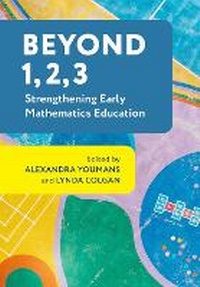
Beyond 1, 2, 3
Strengthening Early Mathematics Education
Published on 31. March 2024
Book
Paperback/Softback
336 pages
978-1-77338-405-4 (ISBN)
Description
Beyond 1, 2, 3 is a comprehensive collection providing an overview of important topics within the field of early childhood mathematics education in Canada. Chapters include a mix of theory and practice and feature rich pedagogical tools including, a set of learning objectives, key terms, and discussion questions.Authored by expert contributors from across Canada, the foundational opening section includes chapters on how to support curiosity in early mathematics learning; understanding, assessing, and building children's early number skills; principles for teaching early mathematics with manipulatives; and an overview of the typical characteristics and cognitive processes of students with mathematics learning disabilities. Section two highlights play as a tool to build spatial thinking and abstract ideas, while demonstrating practical examples of how to integrate assessment into math play. Section three explores a touchscreen technology program called TouchCounts and practical ideas for how coding can support early mathematics learning. Section four ties together the other sections with emphasis on the role of parents and the community in encouraging early math learning through different practices that may be used at home and in community-based programs.
Beyond 1, 2, 3 is an important text for primary and elementary mathematics education courses offered in Bachelor of Education and Early Childhood Education programs, and is also a professional learning resource for teachers and early childhood educators.
Beyond 1, 2, 3 is an important text for primary and elementary mathematics education courses offered in Bachelor of Education and Early Childhood Education programs, and is also a professional learning resource for teachers and early childhood educators.
Reviews / Votes
Read this book and meet a stellar lineup of Canada's top experts in early mathematics learning. Explore research-supported instructional practices to enrich young children's mathematical minds and introduce them to the wonderfully wide world of mathematics."-Dr. Beverly Caswell, Former Director of the Robertson Program for Inquiry-Based Teaching in Mathematics and Science, University of Toronto"Beyond 1, 2, 3: Strengthening Early Mathematics Education provides early years educators with the theoretical foundations and pedagogical possibilities to create mathematics curriculum that will engage and inspire young learners. Organized into explorations of learning environments, play, technology, and family and community engagement, its chapters bring together mathematical content and contexts including outdoor and land-based learning, coding, and STEM, and uniquely share the practice and research of Canadian mathematics educators and scholars.-Dr. Susan Jagger, Associate Professor, School of Early Childhood Studies, Toronto Metropolitan University"This book covers many bases-different pedagogical approaches, varied ways to engage children, beneficial ways to bring coding and technology to these classrooms, and the importance of parents and guardians. This book is rich with ideas that, collectively, illustrate where fully developed instruction for young children currently resides in mathematics."-Dr. Timothy Sibbald, Professor, Schulich School of Education, Nipissing University
More details
Language
English
Place of publication
Toronto
Canada
Target group
College/higher education
Professional and scholarly
Product notice
Paperback (trade)
Illustrations
1 image
Weight
255 gr
ISBN-13
978-1-77338-405-4 (9781773384054)
Copyright in bibliographic data and cover images is held by Nielsen Book Services Limited or by the publishers or by their respective licensors: all rights reserved.
Schweitzer Classification
Persons
Dr. Alexandra (Sandy) Youmans is a Continuing Adjunct Professor in the Faculty of Education at Queen's University.
Dr. Lynda Colgan is a Professor Emerita in the Faculty of Education at Queen's University.
Dr. Lynda Colgan is a Professor Emerita in the Faculty of Education at Queen's University.
Content
Introduction
Section 1: Creating Mathematically Rich and Supportive Early Years Classrooms
Chapter 1: Curious Minds Want to Learn: Supporting Curiosity in Early Mathematics Learning
Chapter 2: Counting on Early Mathematics: Understanding, Assessing, and Building Children's Early Number Skills
Chapter 3: Teaching Early Mathematics with Manipulatives: Pedagogical Strategies for Early Years Educators
Chapter 4: Outdoor Learning and Mathematics in the Early Years
Chapter 5: Too Many Roads Diverge: Insights into Early Mathematics Learning Disabilities
Section 2: Enriching Early Mathematics Learning Through Play
Chapter 6: Play and Assessment: The Role of Play and Assessment in the Mathematics Development of Early Years Learners
Chapter 7: Paying Attention to Spatial Reasoning in Early Years Mathematics: Empowering Children's Learning through a Playful, Spatial Approach
Chapter 8: Learning to Play, Learning from Play: The Math Minds Initiative
Section 3: Developing Early Mathematical Thinking with Technology and Coding
Chapter 9: Making Fingers Count: An Introduction to the TouchCounts Program
Chapter 10: The Role of STEM-Based Learning in the Mathematical Development of Early Years Learners
Chapter 11: The Role of Coding in Early Elementary Mathematics
Chapter 12: Coding: What, Where, Why, When, and How it Matters in Early Mathematics
Section 4: Engaging Families and Communities in Early Mathematics Learning
Chapter 13: Parents Matter Too: The Important Role that Parents/Guardians and the Home Environment Play in Children's Mathematical Well-Being
Chapter 14: Engaging Parents in their Children's Early Math Learning: Strategies Learned from the Building Parent Engagement in Math Project
Chapter 15: LittleCounters (R): A Community-Based Early Numeracy Program
Chapter 16: Exploring Early Numeracy Learning Opportunities with the TOYBOX Community Project
Conclusion
Contributor Biographies
Section 1: Creating Mathematically Rich and Supportive Early Years Classrooms
Chapter 1: Curious Minds Want to Learn: Supporting Curiosity in Early Mathematics Learning
Chapter 2: Counting on Early Mathematics: Understanding, Assessing, and Building Children's Early Number Skills
Chapter 3: Teaching Early Mathematics with Manipulatives: Pedagogical Strategies for Early Years Educators
Chapter 4: Outdoor Learning and Mathematics in the Early Years
Chapter 5: Too Many Roads Diverge: Insights into Early Mathematics Learning Disabilities
Section 2: Enriching Early Mathematics Learning Through Play
Chapter 6: Play and Assessment: The Role of Play and Assessment in the Mathematics Development of Early Years Learners
Chapter 7: Paying Attention to Spatial Reasoning in Early Years Mathematics: Empowering Children's Learning through a Playful, Spatial Approach
Chapter 8: Learning to Play, Learning from Play: The Math Minds Initiative
Section 3: Developing Early Mathematical Thinking with Technology and Coding
Chapter 9: Making Fingers Count: An Introduction to the TouchCounts Program
Chapter 10: The Role of STEM-Based Learning in the Mathematical Development of Early Years Learners
Chapter 11: The Role of Coding in Early Elementary Mathematics
Chapter 12: Coding: What, Where, Why, When, and How it Matters in Early Mathematics
Section 4: Engaging Families and Communities in Early Mathematics Learning
Chapter 13: Parents Matter Too: The Important Role that Parents/Guardians and the Home Environment Play in Children's Mathematical Well-Being
Chapter 14: Engaging Parents in their Children's Early Math Learning: Strategies Learned from the Building Parent Engagement in Math Project
Chapter 15: LittleCounters (R): A Community-Based Early Numeracy Program
Chapter 16: Exploring Early Numeracy Learning Opportunities with the TOYBOX Community Project
Conclusion
Contributor Biographies