

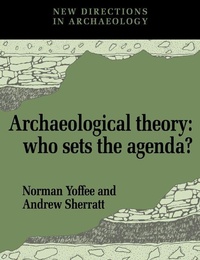
Archaeological Theory
Who Sets the Agenda?
Published on 22. July 1993
Book
Paperback/Softback
152 pages
978-0-521-44958-8 (ISBN)
Description
This volume assesses the real achievements of archaeology in increasing an understanding of the past. Without rejecting the insights either of traditional or more recent approaches, it considers the issues raised in current claims and controversies about what is appropriate theory for archaeology. The first section looks at the process of theory building and at the sources of the ideas employed. The following studies examine questions such as the interplay between expectation and evidence in ideas of human origins, social role and material practice in the formation of the archaeological record, and how the rise of states should be conceptualised; further papers cover issues of ethnoarchaeology, visual symbols, and conflicting claims to ownership of the past. The conclusion is that archaeologists need to be equally wary of naive positivism in the guise of scientific procedure, and of speculation about the unrecorded intentions of prehistoric actors.
Reviews / Votes
'I recommend this provocative volume, in which I found much to think about, not least Sherratt's plea that archaeologists - not the media, tour managers or politicians - should be the ones who set the agenda.' Nick Saunders, New ScientistMore details
Series
Language
English
Place of publication
Cambridge
United Kingdom
Target group
Professional and scholarly
Product notice
Paperback (trade)
Illustrations
14 Line drawings, unspecified
Dimensions
Height: 246 mm
Width: 189 mm
Thickness: 8 mm
Weight
309 gr
ISBN-13
978-0-521-44958-8 (9780521449588)
Copyright in bibliographic data and cover images is held by Nielsen Book Services Limited or by the publishers or by their respective licensors: all rights reserved.
Schweitzer Classification
Other editions
Additional editions
Book
07/1993
Cambridge University Press
€43.40
Article exhausted; check for reprint
Previous edition
Book
07/1993
Cambridge University Press
€43.40
Article exhausted; check for reprint
Persons
Content
Introduction: The sources of archaeological theory Norman Yoffee, and Andrew Sherratt; Part I. The Social Context of Archaeological Theory: 1. Limits to a post-processual archaeology (or The dangers of a new scholasticism) Philip L. Kohl; 2. A proliferation of new archaeologists 'Beyond objectivism and relativism' Alison Wylie; 3. Ambition, deference, discrepancy, consumption; the intellectual background to a post-processual archaeology Christopher Chippendale; Part II. Archaeological Theory from the Paleolithic to the State: 4. Ancestors and agendas Clive Gamble; 5. After social evolution: a new archaeological agenda? Stephen Shennan; 6. Too many chiefs? (or, Safe texts for the 90s) Norman Yoffee; Part III. Case-Studies in Archaeological Theory and Practice; 7. When is a symbol archaeologically meaningful? Meaning, function and prehistoric visual arts Kelley Hays; 8. Re-fitting the 'cracked and broken facade': the case for empiricism in post-processual ethnoarchaeology Miriam Start; 9. Communication and the importance of disciplinary communities: who owns the past? Tim Murray; Part IV. Postscript and Epilogue: 10. The relativity of theory Andrew Sherratt; 11. Archaeology: the loss of nerve Richard Bradley.